
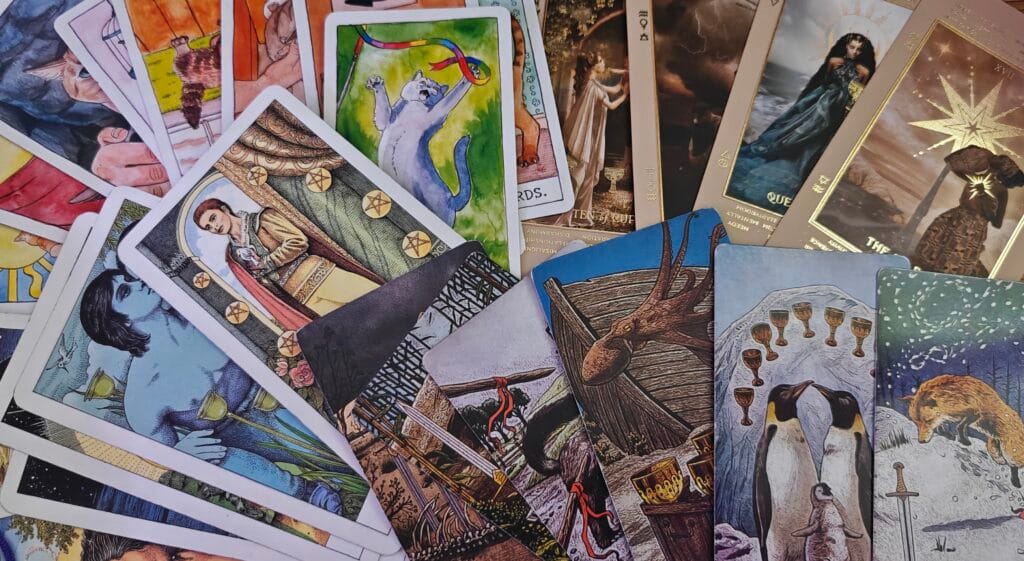
Tarot is one of the oldest and most widely used tools for self-reflection and divination. A deck of 78 cards, each carrying its own imagery and symbolism, creates a complete map of human experience. Whether you are drawn to tarot for spiritual guidance, psychological insight or simple curiosity, understanding how the system is built gives you a foundation to read with confidence.
A Brief History of Tarot
Tarot cards originated in 15th-century northern Italy, where they were used as playing cards for a game called Tarocchi. The earliest known decks were hand-painted commissions for wealthy aristocratic families, elaborate artistic objects rather than mystical tools.
The shift toward divination came in the 18th century, when European occultists began connecting the cards to esoteric traditions including numerology, Kabbalah and astrology. By the 19th and early 20th centuries, groups like the Hermetic Order of the Golden Dawn had developed detailed systems of correspondence that tied each card to planetary forces, Hebrew letters and elemental energies. The Rider-Waite-Smith deck, published in 1909, became the most influential deck in the Western tradition and remains the reference point for most modern interpretations.
How a Tarot Deck Is Structured
A standard tarot deck contains 78 cards divided into two sections: the Major Arcana and the Minor Arcana.
The Major Arcana
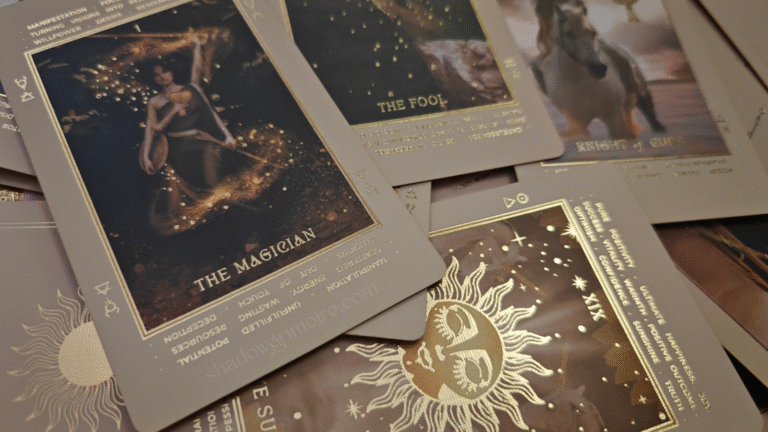
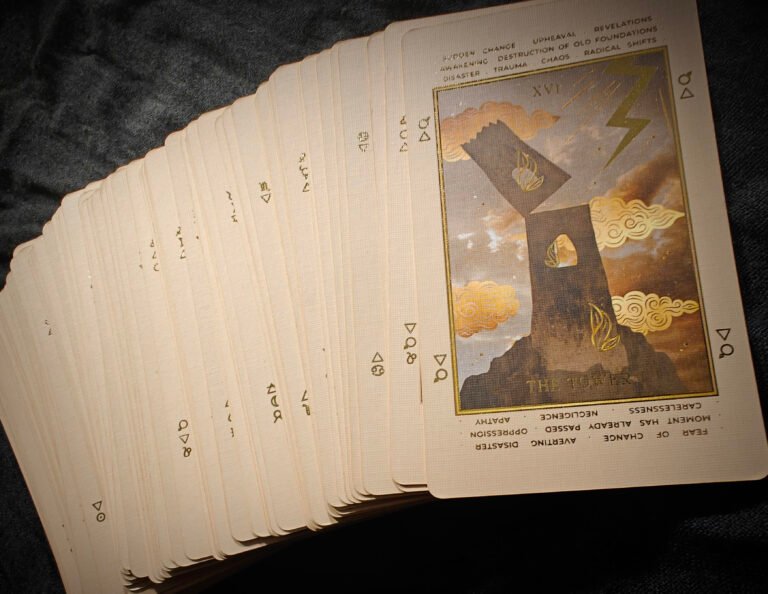
The Major Arcana is a sequence of 22 cards numbered 0 through 21, beginning with The Fool and ending with The World. These cards represent the larger forces and themes that shape a life: transformation, spiritual growth, major turning points and archetypal energies that move through human experience regardless of culture or era.
When a Major Arcana card appears in a reading it typically signals that something significant is at play, a theme that runs deeper than daily circumstances. For a full breakdown of each card see The Major Arcana – A Guide to Tarot’s Most Powerful Cards.
The Minor Arcana
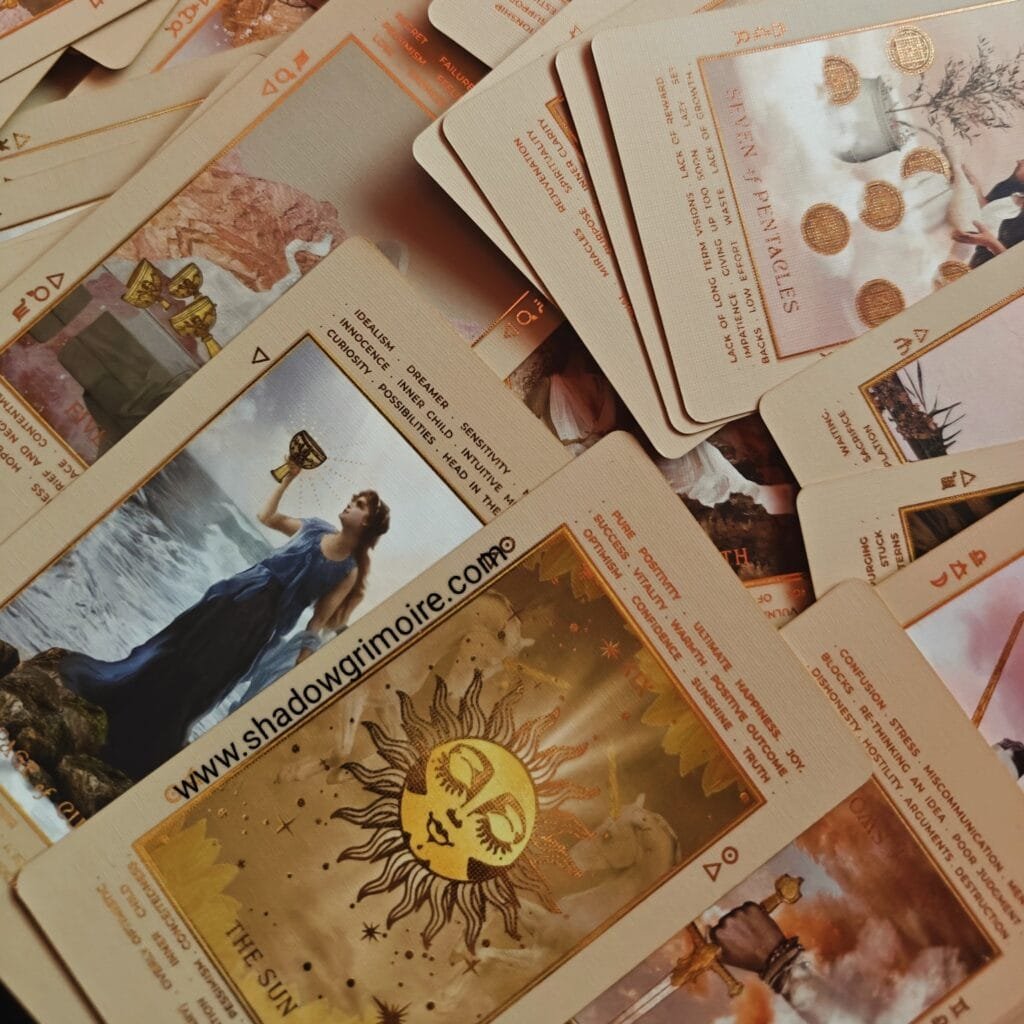
The Minor Arcana contains 56 cards divided into four suits of 14 cards each. Where the Major Arcana addresses the big picture, the Minor Arcana describes the texture of everyday life: relationships, work, emotions, decisions and practical challenges.
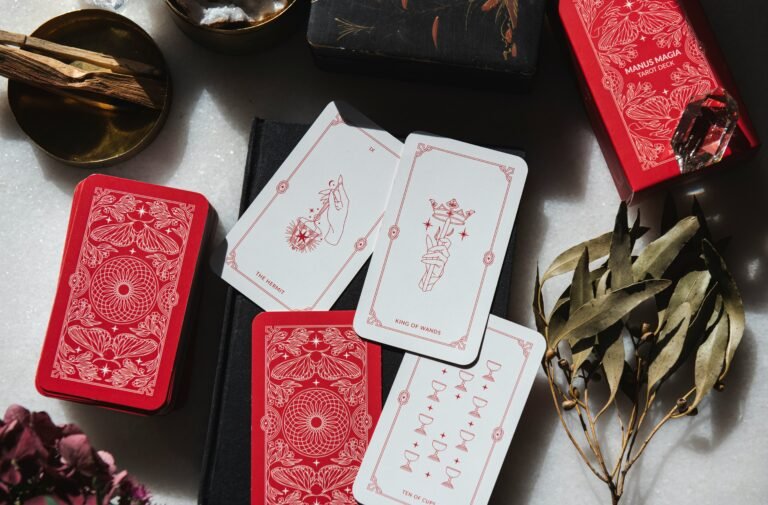
Each suit contains cards numbered Ace through Ten plus four court cards: Page, Knight, Queen and King.
| Suit | Element | Theme |
|---|---|---|
| Wands | Fire | Action, creativity, passion, ambition |
| Cups | Water | Emotions, relationships, intuition |
| Swords | Air | Thought, communication, conflict, truth |
| Pentacles | Earth | Material life, work, finances, stability |
For deeper reading on each suit:
- The Suit of Wands – Action, Creativity & Passion
- The Suit of Cups – Emotions, Love & Intuition
- The Suit of Swords – Truth, Intellect & Challenges
- The Suit of Pentacles – Stability, Success & Practical Growth
Upright, Reversed and Sideways Cards
Every card can appear in three orientations and each changes how the card is read.
An upright card expresses its energy clearly and directly. The themes are active and accessible.
A reversed card, appearing upside down, traditionally indicates a block, delay or internalized version of the card’s energy. Some readers interpret reversals as the opposite of the upright meaning while others read them as the same energy turned inward or operating below the surface. Whether to use reversals at all is a personal choice and many skilled readers work only with upright cards.
A sideways card, appearing at a 90-degree angle, represents liminal energy: something in transition, not yet resolved, standing at a threshold between two states. This is neither a yes nor a no but a not yet or almost. For a complete guide to this third orientation see Reading Sideways Tarot Cards: A Complete Guide.
Choosing Your First Deck
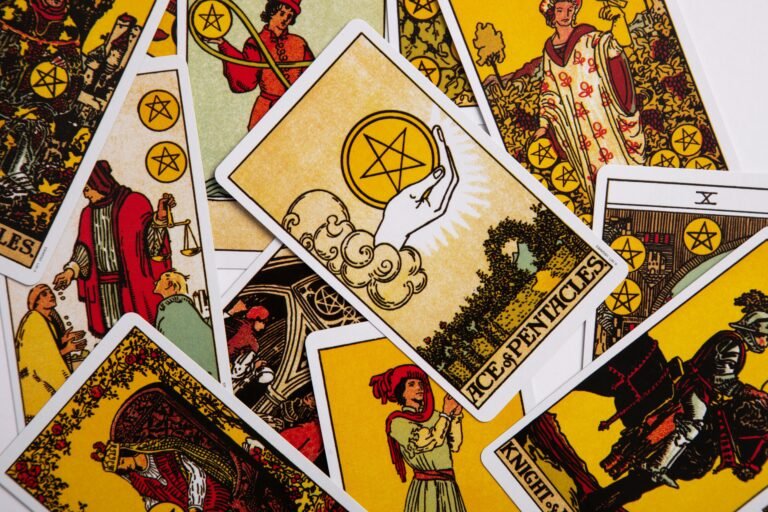
The most widely recommended starting deck is the Rider-Waite-Smith, published in 1909 with illustrated scenes on every card including the Minor Arcana. The imagery is direct and the symbolism has been analyzed extensively, making it easy to find reference material as you learn.
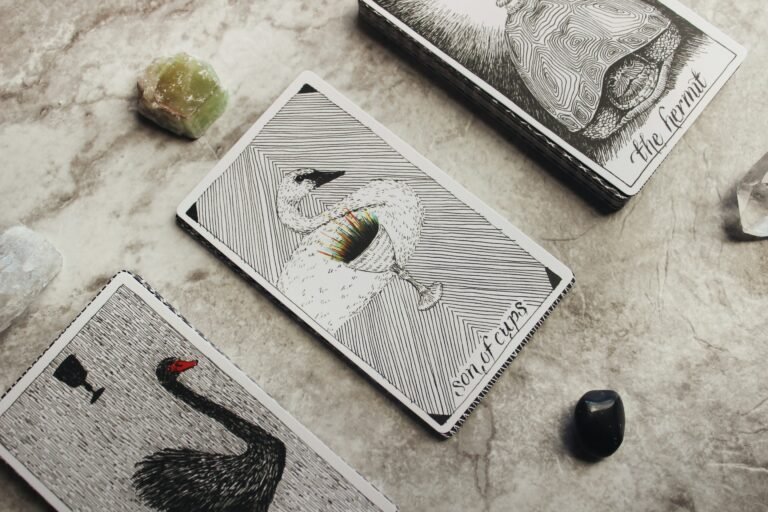
Beyond the Rider-Waite-Smith, there are thousands of decks available in every possible aesthetic, from classical to gothic to botanical to abstract. The most important criterion is whether the imagery resonates with you personally. A deck that speaks to your intuition will serve you better than one that is technically superior but leaves you cold.
Many practitioners recommend buying your first deck yourself rather than waiting to receive one as a gift, despite the traditional idea that tarot must be gifted. The connection you build by choosing your own deck tends to be stronger.
How to Begin Reading
Starting with tarot does not require memorizing 78 card meanings before your first draw. A more useful approach is to begin with direct experience and build understanding over time.
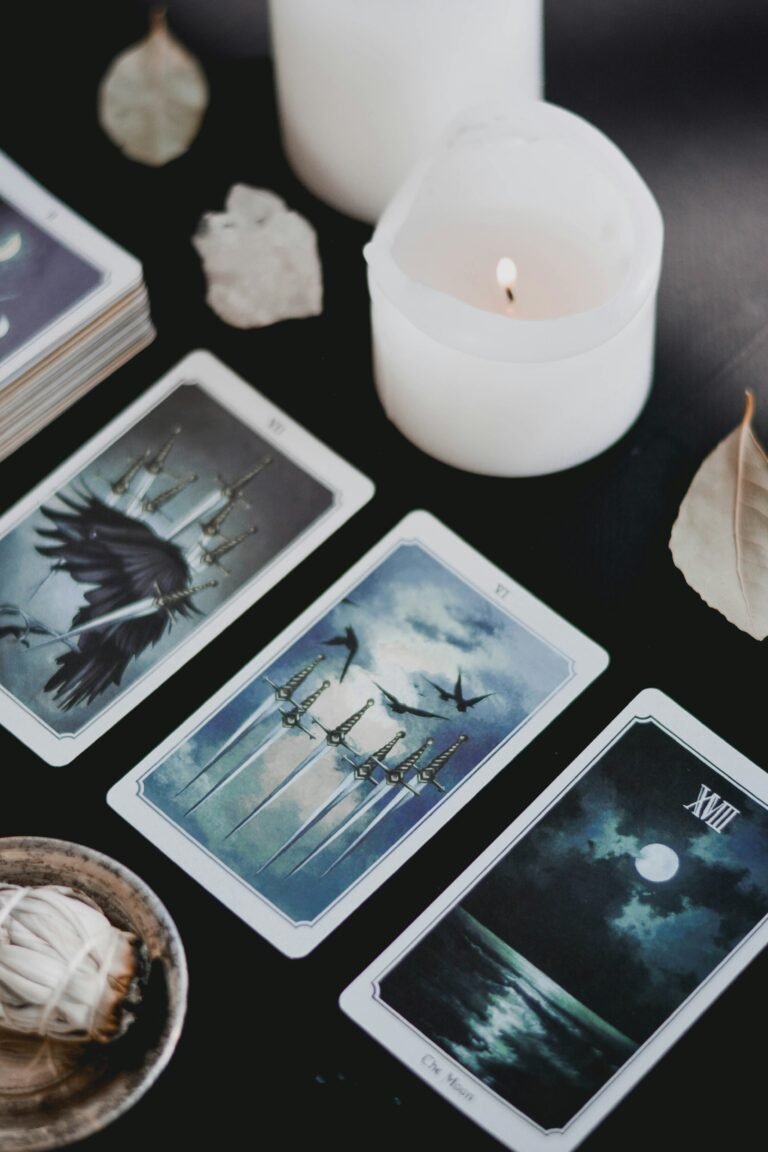
Before a reading, cleanse your deck by passing it through incense smoke, placing it under moonlight or simply holding it and setting a clear intention for the session. This clears any accumulated energy and marks the transition from ordinary handling to intentional use.
Start with a single card draw. Shuffle while holding a question in mind, cut the deck and draw one card. Before reaching for a book or guide, look at the imagery first. Notice what your eye goes to, what feeling the card produces and what your initial interpretation is. Then check the reference meaning and see how it relates to what you already noticed.
From a single card, move to a three-card spread when you feel ready. The most common version uses past, present and future as positions, though you can assign any three positions that suit your question: situation, action, outcome or mind, body, spirit.
How to Deepen Your Practice
Keeping a tarot journal is one of the most effective ways to develop reading skill. Record the date, your question, the cards drawn and your initial interpretation. Return to the entry after a week or a month and note what unfolded. Over time patterns emerge that are specific to your own relationship with the deck.
Reading for yourself regularly, even a single daily card, builds familiarity faster than studying meaning lists. The cards that appear repeatedly carry messages worth sitting with. The cards that unsettle you often point to exactly what needs attention.
Understanding tarot timing is a separate skill. Different cards and suits correspond to different timeframes and astrological periods. For a complete system see Tarot Timing: 3 Powerful Ways to Interpret “When”.
Frequently Asked Questions
Do you need psychic ability to read tarot?
No. Tarot works as well as a psychological and reflective tool as it does as a predictive one. The cards provide a framework for focusing attention and surfacing thoughts and feelings that are already present. Intuition develops through practice, not as a prerequisite.
Can you read tarot for yourself?
Yes and many practitioners read primarily for themselves. The common concern is that personal bias affects the reading and this is worth keeping in mind, but it does not make self-reading impossible or unreliable. Developing awareness of which cards you tend to interpret optimistically or pessimistically based on your own wishes helps you read more honestly over time.
How do you cleanse a tarot deck?
Common methods include passing the deck through incense or smoke, placing it under moonlight, knocking on the deck three times to clear old energy or storing it with a cleansing crystal like selenite or clear quartz. Any method you approach with intention works. The practice matters more than the specific technique.
What is the difference between Major and Minor Arcana?
The Major Arcana covers the larger themes and turning points of life while the Minor Arcana addresses everyday situations, emotions and decisions. A reading heavy with Major Arcana suggests significant forces are at work. A reading composed mostly of Minor Arcana tends to reflect more immediate, day-to-day circumstances.
How long does it take to learn tarot?
You can do a useful reading with basic knowledge after a few weeks of daily practice. Deeper fluency, where you read intuitively without needing references, typically develops over one to two years of regular work with the cards. There is no point at which a reader stops learning.
[…] Tarot Cards: A Complete Beginner’s Guide to Reading the Deck […]