Some situations do not resolve cleanly. You have tried communication, you have tried practical approaches, you have tried gentler forms of magic and the problem persists or the harm has been serious enough that gentler approaches feel insufficient. The unhinged spell exists for exactly this: a contained, deliberate ritual for channeling raw emotional energy toward a specific outcome when nothing else has worked.
This is not a spell for minor annoyances. It is a last resort ritual in a tradition that stretches back centuries and understanding where it comes from makes it more effective, not less.
The Tradition Behind This Spell
What modern practitioners call an unhinged spell or last resort ritual belongs to a family of workings known as sour jar spells in Hoodoo and vinegar bottle spells in European folk magic. These are not fringe practices invented on the internet. They have documented history going back to at least the 1600s.
The oldest related tradition is the English witch bottle, documented from the 1600s onward. These were vessels filled with sharp objects, personal items and sometimes urine, buried under doorsteps or hidden in chimneys to trap and neutralize malevolent forces directed at a household. Archaeological examples have been found across England, with glazed clay bottles dating to at least the early modern period. The Museum of London Archaeology (MOLA) has catalogued nearly 200 documented examples from across southern and eastern England and continues active research into the tradition. The logic was containment: sealing harmful energy or a harmful relationship inside a vessel and physically removing it from your life.
In Hoodoo, the African American folk magic tradition that blended West African, Native American and European influences in the American South, the vinegar jar or souring jar evolved as a distinct working for causing negative conditions for those who had caused harm. Vinegar sours. Sharp objects cause pain. The ingredients were chosen for what they symbolically did, not arbitrarily. Rootworkers, also called conjure doctors, prepared these jars for clients who had been genuinely wronged and who had no other recourse available to them. This was not casual aggression. It was justice work for people with limited institutional protections.
The unhinged spell as practitioners work it today combines both traditions: the European container magic and the Hoodoo souring approach, filtered through the emotional directness of modern practice. The vessel, the sharp objects, the personal connections to the target, the deliberate sealing and disposal: all of these have their roots in centuries of documented folk magic.
Before You Begin
The ethical question is real and worth sitting with before you start. This is not a warning to avoid the spell. It is a prompt to be honest with yourself about what you are doing and why, because honesty of intention is what makes magic work.
Ask yourself whether you are working from a position of genuine harm done to you or from an emotion that will pass. Ask whether this outcome is what you actually want at the deepest level or what you want right now in your worst moment. Ask whether you have actually exhausted other options or whether other options just feel less satisfying than this one. If the answers are clear and the harm is real, proceed. This magic exists because the need for it is real.
Most traditions that work with this kind of magic acknowledge that the energy you release returns to you in some form. This does not mean you should never use it. It means use it with clear eyes about what you are putting into motion.
What You Need
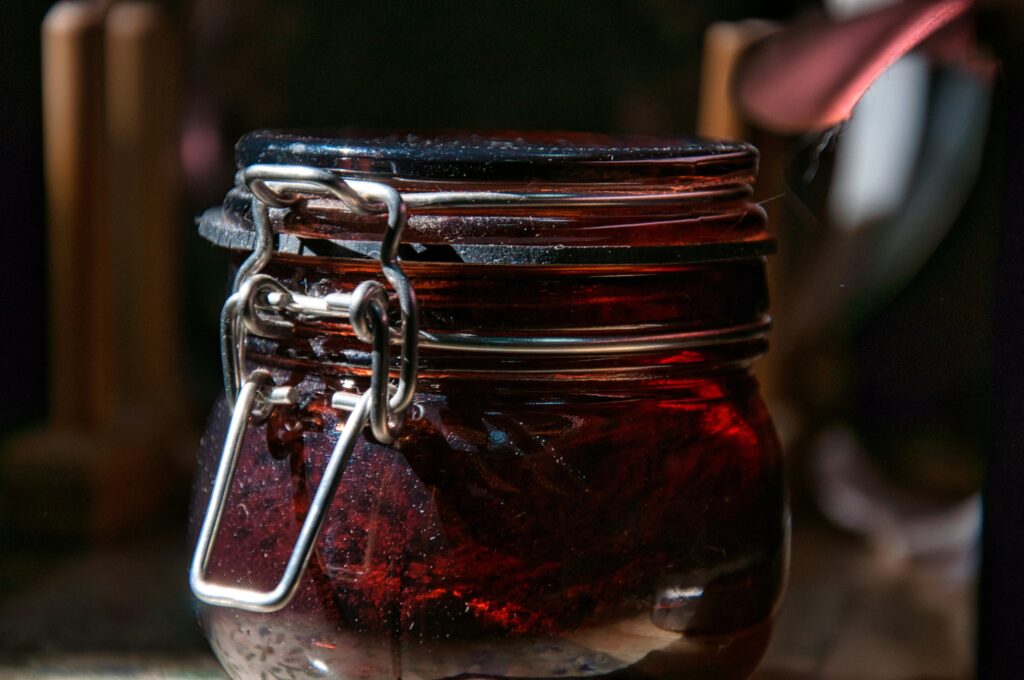
The vessel: A jar with a lid is traditional. Size depends on what you are putting in it. A wide-mouth glass jar works well.
Personal concerns: Something that physically connects the jar to the person or situation you are addressing. A photograph is the most common. A handwritten note from them, their name and date of birth written on paper, a piece of their handwriting or anything directly associated with them all work. In Hoodoo, the personal concern is the most important ingredient because it creates the energetic link.
Sharp objects: Pins, needles, bent nails, thorns or broken glass serve the same function they have served in this tradition for centuries: they carry the intention of pain, disruption and the cutting of ties. Add what feels right for your intention.
Sour or bitter elements: Vinegar is the traditional base. Black pepper adds heat and conflict. Red pepper intensifies. Lemon juice is acidic. Mustard seed creates confusion. Salt can be added but in souring work some practitioners deliberately omit it since salt also protects, which contradicts the working’s purpose.
Decay or bitterness: Spoiled food, ashes, dirt from a crossroads or a graveyard (in Hoodoo tradition, graveyard dirt carries the weight of finality), ground black pepper, rue.
Your written intention: Write specifically what you are working toward. Not vague ill-wishing but a named outcome: that this person leaves your life, that their ability to harm you ends, that the situation resolves in a specific direction.
Optional sigil: If you work with sigils, a sigil drawn for this specific intention placed in the jar amplifies it. See Sigil Magic: A Complete Practical Guide for how to create one.
The Ritual
Prepare your space. Choose a time when you will not be interrupted. You do not need a perfectly clean or ceremonially set space for this work. The energy of the ritual is raw by nature. What you do need is privacy and enough quiet to focus.
Ground yourself. This is not optional. You are working with significant emotional energy and it needs to be directed, not simply released. Take enough time to bring your attention fully to what you are doing. The anger, frustration or pain you are channeling is the fuel. Grounding makes it directed fuel rather than a fire that goes where it wants.
Assemble the jar with intention. Place each ingredient in the jar while holding your specific intention in mind. Speak aloud what each ingredient represents as you add it. Name the person. Name what they did. Name what you are working toward. Specificity is power. The more clearly you articulate the intention, the more precisely the working operates.
Write and include your statement. Write directly to the situation or person. You do not need to be measured or diplomatic here. Write what happened, what it cost you and what outcome you are working toward. Fold the paper away from you (folding away sends energy outward, away from yourself) and place it in the jar.
Seal the jar. Fill it with vinegar or your chosen liquid base. Close the lid tightly. You can drip candle wax over the lid to seal it, bind it with cord or simply close it firmly. As you seal it, state clearly what is now bound and contained.
Dispose of the jar. This step matters as much as the building. The jar and its contents need to leave your space and your property.
Burial in the earth away from your home is traditional: the ground receives and transforms what you have placed in it. A crossroads, a place where two paths meet, is specifically significant in both Hoodoo and European folk magic as a liminal space where magical disposals are accepted. Running water, particularly a river moving away from you, carries the contents and their energy away. Some practitioners bury the jar far from home. Some throw it into a body of moving water. What you do not do is keep it in your home or leave it unfinished.
If your intention was release and closure rather than active harm, burning the written components and burying the ash is an alternative that emphasizes finality over souring.
After the Ritual
Cleanse your space and your body after this working. A salt bath or smoke cleansing removes any energetic residue. This is standard practice after any significant working and is especially relevant here because you have been handling concentrated negative energy.
Do not obsessively check for results. The spell is sealed and working. Continued attention to the situation feeds it energy rather than letting the magic operate on its own.
If you placed this working during a difficult emotional state and later feel it was disproportionate to the situation, it can be symbolically dissolved before disposal: open the jar, state aloud that you are releasing the working and the intention with it and dispose of the contents in running water or by burial. This is not weakness or failure. It is responsible practice.
Connection to Other Protective Work
The unhinged spell addresses a specific situation with concentrated directed energy. It works alongside but is not a substitute for ongoing protective practice.
If someone has been actively working against you through deliberate magical means rather than through mundane harm, the removal of that condition is addressed through hex breaking work alongside or instead of this ritual. If the harm has roots in a longer pattern or a family dynamic, see the approach described in How to Get Rid of a Curse.
If what you need is protection going forward rather than a response to what has already happened, salt in witchcraft and protective spellwork address that separately.
Frequently Asked Questions
Is the unhinged spell the same as a curse?
It shares the same family as souring jar spells and binding magic, which occupy the grey area between protective work and offensive magic. Whether you frame it as a curse depends on your intention: if you are working toward a specific protective outcome, ending a harmful dynamic or removing someone’s ability to continue harming you, most practitioners consider this justice work. If you are working purely out of a desire to cause suffering with no protective dimension, it is closer to a curse. The distinction matters ethically and practically.
Does it matter what phase the moon is in?
Waning moon supports banishing, removal and the dissolving of things. The dark moon, the night before the new moon, is considered the most potent time for banishing and shadow work across Wiccan and pagan traditions. These timings support the souring and removal intent of this working. That said, if the situation is urgent, it is more important to do the work than to wait for optimal timing.
Can this spell backfire?
Most traditions that work with this kind of magic acknowledge the possibility of returned energy if the working was disproportionate, misdirected or poorly contained. The grounding and cleansing steps at the start and end of the ritual reduce this risk. Working with clear and specific intention rather than generalized rage reduces it further. The disposal step is also important: a jar that is not properly disposed of continues to hold and potentially cycle its energy in your space.
What if I feel guilty afterward?
That feeling is worth paying attention to. If it passes quickly and you recognize it as residual discomfort from working with difficult energy, it is probably just the emotional aftermath of intense ritual work. If it persists or grows, it may indicate that on reflection the working was not actually proportionate to the situation. In that case, the dissolution approach described above is available to you.
Can I target a situation rather than a person?
Yes. The jar can be built around a situation, a pattern, a dynamic or even a habit or belief rather than a specific individual. Personal concerns are replaced with written descriptions of what you want to end, items that represent the situation and your specific statement of what you are closing off or dissolving.
Photo by Xuancong Meng on Unsplash