
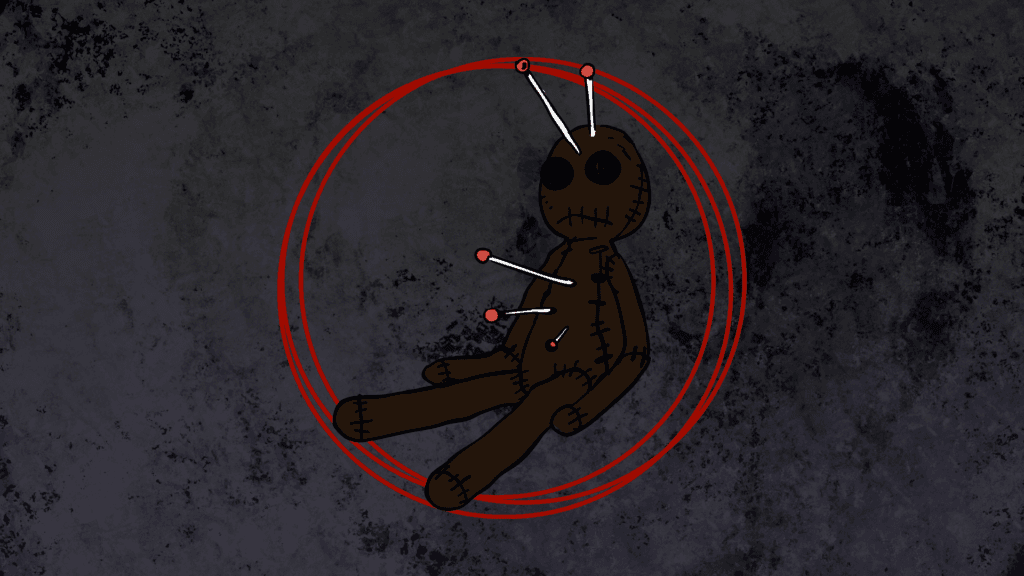
A curse is the most serious form of magical harm: deliberate, sustained and in some cases designed to affect an entire family line rather than a single person. For a full comparison of all three conditions see Jinx, Hex and Curse: What’s the Difference?. If you have worked through jinx removal and hex breaking without resolution or if what you are experiencing has the characteristics of something heavier and longer-lasting than those conditions, this is the level you are working with.
The defining features of a curse are intent, duration and scope. A curse is always deliberate. It is designed to last. And it often reaches further than one person, affecting a family, a bloodline or in historical cases, a place or institution. Understanding these qualities determines how you approach the work.
What Is a Curse?
Curses are documented across every major human civilization. Ancient Mesopotamian curse tablets have been found dating to 3000 BCE. Greek and Roman defixiones, lead tablets inscribed with curses and deposited in graves, wells and temples, number in the thousands from the classical period alone. Ancient Egyptian execration texts named enemies and directed harm toward them. The Old Testament contains documented curses both human and divine. Medieval European grimoires contain extensive curse-working alongside curse-breaking.
In every tradition that recognizes cursing, the same understanding appears: deliberately directed negative energy with sustained magical backing creates a real and lasting condition in the target’s life. The energy itself is neutral. What determines whether it is a curse is the deliberate intention and the sustained direction.
In Hoodoo tradition, a serious curse is distinct from a jinx or crossed condition in both its casting and its removal. Generational curses, understood as conditions that travel along family lines, are recognized in Hoodoo, in Christian theology and in Jewish kabbalistic tradition. The Bible references curses visiting the children of those who turned against God to the third and fourth generation in Exodus 20:5, a text that shaped both Christian and folk magic understandings of generational harm.
Types of Curse
Person-specific curses target one individual and tend to manifest as sustained misfortune in one or several areas of their life. This is the most common type encountered in folk magic contexts.
Generational or ancestral curses affect a family line. They may present as patterns of the same misfortune recurring across generations: persistent financial difficulty, relationship breakdown, early death, illness. In Christian charismatic tradition, ancestral curses are broken through prayer and spiritual authority. In Hoodoo, ancestral altar work and petitions to specific ancestors address the lineage-level condition. In Jungian-informed therapy, the same patterns are explored as inherited trauma or unconscious family scripts rather than magical conditions, but the practical work of identifying and breaking the pattern is similar regardless of framework.
Place curses affect a location. Historical examples include formal ecclesiastical curses placing a settlement under spiritual penalty and folk curses directed at land or buildings. Signs include a property where occupants consistently experience the same kinds of misfortune regardless of who lives there.
Signs You May Be Cursed
A curse presents differently from a jinx or hex in its depth and duration. Sustained, serious misfortune affecting multiple areas of your life over many months or years is the primary indicator. Other signs include a sudden and severe reversal of fortune without natural explanation, health problems that do not respond to medical treatment, a felt sense that something has fundamentally shifted in your life at a specific point in time, recurring dreams about a specific person who wished you harm and a pattern of misfortune that appears to run in your family across multiple generations.
The more areas of your life affected and the longer the duration, the more likely you are dealing with a curse rather than a hex. A genuine generational curse will show its pattern across family history when you look for it.
The Universal Framework: Water, Salt and Smoke
The same three tools that address a jinx and a hex are the foundation of curse removal too: water for purification, salt for neutralizing and smoke for cleansing the space. The difference at the curse level is that these tools need to be applied more extensively, more repeatedly and over a longer period. A jinx may clear with a single bath and some smoke cleansing. A curse typically requires sustained work over weeks to months, possibly with professional spiritual support.
To these three, curse removal adds several additional layers not usually necessary for lighter conditions.
How to Break a Curse
Extended Cleansing
Begin with the same foundational cleansing used for hex removal but extend it over a longer period and apply it more thoroughly. A daily salt and herb bath for seven to twenty-one days is a common Hoodoo protocol for serious crossed conditions and curses. Hyssop for purification, rue for cutting ties to the condition and van van herbs for clearing blocked paths are traditional in this work.
Smoke cleanse your home thoroughly once a week during the clearing period. Pay attention to corners, closets, under furniture and to the thresholds: front door, back door and windows. In Hoodoo tradition, floor washing with an uncrossing wash prepared from herbs and Florida water, working from the back of the house to the front and throwing the dirty water outside away from the property, is the thorough version of this work.
In Islamic tradition, sihr, black magic, which at its most serious level corresponds to what other traditions call a curse, is addressed through extended ruqyah: daily recitation of Ayat al-Kursi, Surah Al-Falaq and Surah An-Nas, ideally morning and evening, over a sustained period. Water is recited over and used for both bathing and drinking. This is not a quick single-session response but an ongoing spiritual practice sustained until the condition clears.
Ancestral Work
If the curse appears generational, working with your ancestors directly is essential rather than optional. Set up an ancestor altar with photographs, objects or written names of those who came before you. Offer water, candles and food. Make a specific request: you are asking for their help in identifying and breaking a pattern that has traveled through the family line.
This work has close parallels across traditions. In Hoodoo, ancestor petitions and altar work are foundational to resolving generational conditions. In Jewish kabbalistic practice, the healing of ancestral souls through prayer and mitzvot, good deeds performed in memory of the dead, is understood to benefit both the living and those who have passed. In Catholic folk traditions, masses said for the souls of ancestors and prayers for their peace are understood to heal disturbances that travel through family lines.
The Yoruba-derived traditions including Santería and Candomblé place ancestor veneration at the center of all serious spiritual work. Egungun ceremonies honor the collective family dead and address conditions that originate in the ancestral realm.
Working with Deities and Spiritual Allies
Curse removal is specifically within the domain of several powerful deities across traditions and working with a deity whose domain includes justice, protection or magical reversal is appropriate at this level of work in a way that optional at lighter levels.
Hecate in Greek tradition governs magic, thresholds, the dead and the reversal of harmful workings. Crossroads rituals calling on her for curse removal are documented in ancient Greek magical papyri. She is appropriate for both the cleansing work and the disposal of the removed condition.
Kali in Hindu tradition governs transformation, the destruction of what must be destroyed and protection from serious supernatural harm. She is one of the most powerful protective figures available for this level of work and responds to honest engagement and appropriate offerings. Her domain specifically includes severing connections to harmful conditions.
Hekate, Morrigan and Sekhmet all govern aspects of transformation, protection and the removal of what must go. Each requires appropriate relationship and offerings, but all are documented as effective allies in serious curse removal work.
In Hoodoo, St. Michael the Archangel is called upon for protection from serious magical harm through specific prayers, candle work and the use of St. Michael oil. His role as warrior against all malign forces is directly relevant here.
Regardless of which figure you call upon, this level of work benefits from an ongoing relationship rather than a one-time petition. If you do not have an established relationship with any protective deity, building one through consistent offerings and attention before attempting major curse work is advisable.
Ritual Work for Curse Removal
Curse removal typically involves a series of rituals rather than a single working. A structured three-part approach is used across many traditions:
Phase one: diagnosis and identification. Use divination to understand the nature, source and duration of the curse. Tarot, runes or consultation with an experienced practitioner can reveal information that shapes the work. In Hoodoo, reading of candle flame behavior, wax residue patterns and card readings are used for this phase.
Phase two: active removal. A series of cleansing baths, smoke cleansings and directed magical work with candles, herbs and prayer over two to four weeks. The specific tools depend on your tradition but the underlying action is removing the energetic structure of the curse from your body, home and life.
Phase three: sealing and protection. Once the condition has been removed, a period of active protective work prevents reinstating the same vulnerability. Salt at the thresholds, protective objects, regular cleansing practice and maintained connection with your spiritual allies all serve this function.
For generational curses, add a phase zero before all of the above: the ancestor work to understand the pattern, seek the ancestors’ help and address any unresolved disturbances in the family line that may be sustaining the condition.
Consulting a Professional
At the curse level, professional spiritual support is not a sign of inability. It is practical recognition that some conditions require specialist knowledge.
In Hoodoo tradition, rootworkers and two-headed doctors were the specialists in exactly this work. Their communities depended on them for conditions that ordinary folk could not resolve alone. In Santería and related traditions, initiated priests and priestesses have specific knowledge and spiritual authority for addressing serious magical harm. In Islamic tradition, qualified scholars who perform ruqyah are sought for serious sihr cases. Across European folk traditions, the cunning folk, pellars and village magical practitioners were the specialists for curse identification and removal.
A practitioner who claims they can definitely remove any curse for a large fee and who requires ongoing payment is a red flag. A genuine specialist typically has a community reputation, works within a specific tradition and does not make guarantees they cannot deliver.
Frequently Asked Questions
How do I know if my problems are a curse or just bad luck?
The distinguishing features of a genuine curse are sustained serious misfortune across multiple areas of life over a long period, a clear point of origin (a specific falling out with someone, a property acquisition, a family event) after which things changed and a pattern that does not respond to ordinary practical efforts to improve your situation. If the same pattern appears across your family history in multiple generations, this strongly suggests a generational condition. Genuinely random bad luck, however persistent, tends to shift eventually on its own. A curse does not.
Can a curse be passed through objects?
Yes. In multiple folk magic traditions, cursed objects are understood to carry and transmit the condition placed on them. Objects left at your threshold, gifts from someone who wishes you harm, personal items worked with against you and objects from cursed locations have all been documented as carriers of harmful conditions. If your misfortune began after receiving or acquiring a specific object, that object should be cleansed thoroughly or disposed of away from your property.
What is a generational curse and how do I break it?
A generational curse is a condition that travels along family lines, manifesting as a recurring pattern of the same type of misfortune across multiple generations. Breaking it requires ancestor work alongside the personal cleansing: acknowledging the pattern, working with the ancestors who carried it before you and making a deliberate act of severance. This may involve prayer, ritual, ancestor petitions, divination to understand the origin and in some traditions the guidance of a professional with experience in ancestral healing.
Is it possible to accidentally curse someone?
Most traditions recognize the possibility of sending harmful energy unintentionally through intense anger, sustained ill-wishing or a genuinely malevolent emotional state directed at a person. This is distinct from deliberate curse work in that it tends to be less structured and often less sustained. The folk practices of controlling one’s speech about others, avoiding speaking harm even in anger and energetically cleaning one’s own emotional state all address this possibility.
How long does it take to remove a curse?
Genuine curse removal is not quick. Most serious conditions require consistent work over several weeks to several months before they fully clear. An experienced practitioner working with you may be able to accelerate this, but anyone who promises complete removal in a single session should be approached with skepticism. The extended timeframe is not a sign that the work is not effective. It is a realistic reflection of how long it takes to dismantle a condition that has had time to embed itself in the patterns of a life.







[…] and Curse: What’s the Difference?. Understanding what makes a jinx different from a hex or a curse matters because the response should match the weight of what you are dealing with. Treating a jinx […]