
A jinx is the lightest form of magical misfortune: temporary, often accidental and usually self-resolving once its cause is addressed. For a full comparison of all three see Jinx, Hex and Curse: What’s the Difference?. Understanding what makes a jinx different from a hex or a curse matters because the response should match the weight of what you are dealing with. Treating a jinx like a generational curse wastes energy and can amplify fear unnecessarily. Treating a curse like a jinx leaves the real problem unaddressed.
What Is a Jinx?
The word jinx entered American English around 1911, first appearing in baseball slang to describe bad luck attached to a player or team. Its roots go back further: the Latin iynx and Greek iunx referred to the wryneck bird, a species associated with divination and love magic in ancient Greece and Rome. A sorceress named Iynx was said to have cast a spell on Zeus and been transformed into the bird as punishment. By the 1690s, jyng was used in English to mean a spell or charm. The modern meaning of bad luck attraction solidified in the early 20th century.
In most folk magic traditions, a jinx sits at the bottom of the three-tier scale: jinx, hex, curse. It is minor and often accidental. Unlike a hex, which requires deliberate magical intent, a jinx can arise from tempting fate with overconfident speech, from objects traditionally associated with bad luck or from a passing envious glance. Its effects are typically annoying rather than genuinely harmful and they tend to be temporary.
In Hoodoo, the African American folk magic tradition that developed from African, Native American and European influences in the American South, a crossed condition or jinx describes a state where someone’s luck has been disrupted. Rootworkers, also called two-headed doctors, specialized in uncrossing these conditions through baths, powders, herbs and prayer. Zora Neale Hurston documented many of these practices in her early 20th-century fieldwork across the American South.
Signs You May Be Jinxed
A jinx tends to express itself through a specific streak of minor misfortune rather than broad life disruption. Common signs include a run of small accidents or mistakes, objects breaking unexpectedly, plans falling through repeatedly over a short period, an unusual run of bad luck in a specific area such as travel or communication and a general feeling that things are slightly off in ways that are hard to pin down.
The distinguishing feature of a jinx versus a hex or curse is scope and duration. A jinx is narrow and temporary. If you are experiencing sustained misfortune affecting multiple areas of your life over months, see How to Get Rid of a Curse instead.
The Universal Framework: Water, Salt and Smoke
Across every major tradition that works with jinx removal, three core elements appear consistently: water for purification, salt for neutralizing negative energy and smoke for cleansing the atmosphere. This consistency across traditions that developed independently is not coincidence. These three materials have genuine energetic properties that practitioners in every culture have recognized.
Water is the universal purification element. In Islamic folk practice, ritual washing or ghusl is used to remove nazar, the harmful effect of an envious gaze. In Hoodoo, uncrossing baths using specific herbs and minerals are the primary tool for removing crossed conditions and jinxes. In Wiccan practice, water charged under the full moon or mixed with sea salt is used for energetic cleansing. In Italian folk magic, washing with water into which protective herbs have been steeped clears the malocchio. The method differs by tradition but the logic is the same: water carries negative energy away from the body and the space.
Salt neutralizes. Sea salt in a bath, salt scattered at the threshold, a salt line around the perimeter of a room: these practices appear in European folk magic, Hoodoo and contemporary Wicca alike. Salt does not discriminate between traditions. It is simply effective.
Smoke purifies the atmosphere. Burning sage, palo santo, rosemary, rue or copal clears the energetic residue a jinx leaves in a space. In Hoodoo, specific herbs are used for uncrossing. In indigenous North American traditions, white sage smudging has been used for spiritual cleansing for centuries. In European folk practice, juniper and mugwort were burned for similar purposes.
How to Break a Jinx
Water Cleansing
Take a bath or shower with the specific intention of washing away the jinx. Add sea salt, a handful of fresh or dried rosemary and a few drops of lemon juice to the bath. Rosemary has been used for purification and protection across European folk magic for centuries. Lemon cuts through energetic residue.
As you wash, focus your attention on the water physically removing the condition. This is not visualization in the sense of imagination. It is a directed energetic act: the water is doing real work and your attention amplifies it. When you drain the bath, the condition goes with the water.
In Hoodoo practice, uncrossing baths often use hyssop, a herb mentioned specifically for purification in Psalm 51:7. The bath water is then carried out of the house and poured on the ground at a crossroads or threshold rather than down the drain, completing the disposal of the removed condition.
Salt Cleansing
Scatter sea salt along the thresholds of your home: doorways, windowsills and any entry points. Leave it for a day and sweep it out the following morning, carrying it outside and disposing of it away from your property. Repeat over three consecutive days if the jinx feels persistent.
A personal salt scrub, using sea salt mixed with olive oil applied to the body before showering, is a simple and effective version of this for conditions that feel physically attached.
Smoke Cleansing
Burn rosemary, sage or a combination of protective herbs and move through each room of your home, paying particular attention to corners where stagnant energy accumulates and to the thresholds. Open windows and doors while doing this so the cleared energy has somewhere to go. State your intention aloud as you work: naming what you are removing is part of the practice in most traditions.
Reversing Symbolic Actions
Many jinx-removal traditions use symbolic reversal: undoing the action that created the condition. In European folk practice, throwing salt over the left shoulder reverses the bad luck of spilling salt. Knocking on wood after a bold statement protects against the boast taking effect. Crossing your fingers undoes a spoken forecast. These gestures appear trivial from the outside but they engage the same mechanism as any other magical act: intention applied through symbolic form.
The tradition of spitting three times to ward off the evil eye appears in ancient Roman practice under the term despuere malum, to spit at evil. It survives in Greek, Italian, Turkish and Jewish folk practice to the present day. The gesture functions as both a protective action and a mild reversal.
Protective Objects
Every tradition that recognizes jinxes also has objects that protect against them. In Turkish and wider Mediterranean culture, the nazar boncuğu, a blue glass eye bead, is hung in homes and vehicles and worn as jewelry to deflect the evil eye, understood as one of the most common sources of jinx energy. The nazar’s blue color and eye shape reflect the harmful gaze back toward its source.
The hamsa, a hand-shaped amulet used across the Middle East and North Africa, is called the Hand of Fatima in Muslim tradition and the Hand of Miriam in Jewish tradition. It is documented as a protective symbol since at least the 2nd century BCE in the ancient Levant.
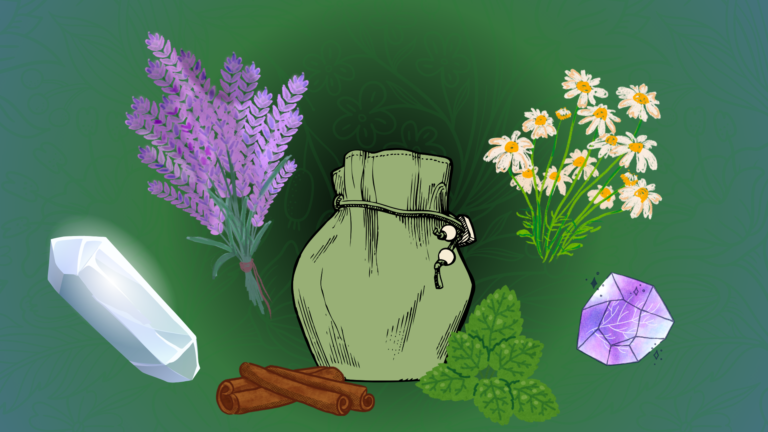
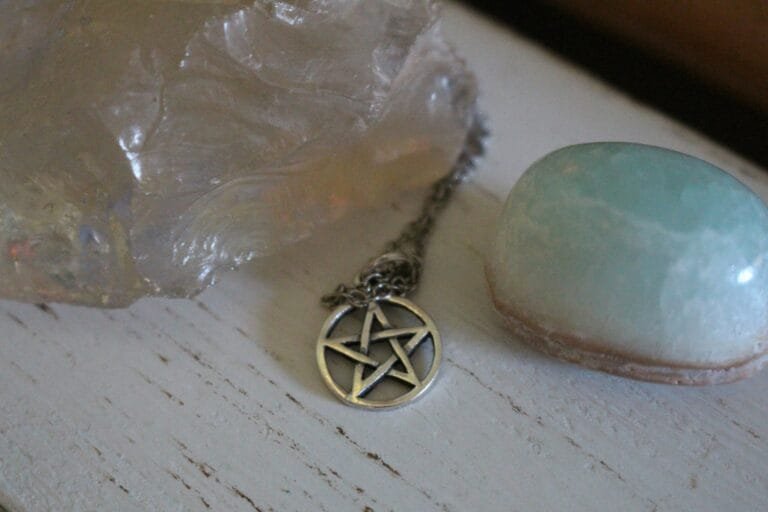
In Hoodoo, black tourmaline, a High John the Conqueror root and a mojo bag filled with protective herbs and minerals serve the same function. In European folk magic, iron has been protective against malign influences since the pre-Christian era.
Working with Deities and Spiritual Allies
If you have an established relationship with a deity or spiritual ally, calling on them for jinx removal is one of the most direct approaches available. The specific deity appropriate to the work depends on your tradition.
In Hoodoo, St. Michael the Archangel is widely called upon for protection and uncrossing work, often through candle work and prayer combining folk magic and Christian elements. In Wiccan practice, deities associated with protection and justice serve this function: Hecate as guardian of thresholds, Athena for justice-related uncrossing, Brigid for purification. In Yoruba-derived traditions including Santería, Ochossi governs justice and the clearing of obstacles while Eleggua presides over crossroads and the removal of blockages. In Celtic practice, Morrigan can be called upon for protection and the severing of conditions that have been placed on you.
Whatever tradition you work within, an offering accompanied by a specific request tends to be more effective than a general call for help. Be clear about what you are asking and express genuine gratitude whether or not the condition resolves immediately.
Addressing the Psychological Layer
Most experienced practitioners acknowledge that jinxes have both an energetic and a psychological dimension. The fear of being jinxed, particularly after making an overconfident statement, creates a state of hypervigilance in which every small misfortune feels like confirmation of the condition. This feedback loop can sustain a jinx long after its energetic basis has been cleared.
Identifying the thought pattern and consciously interrupting it is not an alternative to energetic work but a complement to it. Journaling, naming the fear directly and deliberately redirecting attention toward what is going well in your life all reduce the psychological amplification that makes minor misfortune feel larger than it is.
Frequently Asked Questions
What is the difference between a jinx, a hex and a curse?
A jinx is minor, temporary and often accidental. It tends to affect one area of life for a short period and typically resolves with basic cleansing. A hex is deliberate magical harm, more targeted and more persistent than a jinx, usually requiring specific reversal work. A curse is the most serious level: intentional, sustained and potentially generational, requiring deeper and repeated work to break. If what you are experiencing feels serious and sustained across multiple areas of your life, read How to Get Rid of a Hex or How to Get Rid of a Curse instead.
Can you jinx yourself?
Yes. This is actually one of the most common sources of a jinx in both folk belief and in psychological terms. Making an overconfident statement, expressing certainty about a positive outcome before it has happened or speaking a fear aloud as if it were already true can all create the conditions for a self-generated jinx. The folk practices of knocking on wood, crossing fingers and spitting three times exist specifically to counteract this.
How long does a jinx last?
A jinx is by definition temporary. In most folk magic frameworks it lasts days to a few weeks and often resolves on its own once the initial cause is no longer active. If what you are experiencing has lasted for months or is affecting multiple major areas of your life, it is likely something heavier than a jinx.
Does the evil eye cause a jinx?
The evil eye, known as nazar in Turkish and Arabic tradition, ayin hara in Hebrew, malocchio in Italian and drishti in Indian folk belief, is one of the most documented sources of jinx-like conditions across world traditions. In Islamic theology the Prophet Muhammad confirmed its reality and ruqyah, the recitation of specific Quranic verses, is the prescribed response. In Jewish tradition the phrase b’li ayin hara, meaning without an evil eye, is spoken proactively to prevent its effects. In Italian folk practice the malocchio is diagnosed and removed through specific oil-and-water tests and prayer. The evil eye functions like a jinx in most traditions: real, external, tied to envy and addressable through cleansing and protective practice.
What herbs are best for removing a jinx?
Rosemary is one of the most universally documented herbs for purification and protection across European folk magic traditions. Rue, called ruta, is the primary jinx-breaking herb in both Hoodoo and Italian folk magic. Hyssop appears specifically for purification in both the Bible and Hoodoo practice. Sage is used for atmospheric cleansing across Native American and European traditions. Bay laurel and lemon have purifying properties in Mediterranean folk practice. In Hoodoo, specific uncrossing herb blends including five-finger grass, van van herb and lemon verbena are used in baths and floor washes.



[…] For full removal guidance see How to Get Rid of a Jinx. […]
[…] hex sits in the middle of the three-tier scale of magical harm: heavier than a jinx and lighter than a full curse. For a full comparison of all three see Jinx, Hex and Curse: […]
[…] three conditions see Jinx, Hex and Curse: What’s the Difference?. If you have worked through jinx removal and hex breaking without resolution or if what you are experiencing has the characteristics of […]