
Divination is much more than trying to predict the future. At its core, divination is a method of tapping into your inner wisdom, the energy around you and even the universe itself. While it can offer glimpses of future possibilities, its true power lies in guiding self-reflection, providing insights into your current circumstances and revealing hidden truths.
Here are the most common tools and techniques, along with how each one actually works.
Tarot Cards
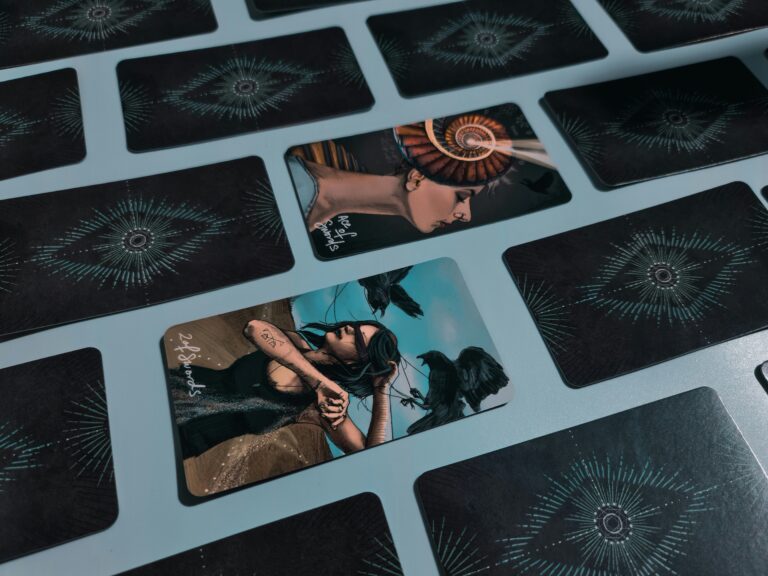
Tarot is perhaps the most popular form of divination today. A traditional tarot deck consists of 78 cards divided into the Major Arcana and Minor Arcana, each carrying its own symbolism and meaning. During a reading, cards are drawn and laid out in a spread, and the imagery of each card provides insight into your current situation, your subconscious mind and possible future directions.
What makes tarot particularly powerful for self-reflection is the way it surfaces what is already operating beneath awareness. The cards do not so much tell you something new as help you see clearly what you already sense but have not yet named. For divination purposes, tarot reads the energy surrounding a situation and points toward what is likely to unfold if current patterns continue.
Tarot Cards: A Complete Beginner’s Guide to Reading the Deck
Oracle Cards
Oracle cards are a more flexible alternative to tarot. Unlike tarot, oracle decks have no fixed structure. Each deck is built around its own theme and system, which makes them easier to approach for beginners while still offering genuine depth. You draw one or more cards while focusing on a question or situation, and the imagery and guidebook interpretations help you access intuitive answers.
Because oracle decks are thematically focused, they often speak directly to emotional and spiritual themes in ways that feel immediately personal. They work particularly well for questions about relationships, transitions and inner blocks. The energy they reflect tends to be more open and less structured than tarot, which some readers find more accessible and others find less precise.
Vera Sibilla
The Vera Sibilla Italiana is one of the oldest oracle card traditions in Europe, originating in 18th-century Italy. It consists of 52 cards organized into four suits, each depicting figures, situations and symbols drawn from Italian folk culture and everyday life. Unlike modern oracle decks, the Vera Sibilla has a fixed system of meanings that has been passed down through generations of readers.
Readings with the Vera Sibilla tend to be concrete and situation-specific, describing the people, dynamics and likely outcomes of real-life circumstances rather than abstract spiritual themes. It is an especially strong tool for questions about relationships, work and practical decisions.
Vera Sibilla Italiana: Complete Guide to All 52 Cards and Their Meanings
Playing Cards and Cartomancy
Long before tarot became widely available, people used ordinary playing cards for divination. Cartomancy is the practice of reading a standard 52-card deck for insight and guidance, and it has been practiced across Europe since at least the 18th century. Each suit carries a specific domain: Hearts for emotions and relationships, Clubs for action and challenges, Diamonds for practical and financial matters and Spades for transformation and difficult truths.
The familiar feel of a regular card deck can actually be an advantage. There is less ceremonial weight attached to playing cards than to tarot, which sometimes makes it easier to stay focused on the question rather than getting caught up in elaborate symbolism. The system is flexible enough to work with a full 52-card deck or a reduced deck for quicker readings.
How to Read Playing Cards for Divination: History, Meanings and Sample Spread
Runes
Runes are an ancient system of symbols used by Germanic and Nordic cultures, with the oldest inscriptions dating to around the 2nd century CE. A traditional rune set consists of 24 symbols, each corresponding to a specific concept or force such as strength, journey, protection or transformation. They are typically made of wood, stone or bone and are drawn or cast to gain insight into a situation.
What distinguishes runes from card-based systems is their directness. Each rune carries a compact, concentrated meaning rather than a complex narrative, which makes them effective for cutting through overthinking and arriving quickly at what matters. They are also used actively in magic, carved onto objects or worn as talismans for specific purposes rather than just consulted as a divination tool.
Runes: A Historical Overview
Runes: Modern Meanings and Uses
Pendulums
A pendulum is one of the simplest divination tools available. It is any weighted object suspended from a string or chain, held steady while a question is asked and allowed to swing freely in response. The direction of movement is interpreted as yes, no or something more ambiguous depending on the calibration the reader has established with their pendulum.
The interesting thing about pendulum work is what it actually accesses. The movement is generated by ideomotor response, tiny involuntary muscle movements that reflect what is happening below conscious thought. The pendulum does not receive answers from outside. It externalizes what your own system already knows, which makes it a particularly honest tool for questions where the rational mind has a strong preference about the outcome.
Pendulum Divination: A Guide to Tools, Usage and Free Printable Boards
Scrying
Scrying involves gazing into a reflective or translucent surface to receive visions, symbols or impressions. Common surfaces include crystal balls, dark mirrors and bowls of water, though any still reflective medium can work. The practice requires a calm and receptive mental state. The gaze softens rather than focuses, and images or impressions surface in peripheral awareness rather than appearing sharply in the center of vision.
What appears during scrying tends to be symbolic rather than literal. Shapes, colors and movements carry meaning that the reader interprets through their own intuitive and symbolic vocabulary. For this reason scrying is considered one of the more advanced forms of divination. It produces less structured information than card systems or runes and requires more developed interpretive skill.
Mirrors in Magic: Portals, Protection and Traditions
Numerology
Numerology uses numbers derived from your birth date and name to reveal patterns in personality, life themes and timing. It is one of the oldest systems of symbolic interpretation, with roots in Pythagorean philosophy and ancient Chaldean traditions. Your life path number is calculated by summing the digits of your full birth date and reducing them to a single digit or one of the three master numbers, 11, 22 or 33, which are not reduced further because they carry a distinct intensity.
Each number describes a specific energetic structure with real implications for how a person experiences challenge, builds their life and relates to others. Beyond the life path number, numerology includes a timing system of personal year cycles that describes the dominant theme of each year in your life. This makes it useful not just for self-understanding but for recognizing what a particular period is actually asking of you.
Life Path Numbers Explained: What Numerology Actually Reveals About Who You Are
Astrology
Astrology is the study of how the positions of celestial bodies relate to patterns in human life. Your natal chart is calculated from your exact birth date, time and location and describes the symbolic landscape you were born into. The positions of the sun, moon, planets and key points are analyzed in relation to each other and to the signs and houses they occupy, creating a detailed map of your core nature, your challenges and the themes your life is structured around.
For divination purposes, astrology works through transits and progressions, the ongoing movement of planets in relation to your natal chart. This produces one of the most precise timing systems available in any divinatory tradition, capable of describing not just what kind of event might unfold but when the conditions for it are most active.
I Ching
The I Ching is an ancient Chinese divination system using 64 hexagrams to offer guidance on questions and situations. It is one of the oldest written texts in existence, with roots going back over three thousand years. Three coins or yarrow sticks are used to generate a hexagram, and each hexagram corresponds to a specific teaching that speaks to the nature of the situation being asked about.
The I Ching is unlike most Western divination systems in that it rarely gives a direct answer. Instead it reflects the deeper dynamics of a situation back to you and challenges you to consider your own role in what is unfolding. Its guidance is philosophical and often asks you to sit with the tension of a question rather than resolve it quickly.
Tea Leaf Reading
Tea leaf reading, known as tasseography, is the practice of interpreting patterns left by loose-leaf tea at the bottom of a cup after drinking. After finishing the tea, the patterns formed by the remaining leaves are read by the interpreter. The position of shapes in the cup relates to timing and significance, with symbols near the rim generally indicating near-future events and those deeper toward the base pointing to longer timescales or underlying influences.
Tasseography is one of the most intuitive and least codified forms of divination. There are traditional symbol meanings passed down through British, Turkish and Irish folk traditions, but much of the interpretation depends on the reader’s symbolic instinct and what the shapes evoke in the moment. It rewards practice and a willingness to trust associative thinking over fixed meanings.
Where to Begin
Every divination system works by creating a structured way to engage with the symbolic layer of experience. They give you a framework for asking a question and receiving an answer in a form that bypasses purely logical analysis. Whether you believe divination accesses something beyond ordinary perception or view it as a psychological tool, the effect is the same: access to insight that was not available through ordinary thinking alone.
The best place to start is with a system that appeals to you visually and intuitively. Try one method consistently for a few weeks before moving to another. The depth comes from relationship with a specific system over time, not from sampling many at once.
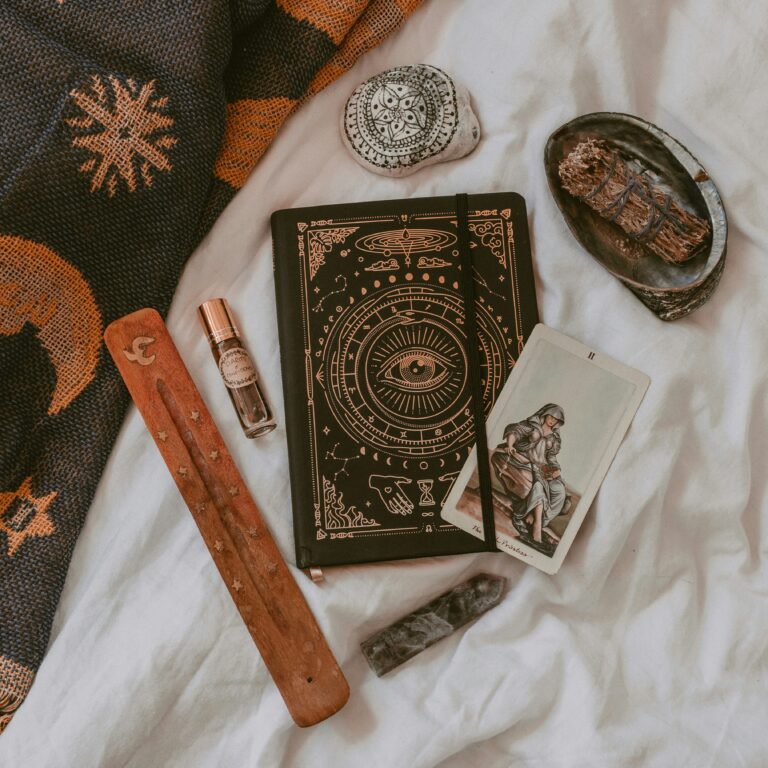
Photo by Jen Theodore on Unsplash



[…] and other still surfaces. For a fuller overview of scrying alongside other divination methods, Divination Basics: Exploring the Art of Self-Reflection and Insight covers the wider […]