
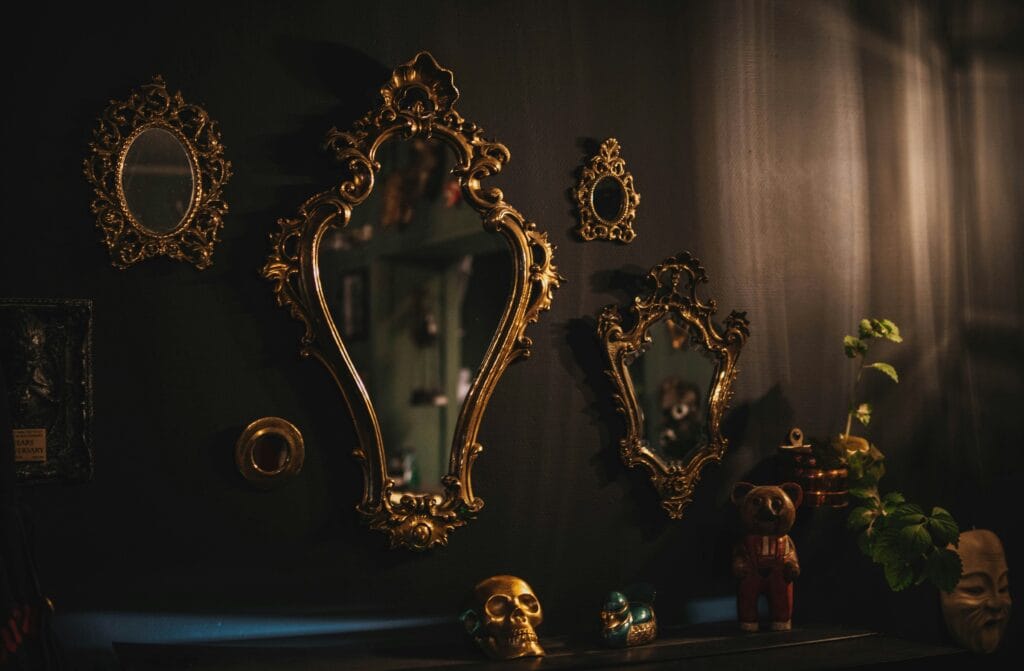
Mirrors have never been just functional objects. Long before glass mirrors existed, humans gazed into still water, polished obsidian and burnished metal and understood instinctively that a surface which shows you yourself might also show you something more. The reflection you see is you and yet not you, present and reversed at once, real and slightly off. That quality, that liminality, is exactly what made mirrors so central to magical practice across thousands of years and dozens of cultures.
Today, mirrors remain among the most versatile tools in witchcraft. They are used for divination, protection, reversal work and spirit communication. They are subject to some of the most widespread folk beliefs still practiced today, from covering mirrors at death to the near-universal idea that breaking one brings seven years of misfortune. Understanding why mirrors carry this weight, historically, symbolically and practically, makes working with them far more intentional.
What Is the History of Mirrors in Magic?
The formal term for mirror divination is catoptromancy, from the ancient Greek words katoptron (mirror) and manteia (divination). It is among the oldest documented forms of scrying, practiced by the ancient Egyptians, Persians, Greeks, Romans and countless other civilizations. The fact that these cultures developed mirror magic independently, often without direct contact with each other, suggests that something about reflective surfaces consistently invites the same intuitions and uses.
Glass mirrors as we know them did not exist in the ancient world. The earliest magical mirrors were natural reflective materials: still pools of water, polished obsidian, bronze and copper discs and bowls of dark liquid or ink. The principle was always the same: provide a surface that absorbs rather than scatters light, quiet the rational mind and allow deeper perception to surface.
John Dee, the Elizabethan mathematician, occult philosopher and advisor to Queen Elizabeth I, is among the most documented historical mirror workers. From the late 1570s onward and more intensively throughout the 1580s, Dee worked with Edward Kelly using a polished obsidian mirror to attempt communication with angelic intelligences. Compositional analysis has confirmed that this mirror, now on display at the British Museum in London, originated in Mexico, made from the same volcanic glass used by Aztec priests centuries before it reached Europe.
That mirror’s journey is itself a piece of magical history. It was brought to Europe after the Spanish conquest of Mexico, where obsidian had been sacred to the Aztec deity Tezcatlipoca for centuries. When it entered Dee’s collection, it carried an entirely different cultural meaning. He reframed it within Hermetic and Kabbalistic frameworks and used it for purposes Aztec priests would not have recognized. The mirror’s physical form traveled. Its ritual function transformed entirely depending on who held it.
How Have Different Cultures Used Mirrors in Magic?
Ancient Egypt
The Egyptians connected mirrors directly to the soul and to the afterlife. Funerary manuscripts known collectively as the Book of the Dead describe a ritual in which the recently deceased could use a mirror to reunite with their mortal soul by looking at their own reflection in the afterlife. Mirrors have been found inside Egyptian burial tombs, placed there to serve this transitional function.
The goddess Hathor, associated with beauty, femininity and the sky, appears in several legends holding or creating a reflective surface. One account describes her carrying a shield polished to serve as a mirror, capable of reflecting all things in their true nature. Some later texts credit her with creating the first magic mirror from this shield.
Ancient Greece and Rome
The Greek traveler Pausanias described a specific catoptromancy practice at the Temple of Demeter at Patras: a mirror was suspended on a thread and lowered until it touched the surface of a sacred fountain. A sick person would gaze into the mirror after prayers and incense offerings and the quality of their reflection was said to reveal whether they would recover or die. This was a localized and structured ritual, not informal folk magic.
In ancient Rome, priests skilled in mirror reading were formally called specularii. Mirror divination occupied an ambiguous position in Roman religious culture: tolerated when conducted through official institutions but viewed with suspicion as a private practice. Roman authors including Pliny noted the belief that polished surfaces could summon images of gods or spirits, with a mixture of curiosity and concern that characterized Roman attitudes toward many forms of divination.
Hecate, the goddess of witchcraft, magic and the night, was associated with mirrors and the night sky across Greek and later Roman traditions. Obsidian mirrors in particular were linked to her cult and she was believed able to use reflective surfaces to perceive across realms.
The Aztecs and Mesoamerica
The Aztec deity Tezcatlipoca, whose name translates as Smoking Mirror, was one of the supreme deities in the Aztec pantheon and is inseparable from obsidian mirror magic. He is consistently depicted with a polished obsidian mirror as his primary attribute, worn on his chest, placed in his headdress or replacing his missing right foot, which according to myth was torn off by the primordial earth monster.
Tezcatlipoca was the lord of the night, the jaguar, sorcery and fate. His mirror was said to reveal all things: the actions of enemies, the truth of a person’s destiny and the hidden workings of the cosmos. Aztec priests used obsidian mirrors called tezcatl in ceremonial practice for divination and for conjuring visions. This tradition predates the Aztecs themselves: obsidian mirrors appear in Olmec ritual deposits over a thousand years earlier and the Classic Maya deity K’awil was so associated with mirror divination that one way to write his name in hieroglyphs was a mirror symbol.
Chinese Feng Shui and the Bagua Mirror
In Chinese tradition, mirrors are used to direct, deflect and balance the flow of chi, the vital energy that moves through spaces and affects every aspect of life. The most well-known magical mirror in this context is the bagua mirror: an octagonal frame containing a central mirror and marked with the eight trigrams of the I Ching. The octagonal shape represents all eight directions and life areas simultaneously, making the mirror a complete protective symbol.
The bagua mirror is strictly an outdoor tool in classical feng shui. It belongs above the front door or main entrance of a home, facing outward toward whatever external threat or negative influence it is meant to deflect. The three types, flat, concave and convex, serve different functions. A flat bagua mirror reflects simply what stands before it. A convex mirror disperses and reflects away strong negative energy or sha qi directed at a property. A concave mirror gathers and absorbs, useful when a location near difficult energies requires neutralizing rather than deflection.
Placing a bagua mirror inside the home is considered inappropriate in classical feng shui practice: the mirror’s active, reflective energy is wrong for interior spaces and there is a specific concern that aiming it at a neighbor’s door constitutes an act of energetic aggression.
European and Slavic Folk Traditions
Across European folk traditions, mirrors held power over the soul in ways that required careful management. In many Slavic and Eastern European cultures, it was believed that mirrors could capture or steal the soul of anyone reflected in them. This belief gave rise to the widespread practice of covering all mirrors in a home where someone had recently died, so the departing soul could leave peacefully without becoming trapped in the glass.
Similar practices existed in Jewish mourning customs (shiva), in many rural Christian traditions and in Victorian England. The specifics varied but the underlying logic was consistent: a reflective surface is a threshold and the recently dead are particularly vulnerable to becoming caught in thresholds.
The superstition that breaking a mirror brings seven years of bad luck is connected to the same logic. The mirror holds something of your reflection, which is to say something of you. Damage the mirror and you damage what it contains.
In folk magic practice across Britain, mirrors were sometimes used to identify witches or find the source of hexes. A crystal ball immersed in water or a mirror specially prepared through magical rites was believed capable of showing the face of whoever had cast ill-wishing. The church condemned these practices, though this seems to have done more to drive them underground than to end them.
How Are Mirrors Used for Scrying and Divination?
Scrying with mirrors, formally called catoptromancy, is the practice of gazing into a reflective surface in a relaxed, unfocused state to receive visions, symbolic imagery or impressions. It belongs to a broader category of divination through reflective media that includes crystal balls, bowls of water and other still surfaces. For a fuller overview of scrying alongside other divination methods, Divination Basics: Exploring the Art of Self-Reflection and Insight covers the wider landscape.
The key distinction of mirror scrying compared to card systems or runes is that it produces less structured information. A tarot spread has defined positions and a card in each position. A scrying session has whatever emerges. This makes mirror scrying one of the more demanding divination practices in terms of interpretive skill: you must be comfortable sitting with ambiguity and working with symbolic rather than literal imagery.
How to approach a mirror scrying session:
Preparation matters more than technique. Choose a quiet time when you will not be interrupted. Dim the space significantly. Candlelight works well because it provides minimal, warm illumination without creating distracting reflections. If you have a dedicated magical mirror, cleanse it before use. Set a clear intention, whether a specific question or an open receptive state.
When you begin gazing, soften rather than focus your vision. You are not looking at the surface of the mirror but through or beyond it. Peripheral awareness tends to produce more results than direct staring. What appears is typically symbolic rather than literal: shapes, colors, movements or fleeting impressions that carry meaning within your own symbolic vocabulary.
Allow at least 15 to 20 minutes in the receptive state. Experiences during scrying vary considerably. Some practitioners perceive visual imagery clearly. Others receive impressions, feelings or sudden thoughts that feel externally originated. Some sessions produce nothing discernible. Consistency in practice tends to develop the skill over time.
Record what you receive as soon as the session ends. Dreams and scrying visions share a quality of dissolving quickly when not immediately captured. A dedicated section of your grimoire or book of shadows is useful for this.
How Do You Use a Mirror for Protection in Witchcraft?
The protective logic of mirrors is simple and ancient: a mirror reflects. Whatever is directed at it can be sent back to its source. This principle appears in the bagua mirror of Chinese feng shui, in the placement of mirrors facing entrances across European folk traditions and in modern witchcraft practice.
Basic protective placement: A mirror positioned near or facing the main entrance of your home is a traditional method for reflecting negative energy, ill-wishing or harmful intent back before it enters your space. The mirror should face outward, toward whatever you want to deflect. This is most effective when the mirror has been cleansed and charged specifically for this purpose rather than used as a general household mirror.
Mirror spell for protection:
Cleanse a small mirror using smoke from protective herbs such as sage, rosemary or cedar or by wiping it with saltwater. Salt is a foundational protective ingredient in witchcraft with a long documented history of this use, covered in depth in Salt in Witchcraft. As you cleanse, state clearly that this mirror serves to deflect and return harmful energy. Position it facing the direction of whatever you want to guard against.
For a more formal working, you can inscribe a protective sigil on the back of the mirror using permanent marker or oil. Sigil Magic: A Complete Practical Guide to Creating and Charging Sigils explains sigil creation in detail. The sigil is hidden on the back of the mirror while the reflective surface faces outward.
Re-cleanse protective mirrors regularly, particularly if you feel the energy in your space has become heavy or if there has been conflict. A mirror that has been absorbing or deflecting for some time benefits from being cleared and recharged.
What Is Mirror Reversal Magic?
Reversal magic uses a mirror’s reflective property to send something back to its source. This differs from basic protection, which is primarily about defense. Reversal work is active: it identifies a specific situation, person or energy pattern and directs it back along the path it came.
Approaches to reversal magic vary considerably across traditions and the ethics involved are worth considering honestly. Some practitioners work reversal magic as a form of justice, returning harm to whoever originated it without any personal attachment to what happens next. Others have concerns about the potential for escalation or unintended consequences. This is a decision each practitioner must make according to their own values and framework.
A simple mirror reversal working:
Write the name of the situation or the specific energy you want to return on a piece of paper. Place the paper against the reflective surface of a mirror, facing inward toward the glass. Visualize the mirror absorbing what is written and sending it back along its original path. Many practitioners seal the paper to the back of the mirror with black wax or cord while the working is active, then burn the paper once they feel the situation has resolved.
A black candle is commonly used alongside reversal mirror work. For details on candle colors and their magical uses, Candle Magic: A Beginner’s Guide to Candle Colors and Their Meanings provides a practical reference.
What Are the Rules for Mirror Placement in the Home?
Beyond formal magical workings, mirrors carry symbolic weight in everyday placement. Several traditions offer guidance on where mirrors help and where they cause disruption.
The bedroom: The most consistent recommendation across feng shui and folk traditions is to avoid placing a mirror where it directly reflects the bed. In feng shui, this is believed to disturb sleep and create instability in relationships. In folk traditions, the concern is more oriented toward spirit work: mirrors facing a sleeping person are thought to make the sleeper vulnerable during the lowered awareness of sleep. Whether you interpret this symbolically or practically, a mirror that catches your reflection first thing upon waking can have subtle effects on how you start your day.
Two mirrors facing each other: Placing two mirrors directly opposite each other creates an infinite regression of reflections. In many magical traditions this is considered energetically destabilizing, creating a loop that can trap energy or become difficult to control. In practical terms it can also create a disorienting visual environment.
Opposite the front door: A mirror placed directly across from the main entrance to a home will reflect incoming energy straight back out. In feng shui this specifically sends chi (including positive energy entering the home) immediately back the way it came, creating a sense of emptiness or stagnation. If you want a mirror near an entrance for protection, it should face the entrance from an angle or from the side rather than directly opposing it.
The dining room: In feng shui, the dining room is one of the better locations for a mirror because the table and food symbolize abundance. A mirror reflecting a set table is said to double the prosperity energy of the space.
Covering mirrors: The practice of covering mirrors during mourning, illness or significant ritual work appears across many traditions. The logic varies: protecting the soul of the recently deceased, preventing the sick from seeing a weakened reflection that might worsen their condition or simply removing reflective surfaces that could distract from or interfere with focused ritual space. Any of these reasons remains a valid consideration in modern practice.
How Do You Cleanse and Charge a Magical Mirror?
A mirror used in magical practice should be cleansed when you first acquire it and regularly thereafter, particularly after scrying sessions, protective work or any time the mirror has been used to interact with difficult energies.
Cleansing methods:
Smoke cleansing with protective herbs is among the most common methods. Pass the mirror through the smoke of sage, rosemary, mugwort or cedar, covering both the reflective surface and the back. As you do this, hold the intention that the mirror is cleared of everything it has absorbed.
Saltwater cleansing works well for mirrors without wooden frames or delicate finishes. Wipe the surface with water in which a small amount of sea salt has been dissolved. Salt’s cleansing properties in witchcraft are rooted in centuries of folk practice.
Moonlight is frequently used to both cleanse and charge mirrors. Place the mirror where it will receive direct moonlight overnight, ideally at or near the full moon. This method requires no action on your part beyond placement and intention: the moon’s light does the work. Many practitioners find that a moon-charged mirror feels distinctly different during scrying afterward.
Charging for specific purposes:
Once cleansed, you can charge a mirror for a particular use. For a scrying mirror, hold it and visualize clear, truthful vision. Speak or think your intention directly into the glass. For a protective mirror, focus on the quality of the protection you want: reflecting, absorbing or neutralizing.
Mirrors dedicated to specific purposes benefit from being kept wrapped in cloth when not in use, shielded from casual viewing and kept away from regular household mirrors. Many practitioners use black velvet or silk for this, which also protects the surface from scratches and dust.
What Folklore and Superstitions Surround Mirrors?
The folklore of mirrors is global and remarkably consistent in certain themes, suggesting that mirrors consistently produce the same questions across cultures regardless of the tradition in which people encounter them.
Breaking a mirror: The belief that breaking a mirror brings seven years of bad luck is recorded across European, North African and Middle Eastern traditions. The reasoning in Roman times was that the soul renewed itself every seven years, so a damaged reflection meant seven years of damaged fortune until the soul refreshed itself. The underlying logic connects back to the belief that a mirror holds something of the person it reflects.
The vampire and the mirror: The folklore that vampires cast no reflection is relatively recent in historical terms, appearing primarily in 19th-century European literature. The folk logic connected to it is older: a reflective surface reveals the soul and a creature without a soul would produce no image. This appears in various forms across traditions, specifically the idea that certain supernatural beings either cannot be reflected or appear distorted in mirrors.
Bloody Mary: The tradition of gazing into a darkened mirror on Halloween to see one’s future spouse or a skull warning of early death is documented across Britain, Ireland and parts of Europe for several centuries. The more modern Bloody Mary variant, in which a name is chanted before a bathroom mirror, follows the same structural logic: create conditions of altered attention and reduced light, gaze into the reflective surface and allow the mind to surface imagery that the ordinary waking state suppresses.
Soul theft: The belief that mirrors can steal or trap souls appears in Slavic, West African and various other traditions. This belief produced the mourning practice of covering mirrors, the folk prescription against letting a sick person see their reflection and the superstition that seeing a corpse’s reflection in a mirror risks carrying off the viewer’s soul along with the dead.
FAQ
What is catoptromancy?
Catoptromancy is the formal name for divination using mirrors or reflective surfaces. The term comes from the ancient Greek words for mirror and divination. It is among the oldest documented forms of scrying, practiced across ancient Egypt, Greece, Rome, Persia, Mesoamerica and China. The practice involves gazing into a reflective surface in a relaxed, receptive state to receive visions or impressions.
What kind of mirror is best for scrying?
Black mirrors, usually made from polished obsidian or glass painted black on the reverse, are the most traditional and widely used scrying surfaces. The dark, non-reflective quality reduces visual distraction and creates the low-structure visual field that supports the relaxed attention scrying requires. Regular mirrors can be used, particularly in dim light. A bowl of dark water is one of the oldest and most accessible alternatives.
Is it bad luck to break a mirror?
The belief that breaking a mirror brings seven years of bad luck is widespread and historically documented across multiple cultures, primarily European and Mediterranean traditions. The folk reasoning connected to it is that a mirror holds something of the soul of whoever it reflects, so damaging it damages the person’s fortune until the soul renews itself. Whether you treat this as superstition or take it as a signal to be mindful about how you handle reflective tools in your practice is a personal choice.
Should I cover mirrors during rituals?
Many practitioners cover mirrors when working rituals that require focused, contained energy. An uncovered mirror in a ritual space can become an unintended scrying surface, pull attention or create energetic openings that were not planned. Covering mirrors during serious workings is particularly common in traditions that treat mirrors as active thresholds rather than passive objects. During mourning or significant life transitions, covering mirrors is a traditional protective practice.
Can I use a regular household mirror for magic?
Yes, though many practitioners prefer to keep dedicated magical mirrors separate from mirrors used in daily life. A regular mirror can be cleansed and charged for magical purposes. The main consideration is that a mirror used daily for ordinary reflection has absorbed a great deal of varied energy and attention, which may make it less clean as a divination tool than a mirror kept specifically for practice. If you want to start mirror work without acquiring a new tool, cleanse a household mirror thoroughly before use and set a clear intention.
What does it mean if a mirror cracks on its own?
In folk belief, a mirror cracking spontaneously is treated as a significant omen, often connected to the household’s fortune or a warning of change. In a magical context, if a mirror used for protection cracks, some practitioners interpret this as the mirror having absorbed something significant or having completed its work. Dispose of a cracked protective mirror respectfully: wrapping it in cloth, burying it or placing it in flowing water are traditional methods.
How do I dispose of a magical mirror?
A mirror used in magical practice, particularly one used for reversal work or spirit communication, benefits from being properly cleared before leaving your hands. The first step is always a thorough magical cleansing: smoke from sage, cedar or rosemary, a wipe with saltwater or a night in moonlight. Once the mirror is energetically cleared, the most practical options are often the simplest. Donating it to a charity shop or passing it on to someone who wants it is a perfectly reasonable choice for a whole mirror, provided it has been cleansed first. Recycling is also a responsible option where available.
If the mirror was used for particularly heavy work and you want to make sure it is fully decommissioned, traditional folk methods include wrapping it in cloth and burying it or leaving it at a crossroads. Whatever method you choose, the key step is the cleansing. A cleared mirror can safely be handled by others without carrying your working with it.
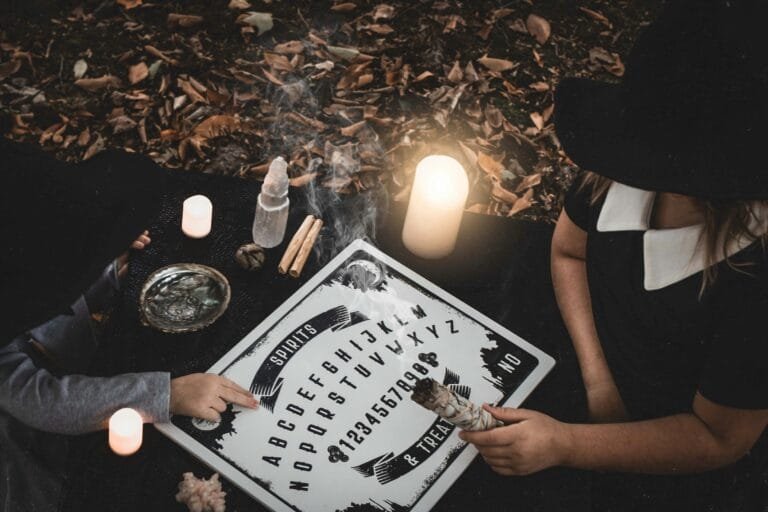
Photo by Tuva Mathilde Løland on Unsplash





This piece feels like a gentle invitation to think more deeply, while never losing the sense of wonder.
[…] Mirrors in Magic: Portals, Protection and Traditions […]