The snake has held profound symbolic meaning across virtually every major religion, spiritual tradition and culture throughout human history. Its interpretations are remarkably diverse and often contradictory, ranging from representing evil and temptation to embodying wisdom, transformation and life force energy itself. This duality reveals something essential about the serpent: it is a symbol of the fundamental paradox of existence, where destruction and creation coexist, where death leads to rebirth and where the most dangerous forces also contain the greatest healing power.
Understanding the snake’s role across different belief systems reveals patterns in how humans understand power, transformation and the divine. The serpent appears wherever there is deep spiritual knowledge to be found.
The Snake in Christianity
In Christian theology, the snake occupies a paradoxical position. On one hand, it is strongly associated with Satan, primarily due to the story of the Garden of Eden in the Book of Genesis. In this narrative, a serpent tempts Eve to eat the forbidden fruit, leading to the fall of humanity and the expulsion from paradise. This single tale has cemented the snake as a symbol of sin, deceit, temptation and spiritual corruption in Western Christian consciousness for thousands of years.
The association runs deep. In Christian iconography and theology, the serpent represents the enemy of God and humanity. It is the vehicle through which Satan operates in the world. This interpretation has shaped Western culture’s relationship with snakes as creatures to fear and destroy.
However, there is another Christian interpretation often overlooked. Jesus himself invoked the serpent as a symbol of wisdom and cunning. In the Gospel of Matthew, Jesus tells his disciples: “Be wise as serpents and innocent as doves.” This suggests that the serpent, while dangerous, possesses a kind of intelligence and discernment that spiritual seekers should emulate. The snake is not inherently evil in this passage. It is a model of careful awareness.
Additionally, in the Book of Numbers, God instructs Moses to create a bronze serpent, the Nehushtan, which is lifted up in the wilderness so that those bitten by serpents might look upon it and be healed. Later, Jesus himself references this bronze serpent, comparing his own crucifixion to it as a symbol of salvation and healing. This reveals that within Christianity itself, the serpent can represent healing and redemption, not just temptation and fall.
This Christian ambivalence toward the serpent persists to this day, with snakes often portrayed as both threats and teachers in Christian symbolism and theology.
The Snake in Hinduism: Guardian, Creator, Teacher
In Hinduism, the snake occupies a position of supreme spiritual significance. The relationship with serpents is far more nuanced and reverent than in Western traditions. The snake is simultaneously dangerous and sacred, destructive and creative, feared and honored.
The serpent king Naga is considered a guardian of wealth, fertility and the natural world. Nagas are depicted as semi-divine beings, often shown as cobra-headed humanoids. They are protectors of the sacred and keepers of hidden treasure and knowledge. In Hindu temples, Nagas are honored and offerings are made to them for protection and prosperity.
The cosmic serpent Shesha, also called Ananta (infinite), is depicted as the foundation of creation itself. Shesha serves as the eternal bed of Vishnu, the supreme being and preserver of the universe. Shesha’s body forms the layers upon which all of creation rests. This serpent is infinite, eternal and absolutely essential to the cosmic order. Without Shesha, existence itself would not be possible.
In the myth of Samudra Manthan, the cosmic churning of the milk ocean, the serpent Vasuki plays a crucial role. Both devas (gods) and asuras (demons) use Vasuki as a rope to churn the cosmic ocean, seeking to obtain amrita, the nectar of immortality. This myth shows the serpent as the tool through which cosmic transformation occurs. The serpent facilitates the meeting of opposing forces and brings forth divine nectar and healing.
Kundalini, often represented as a coiled serpent at the base of the spine, is one of Hinduism’s most significant spiritual concepts. This dormant serpent energy, when awakened through yoga, meditation and spiritual practice, rises through the chakras and brings profound spiritual awakening and enlightenment. The serpent is not just a symbol in this context; it is the fundamental life force energy that animates existence and consciousness itself.
The Snake in Ancient Egypt: Divine Authority and Cosmic Order
In ancient Egypt, the serpent embodied both divine protection and cosmic chaos. This duality was essential to Egyptian understanding of the universe.
Wadjet (also called Wedjat or Uraeus), the cobra goddess, was a symbol of protection for Lower Egypt and for the pharaoh. The cobra was worn on the pharaoh’s crown as the Uraeus, symbolizing divine authority, protection and the eye of the sun god Ra. The cobra sits alert and ready to strike, defending the pharaoh and the realm from enemies and spiritual threats. This serpent is guardian and warrior.
Conversely, the serpent Apophis represents chaos, disorder and the forces that oppose creation and cosmic order. Apophis dwells in the underworld and must be defeated every night by the sun god Ra as he travels through the underworld on his eternal journey. This daily battle between Ra and Apophis represents the eternal struggle between order and chaos, light and darkness, creation and destruction. The snake is the primal force that must be continually overcome for existence to continue.
This Egyptian understanding reveals that the serpent bridges the realm of the divine and the realm of chaos. To ancient Egyptians, the same force that could protect could also destroy. Power is not moral. It simply is, and how it is used determines whether it creates or destroys.
The Snake in Greek Mythology: Wisdom, Healing and Monstrosity
In Greek mythology, snakes are consistently associated with healing, medicine and divine wisdom. Asclepius, the god of healing and medicine, is depicted carrying a staff entwined with a snake, the Rod of Asclepius. This symbol has become the universal symbol for medicine and healthcare. The serpent itself was considered healing by the ancient Greeks.
According to mythology, Asclepius learned from the serpent how to heal. The serpent became his teacher and his emblem. This reflects a deep understanding that the serpent, as a creature that sheds its skin, understands rebirth and renewal. The snake knows how to transform itself completely and emerge new. This knowledge is healing.
However, snakes also appear in Greek myths as agents of destruction and danger. Medusa’s hair was transformed into a nest of serpents as punishment, turning her into a monster whose very gaze could turn people to stone. Here the serpent is a curse, a mark of degradation and horror. Yet even Medusa’s serpents possessed power and commanded respect.
The Hydra, a many-headed serpent slain by Heracles as one of his Twelve Labors, represents a monster of impossible regeneration. Cut off one head and two grow back. This serpent embodies a threat that cannot be overcome through conventional means. The Hydra shows the snake as a creature whose power exceeds human capability.
The Snake in Witchcraft: Transformation, Ancient Power and Primal Magic
In witchcraft, the snake holds particular significance as a symbol of transformation and ancient power. The snake’s ability to shed its skin makes it a natural symbol for witches working with transformation magic, rebirth and the cycles of life and death.
The serpent is connected to earth magic and grounding. Witches who work with snakes often invoke them for protection, particularly around the home and personal space. The snake represents the capacity to remain still and alert, to strike swiftly when necessary and to shed what no longer serves.
In some witchcraft traditions, particularly those influenced by Hoodoo and folk magic, the black snake or black serpent is invoked for protection and banishment. The snake’s venom becomes a metaphor for the witch’s ability to remove harmful energy or people from her space. The snake is not evil in this context. It is a tool of defense and boundary-setting.
In Wicca and other pagan witchcraft traditions, the snake is often associated with the Goddess, particularly in her aspect of hidden knowledge, transformation and the cycles of nature. The serpent represents the chthonic (underworld) powers and the knowledge that comes from descending into darkness and returning transformed.
The Ouroboros, the ancient symbol of a serpent eating its own tail, is embraced by many witches and pagans. This symbol represents the eternal cycle of life and death, creation and destruction, beginning and end. It is a symbol of the paradox that endings are always beginnings and that destruction is always followed by creation. Witches work with this symbol to understand that their magical practice occurs within these eternal cycles.
Some witchcraft traditions see the snake as a familiar or spiritual ally. A snake appearing repeatedly in your life or dreams may be a sign that this ancient power is trying to establish relationship with you. Respect this. The serpent is not a pet. It is a power that demands proper protocol and understanding.
The Snake in Paganism: Earth, Fertility and Sacred Knowledge
Many pagan traditions, particularly those rooted in Celtic and Germanic mythologies, hold serpents in high regard as creatures of wisdom and sacred knowledge.
In Celtic symbolism, the serpent represents the earth itself, fertility, healing and the hidden knowledge that dwells within the earth. The serpent is a creature of both sky and earth, connecting the upper and lower worlds. Druids viewed the serpent as a being of profound wisdom and prophecy. The serpent was consulted, honored and respected.
The Celtic snake Nidhogg, which gnaws at the roots of Yggdrasil in Norse mythology, represents a power that keeps the cosmic tree vital and alive. Though it sounds destructive, the serpent’s action is essential. Destruction is not evil in this cosmology. It is necessary.
In Norse mythology, the serpent Jörmungandr (also called the Midgard Serpent) is one of the children of Loki and is so massive that it encircles the entire world, holding its tail in its mouth (like the Ouroboros). At Ragnarök, the end times, Jörmungandr will break free and cause the seas to flood the earth. Yet from this destruction, the earth will be renewed. The serpent is the agent of apocalyptic transformation. It destroys the old world so a new world can be born.
This Norse understanding reveals that the serpent is not evil, but transformative. The destruction the serpent brings is necessary for renewal.
Kundalini: The Serpent Fire Within
Perhaps the most significant serpent symbolism in contemporary spiritual practice is Kundalini, the coiled serpent energy located at the base of the spine. In Hindu tantra, yoga and other spiritual traditions, Kundalini is considered the source of all spiritual power and consciousness.
Kundalini lies dormant at the root chakra (Muladhara) until awakened through dedicated spiritual practice. When aroused through meditation, breathwork (pranayama), yoga asanas, tantra or other practices, the serpent rises through the central energy channel (Sushumna Nadi) of the body, passing through each of the seven chakras.
As Kundalini rises, it brings dramatic shifts in consciousness and perception. Practitioners report intense physical sensations, emotional releases, visions and profound spiritual experiences. The awakening of Kundalini is considered the goal of many spiritual paths because it brings direct experience of divine consciousness and union with the absolute.
This rising serpent is not gentle. Kundalini awakening can be intense, overwhelming and disorienting. The serpent burns away illusions and ego structures. It demands complete honesty and authenticity. Many spiritual teachers warn against forcing Kundalini awakening without proper preparation and guidance because the energy is so powerful.
The serpent in Kundalini work represents the raw, transformative power of the divine itself. It is neither good nor bad. It simply is, and those who work with it must surrender to its intelligence and timing.
The Snake as Spiritual Guide and Personal Power
In modern spiritual practice, snakes are increasingly viewed as spiritual guides and symbols of personal power. An encounter with a snake in dreams, meditation or daily life may be interpreted as a message from the spiritual realm.
Such encounters often signal themes of transformation, healing or the need to shed old beliefs and identities. The snake may be showing you that you are ready for major change. It may be warning you of danger. It may be inviting you into deeper power.
The snake’s ability to shed its skin and continuously renew itself is a powerful reminder that transformation is always possible. Nothing is permanent. Everything that has been can be released and replaced with something new.
Snakes as spiritual guides often represent personal power reclaimed. If you have feared snakes or been bitten by them, the snake may appear in your spiritual work as an invitation to transform your relationship with power itself. Can you see the serpent not as something to fear but as something to respect and work with?
The snake also represents the union of masculine and feminine forces, and when paired with yoni symbolism, shows the sacred dance between creation and receptivity. The serpent is both masculine penetrating energy and feminine transformative power.
FAQ
Why is the snake sacred in some traditions and evil in others?
The snake’s meaning is context-dependent and culture-dependent. In traditions focused on transformation, healing and natural cycles (Hinduism, paganism, witchcraft), the serpent is honored. In traditions emphasizing moral dualism and divine authority (Christianity), the serpent often represents opposition to divine will. The same animal can be both, depending on your lens.
What does it mean if I dream about snakes?
Snake dreams can indicate transformation, healing, fear or the need to shed something from your life. The emotion you feel in the dream matters more than the snake itself. Do you feel fear, curiosity, respect or power? Your emotional response shows what the snake is trying to communicate.
Is Kundalini awakening dangerous?
Kundalini is powerful and should be approached with respect and preparation. Working with an experienced teacher is recommended. The intensity of Kundalini awakening is real and can be overwhelming without proper grounding and support. However, gradual awakening through consistent practice is safe and transformative.
Can I work with snakes in my witchcraft?
Yes. You can invoke serpent energy for protection, transformation and grounding. You can wear serpent symbols or keep them on your altar. You can meditate on the snake’s ability to shed and renew. However, work with respect and understanding. The serpent is not a force to manipulate carelessly.
What does the Ouroboros mean?
The Ouroboros represents the eternal cycle of creation and destruction, life and death, beginning and end. It symbolizes that all opposites are ultimately unified and that endings are always beginnings.
Is the snake always a symbol of wisdom?
Not always. The snake can symbolize danger, temptation, chaos or venom as well as wisdom and healing. Context matters. In healing traditions, the snake is wisdom. In moral traditions focused on good versus evil, the snake can represent temptation and darkness. Both interpretations are valid within their frameworks.
How do I connect with snake energy spiritually?
Meditate on snakes. Study their behavior. Spend time observing real snakes if you can do so safely. Work with snake symbols or images. Invoke serpent energy in your spiritual practice. Most importantly, approach with respect. Ask the serpent what it wants to teach you and listen.
Is it bad luck to see a snake?
Not at all. In many traditions, seeing a snake is considered fortunate. It may be a sign that transformation is approaching or that you are being guided toward healing. The context of the encounter and your intuitive response matter more than any rule about luck.
Can the snake represent both good and evil?
Absolutely. This is part of what makes the serpent so spiritually significant. It transcends moral categories. The snake is powerful. Power itself is neutral. How it is used determines its effect.
What is the difference between a serpent and a snake spiritually?
Often these terms are used interchangeably. However, serpent can carry more mystical and mythological weight, while snake can feel more immediate and practical. The serpent is the cosmic principle. The snake is its earthly manifestation.
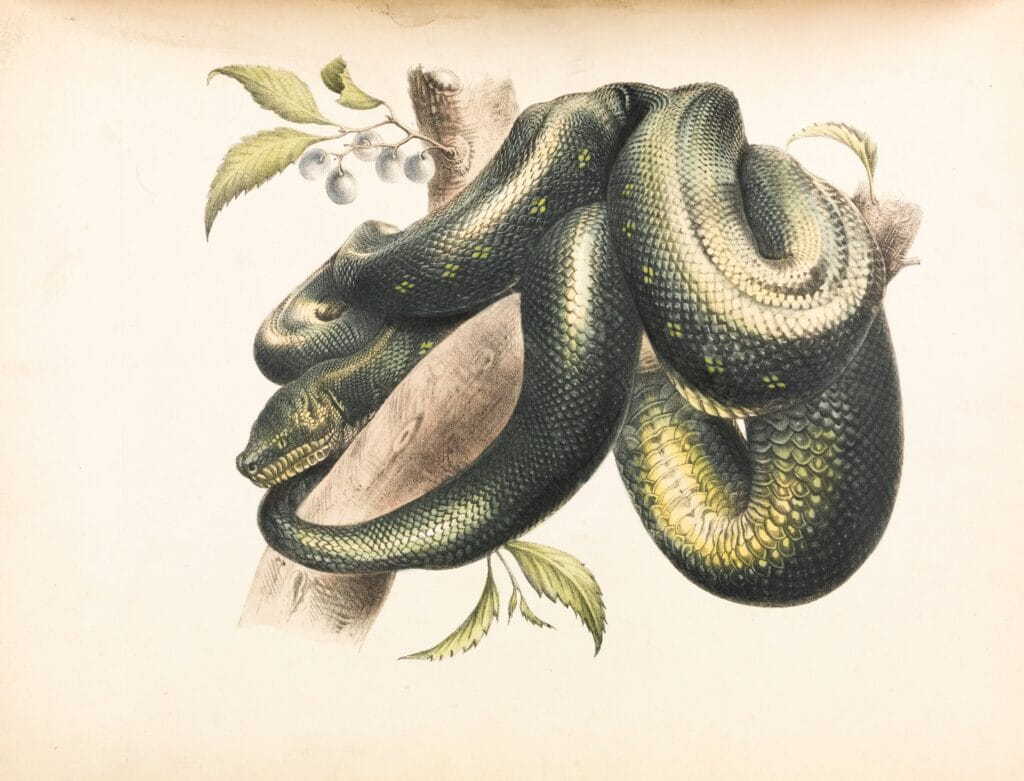
Photo by Museums Victoria on Unsplash