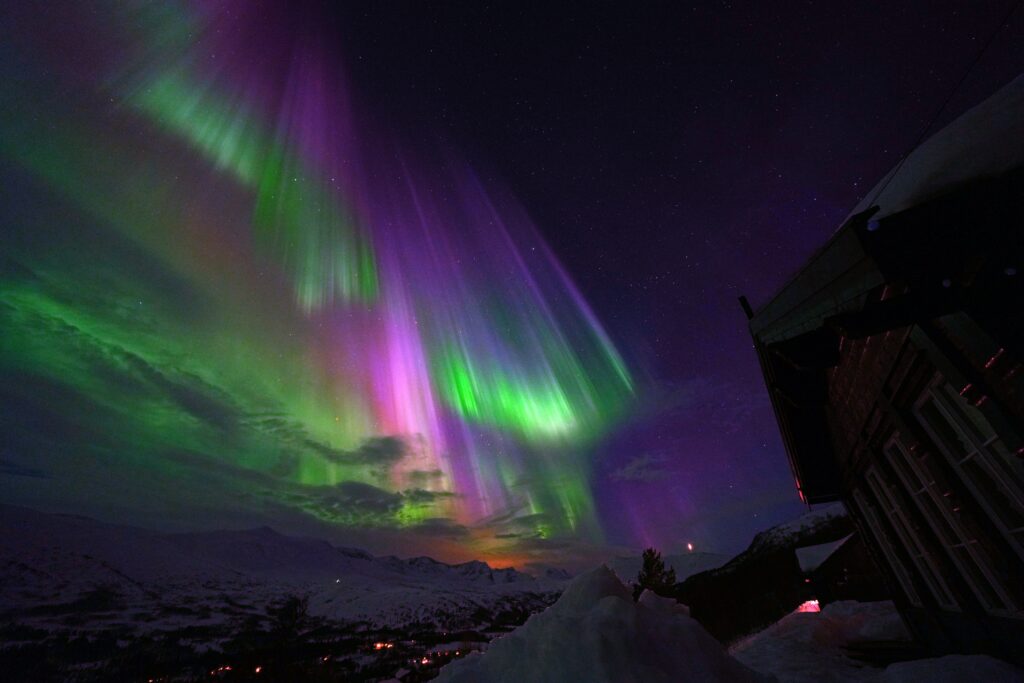
In Finnish folklore, the aurora borealis is explained through the legend of the fire fox. This magical creature runs across the snowy fells of Lapland, sweeping its great bushy tail against the snow. As the tail strikes, sparks fly upward into the heavens, painting the night sky with shimmering lights. The fire fox myth captures the awe of witnessing the aurora and reflects a worldview where animals, nature and magic are inseparably linked. Yet the fox is only one story among many: across cultures, the Northern Lights themselves are the true focus of myth, mystery and reverence.
What Are the Northern Lights in Myth and Magic?
Scientifically, auroras are caused by solar particles colliding with Earth’s atmosphere. But for centuries, people interpreted them as supernatural signs. The lights were seen as messages from gods, spirits or cosmic forces. Their sudden appearance in the dark winter sky carried deep symbolic meaning, often tied to life, death, fertility and renewal.
How Did the Sámi People Interpret the Aurora Borealis?
The Sámi, Indigenous people of northern Scandinavia, treated the aurora with reverence and caution.
- Respect and fear: Whistling at the lights was forbidden, as it was believed to draw them dangerously close.
- Spiritual connection: The aurora was thought to embody powerful spirits or omens.
- Shamanistic traditions: In Sámi cosmology, natural phenomena carried messages from the unseen world and the aurora was among the most potent.
What Did the Vikings Believe About the Northern Lights?
In Norse mythology, the aurora was often linked to battle and the afterlife.
- Warrior spirits: The lights were described as the reflection of Valkyries’ armor or the shields of warriors traveling to Valhalla.
- Divine gateways: The aurora was seen as a pathway between the human world and the gods.
- Symbol of strength: For Viking societies, the aurora embodied courage, protection and the eternal presence of their deities.
Why Did Inuit and Arctic Peoples See Spirits in the Sky?
Inuit and other Arctic Indigenous groups developed rich spiritual narratives around the aurora.
- Dancing spirits: The lights were believed to be the souls of ancestors playing or dancing in the sky.
- Guiding torches: In Greenland, auroras were thought to be spirits carrying lanterns to guide the newly dead.
- Warnings and omens: In some traditions, the aurora could signal war or disaster, reminding communities of the fragile balance between life and death.
What Role Did the Aurora Borealis Play in Asian Beliefs?
- Japan: Couples believed that children conceived under the aurora would be blessed with happiness and good fortune. The lights were linked to love and fertility.
- China: Ancient Chinese texts describe auroras as celestial dragons battling in the heavens, a powerful image of cosmic struggle and renewal.
- Symbolism: In both cultures, the aurora was tied to fertility, vitality and the eternal cycles of nature.
How Did Other Cultures Interpret the Northern Lights?
- North America: Some Native American tribes saw the lights as messages from the Great Spirit or as omens of future events.
- Medieval Europe: Auroras were sometimes feared as signs of plague, famine or war.
- Modern interpretations: Even today, the aurora inspires spiritual reflection, often seen as a reminder of the universe’s mystery and beauty.
Were the Northern Lights Seen as Pagan or Magical Signs?
Yes, many interpretations of the aurora are rooted in pagan traditions and magical thinking.
- Pagan symbolism: The lights were viewed as manifestations of gods, spirits or cosmic forces.
- Magic and ritual: In some cultures, auroras were incorporated into ceremonies for fertility, protection or divination.
- Seasonal cycles: The lights often appeared during the darkest months, reinforcing their role as symbols of renewal and the eternal struggle between light and darkness.
Do the Northern Lights Symbolize Renewal After the Winter Solstice?
Even in lands of ice and darkness, the aurora reminds us that light always returns. After the winter solstice, around December 21, days slowly begin to lengthen. Just as the aurora illuminates the night sky, the turning of the seasons promises renewal. The Northern Lights are therefore not only a spectacle of nature but also a timeless metaphor for hope and rebirth.
Why the Aurora Borealis Still Inspires Awe
The Northern Lights are more than a scientific phenomenon. They are a canvas upon which cultures have projected their deepest hopes, fears and beliefs. From the Finnish fire fox to Norse warriors, Inuit spirits and Asian dragons, the aurora has been a universal symbol of mystery and transcendence.
The Northern Lights remain a timeless bridge between science and spirituality, nature and myth, reminding us that wonder itself is sacred
Photo by Jelle de Gier on Unsplash