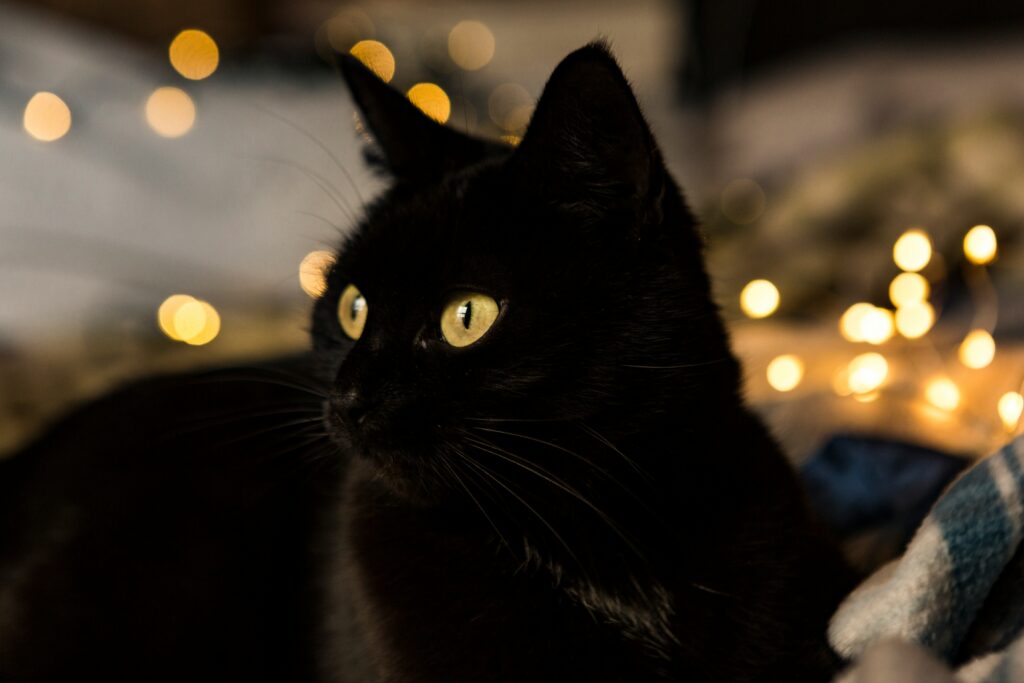
They slip through moonlight like whispers. Their gaze pierces veils between worlds. Black cats have long been more than pets, they are living symbols, feared and revered, misunderstood and magical. From ancient temples to modern tarot decks, the black cat has walked beside humanity’s deepest mysteries. This is their story.
Ancient Origins: From Divinity to Darkness
Long before black cats were feared, they were worshipped.
Egypt’s Sacred Feline
In ancient Egypt, cats were divine. The goddess Bastet, protector of home, fertility, and joy, was often depicted as a lioness or domestic cat and black cats were especially sacred. Killing one, even accidentally, was punishable by death. Families kept cats not just for companionship, but as spiritual guardians.
Rome and Greece
Romans believed cats brought good fortune and were symbols of liberty. In Greece, they were associated with Hecate, goddess of witchcraft and the moon, a connection that would later shape their darker reputation.
The Fall from Grace: Medieval Fear and Witch Trials
As Christianity spread through Europe, pagan symbols were demonized and black cats became collateral damage.
Familiars and Demons
By the 13th century, black cats were seen as witches’ familiars, spiritual helpers or even shape-shifted witches themselves. Pope Gregory IX’s decree Vox in Rama (1233) described black cats as part of satanic rituals, igniting centuries of fear.
During witch hunts, owning a black cat could be enough to accuse someone of sorcery. Cats were burned, drowned, or buried alive alongside their human companions. The symbolism shifted: from divine protector to demonic omen.
Superstitions Across Cultures
Despite their dark reputation in the West, black cats have held positive meanings elsewhere.
| Region | Belief about Black Cats |
|---|---|
| Japan | Attract love and ward off evil spirits |
| Scotland | A black cat on your porch means prosperity |
| France | Stroking a black cat brings good luck |
| Germany | Crossing left to right = bad luck; right to left = good luck |
| United States | Often seen as unlucky, especially on Halloween |
Symbolism in Spirituality and Witchcraft
Modern spiritual communities have reclaimed the black cat as a powerful symbol:
Protection
Black cats are thought to absorb negative energy and guard sacred spaces. They’re often present during rituals or meditations to maintain energetic balance.
Mystery and Intuition
Their silent movements and piercing gaze evoke the unknown. Black cats symbolize the hidden, the intuitive, and the liminal, the space between worlds.
Shadow Work
In spiritual psychology, shadow work involves confronting the darker parts of the self. Black cats, as symbols of the shadow, guide practitioners through transformation and healing.
Pop Culture and the Gothic Revival
From Salem in Sabrina the Teenage Witch to Binx in Hocus Pocus, black cats have become icons of Halloween and gothic aesthetics. They represent rebellion, mystery, and magic, often with a touch of sass.
In fashion and media, they’re no longer feared but celebrated. Tarot decks, crystal shops, and witchy influencers embrace the black cat as a familiar, a guide, and a symbol of empowerment.
Psychological Resonance: Why We Project Onto Cats
Cats are independent, silent observers. They don’t seek approval, they simply are. This unnerving autonomy makes them perfect mirrors for human projection. Black cats, in particular, evoke strong emotional responses:
- Fear of the unknown
- Desire for protection
- Fascination with mystery
- Need for spiritual connection
They embody duality: light and dark, sacred and profane, seen and unseen.
The Cat Between Worlds
Black cats are not unlucky, they are misunderstood. They’ve survived centuries of persecution, walked through fire and folklore, and emerged as symbols of resilience, mystery, and magic.
To see a black cat is to be reminded: not everything hidden is dangerous. Sometimes, the shadow holds the deepest wisdom.
Photo by Diana Parkhouse on Unsplash