
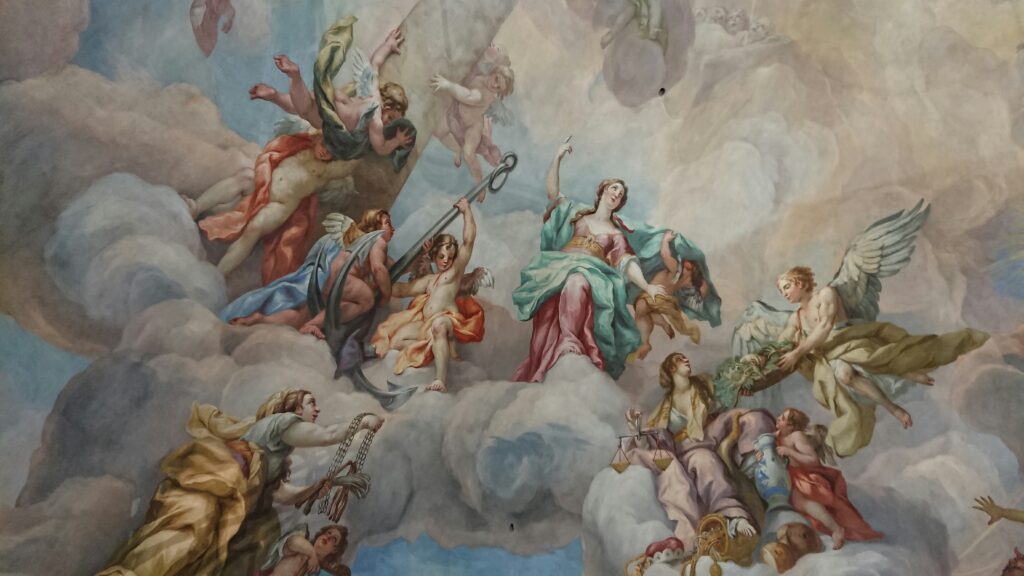
Angels appear in the Bible nearly 300 times across both the Old and New Testaments. They are described as warriors, messengers, guardians, destroyers and worshippers, beings of enormous power who serve specific divine functions. Yet despite hundreds of appearances, only a handful are ever identified by name in the canonical text. The rest remain anonymous, which is itself significant: their identity is secondary to their function.
This article covers every named angel in biblical and deuterocanonical literature, the full hierarchy of angelic orders and practical guidance for those who wish to work with these beings in spiritual practice.
A Note Before You Begin Working with Angels
Biblical angels operate with absolute precision. They do not interpret your requests metaphorically or filter them through emotional sensitivity. If you ask for transformation, they may deliver it through disruption, burning away what needs to go before building what you asked for. A request for a new home might result in losing your current one before the new path opens. This is not cruelty but literal divine execution without emotional buffer.
Approach angelic work with clarity. State exactly what you want and what you are willing for the process to look like. Vague or wishful requests produce literal and sometimes uncomfortable results.
Named Angels in the Biblical Canon
In the 66-book Protestant canon, only two angels who serve God are named by name: Michael and Gabriel. Two fallen angels are also named: Lucifer and Abaddon. The Catholic and Orthodox canons include the deuterocanonical books which add Raphael through the Book of Tobit. Uriel appears in 2 Esdras, a text included in some Orthodox canons and the wider apocryphal tradition.
Michael
Meaning: “Who is like God?” References: Daniel 10:13, Daniel 12:1, Jude 1:9, Revelation 12:7
Michael is the only angel explicitly called an archangel in the biblical text, in Jude 1:9. When he appears in scripture it is consistently in a military or protective context. In Daniel he is described as “one of the chief princes” and as “the great prince who stands guard” over Israel. In Revelation he leads the heavenly armies against the dragon directly.
Michael is the most widely invoked angel across witchcraft and ceremonial magic traditions. He is called on for protection, courage, cutting spiritual cords, clearing aggressive negative energy and in any situation that requires direct confrontation with darkness. He responds to clear, direct requests. Elaborate ritual is less important with Michael than honesty and precision about what you need.
Magical correspondences: Sunday, the Sun, gold and red, sword imagery, fire element.
Gabriel
Meaning: “God is my strength” References: Daniel 8:16, Daniel 9:21, Luke 1:11-19, Luke 1:26-38
Gabriel appears at the pivotal moments of divine communication in scripture. He explained Daniel’s visions, announced to Zechariah that John the Baptist would be born and made the annunciation to Mary. Every time Gabriel appears in the biblical text he carries a specific revelation that changes what the recipient understands about their situation or their path.
Gabriel is the angel of communication, prophecy, creative inspiration and receiving guidance that arrives as inner knowing rather than external event. He is invoked when seeking clarity about a situation, when creative work is blocked and when you need to understand what is actually happening beneath the surface of events.
Magical correspondences: Monday, the Moon, silver and white, lily and lotus imagery, water element.
Raphael
Meaning: “God heals” References: Book of Tobit (deuterocanonical)
Raphael appears in the Book of Tobit traveling in disguise as a human companion, guiding Tobias on a journey, teaching him to drive away a demon that had killed his wife’s previous husbands and healing his father Tobit of blindness. At the end of the story Raphael reveals himself as one of the seven angels who stand before God. His intervention was entirely practical: he addressed a real situation with real solutions.
This practical warmth distinguishes Raphael from the other archangels. He is approachable in a way that Michael’s fierce directness is not. Raphael is invoked for physical and emotional healing, protection during travel, guidance through practical problems that require wisdom rather than force and situations where someone needs companionship through difficulty.
Magical correspondences: Wednesday, Mercury, emerald and healing greens, traveler imagery, air element.
Uriel
Meaning: “Fire of God” or “Light of God” References: 2 Esdras (apocrypha), Book of Enoch
Uriel does not appear in the Protestant or Catholic biblical canon but is present in Orthodox apocryphal texts and the Book of Enoch, where he is counted among the highest angels. In 2 Esdras he is sent to answer the prophet’s deepest questions about divine justice, responding with riddles that demonstrate the limits of human understanding. He is also traditionally associated with warning Noah of the flood and standing guard at Eden.
Uriel is the angel of wisdom, sudden illumination and truth that arrives through difficulty rather than comfort. He is invoked when seeking clarity in situations where self-deception may be present, during deep study or intellectual work and when a situation requires honest reckoning with what is actually true rather than what is comfortable.
Magical correspondences: North, earth element, amber and deep gold, lightning and flame, transformative fire.
Abaddon / Apollyon
Meaning: “Destruction” (Hebrew) / “Destroyer” (Greek) References: Revelation 9:11
Abaddon appears in Revelation as the angel of the abyss, king of a host of destructive forces unleashed during apocalyptic judgment. Unlike the fallen angels, Abaddon appears to be executing divine judgment rather than acting in rebellion. His role is dissolution of what cannot be sustained.
In esoteric practice Abaddon is sometimes approached as a force of radical clearing, useful when something genuinely needs to end completely rather than be healed or transformed. This is advanced work that requires significant discernment and a clear understanding of what you are actually asking to be destroyed.
Lucifer
References: Isaiah 14:12
The name Lucifer appears in the Latin Vulgate translation of Isaiah. The original passage almost certainly refers to a Babylonian king. Later Christian tradition identified the figure with a fallen angel, and the name became synonymous with Satan in popular theology.
Lucifer operates entirely outside the structure of the divine angelic service described in this article. Working with Lucifer is categorically different from working with Michael, Gabriel or Raphael and should not be approached as part of the same framework. He is a separate force with separate purposes.
The Angelic Hierarchy
The Bible describes multiple orders of angelic beings. The nine-order system most widely used in esoteric and theological tradition was codified by the early Christian writer Pseudo-Dionysius in the 5th century, drawing on biblical descriptions of angels across multiple texts.
First Sphere: Closest to the Divine
Seraphim
The seraphim appear in Isaiah 6:1-7, surrounding the divine throne and crying “Holy, holy, holy.” Each has six wings: two covering the face, two covering the feet and two for flight. Their name comes from a Hebrew root meaning “burning ones.” They are beings of pure devotion whose primary function is continuous worship in the direct presence of the divine. The seraphim do not interact with human affairs. They are associated with transformative fire and the direct, overwhelming experience of sacred presence.
Cherubim
The cherubim of scripture bear no resemblance to the small winged children of Renaissance painting. In Ezekiel 10 they are formidable beings with four faces representing the four living creatures: human, lion, ox and eagle. They have four wings and what appears to be human hands beneath them. They guard the most sacred spaces in scripture: the entrance to Eden after the fall and the Ark of the Covenant. Their function is the protection of what is most holy.
Ophanim (Thrones)
Described in Ezekiel 1, the ophanim are among the most striking visions in all of biblical literature: intersecting wheel-shaped beings covered entirely in eyes, moving in perfect coordination with the cherubim. They are associated with divine movement and are understood as the vehicles through which the divine presence moves through creation. Their eyes represent total awareness of all that is happening.
Second Sphere: Governing Angels
Dominions regulate the duties of lower angelic orders, maintaining cosmic order without typically interacting directly with human affairs.
Virtues govern the natural world and are associated with miracles and the bestowal of grace. They are linked to the movement of celestial bodies and the maintenance of physical laws.
Powers guard against chaos and work to prevent the corrupting influence of fallen beings from destabilizing created order.
Third Sphere: Closest to Humanity
Principalities oversee nations, cities and large collective human institutions. They work at the level of shared human experience rather than individual guidance.
Archangels carry out the most significant divine missions with direct involvement in turning points of human history. The tradition of seven archangels comes primarily from the Book of Tobit and the Book of Enoch.
Angels of the third sphere are the order most directly involved with individual human beings. They serve as personal guardians, deliver messages and respond to prayer and invocation. Most angelic appearances in everyday spiritual experience involve this order.
The Seven Archangels
The idea of seven archangels standing before God comes most explicitly from the Book of Tobit, when Raphael identifies himself as one of the seven. Different traditions compile the list differently. The four archangels named across the widest range of biblical and apocryphal sources are Michael, Gabriel, Raphael and Uriel. The additional three in the Orthodox tradition are Selaphiel (prayer), Jegudiel (holy labor) and Barachiel (blessing), drawn primarily from Eastern Orthodox rather than Western biblical sources.
| Archangel | Domain | Magical Correspondences |
|---|---|---|
| Michael | Protection, spiritual warfare, justice | Gold, red, Sunday, fire |
| Gabriel | Communication, prophecy, revelation | Silver, white, Monday, water |
| Raphael | Healing, travel, practical wisdom | Green, Wednesday, air |
| Uriel | Wisdom, truth, illumination | Amber, gold, earth |
Working with Angels in Practice
The Four Archangels and the Cardinal Directions
The placement of archangels at the four cardinal directions does not come from the Bible itself but from Kabbalistic and Hermetic ceremonial magic tradition. It is one of the most practically useful frameworks for witches and magical practitioners working with these beings.
The most widely used arrangement, drawn from the Lesser Banishing Ritual of the Pentagram, places:
- Raphael in the East, associated with air and the fresh energy of beginnings
- Michael in the South, associated with fire and transformative protection
- Gabriel in the West, associated with water and emotional depth
- Uriel in the North, associated with earth and grounding wisdom
This arrangement is used to create a protected and balanced magical space. Calling each archangel to their quarter before ritual work establishes a field of protection across all four elemental directions simultaneously.
Recognizing Angelic Presence
Angels rarely announce themselves with dramatic visions. The more common signs are subtler: a sudden sense of warmth or steadiness arriving during meditation or difficulty, unexpected clarity at moments of confusion, recurring symbolic imagery such as feathers or specific numbers at meaningful moments and vivid dreams involving calm presences that leave you feeling more settled rather than more agitated.
The quality is distinctive. Most practitioners describe genuine angelic contact as producing steadiness rather than excitement, a settling rather than a stirring. If an encounter leaves you feeling pressured, manipulated or confused, trust that discernment.
Invocation Methods
Direct address is the simplest and most effective method. Speak the angel’s name clearly, state your request specifically and express what you are and are not willing for the process to look like. Clarity matters more than elaborate wording.
Candle work creates a focused point of contact. Gold or white for Michael, silver or white for Gabriel, green for Raphael, amber or gold for Uriel. Light the candle, speak your invocation and sit quietly in the resulting space.
Crystals and herbs by angel:
| Angel | Crystals | Herbs and Incense |
|---|---|---|
| Michael | Citrine, carnelian, sunstone | Frankincense, cinnamon, cedar |
| Gabriel | Moonstone, selenite, aquamarine | Jasmine, white rose, mugwort |
| Raphael | Emerald, malachite, green aventurine | Lavender, eucalyptus, mint |
| Uriel | Amber, tiger’s eye, obsidian | Sandalwood, patchouli, clove |
Liminal timing increases receptivity. Dawn and dusk, the transitions between seasons and the new and full moon are moments when the boundary between ordinary experience and the subtle is naturally thinner.
When Contact Does Not Feel Right
If you attempt angelic invocation and something feels off, trust that feeling. Genuine angelic contact does not produce unease, pressure or a sense of being watched in a threatening way. If you feel uncomfortable during or after an attempt:
Close the working deliberately. State clearly that you are ending the session. Ground yourself thoroughly by eating something, drinking water, walking outside or any physical activity that brings you back into your body.
Cleanse your space with smoke, salt or sound before attempting contact again. Consider whether the timing, your emotional state or your level of preparation was appropriate. Build the relationship gradually rather than demanding results from an initial contact.
An entity claiming to be a specific angel but producing feelings of fear, compulsion or disorientation is worth approaching with significant skepticism. Genuine angels associated with the divine do not coerce.
Frequently Asked Questions
How many angels are named in the Bible?
In the 66-book Protestant canon, two angels who serve God are named: Michael and Gabriel. Two fallen angels are also named: Lucifer and Abaddon. The Catholic canon adds Raphael through the deuterocanonical Book of Tobit. Uriel appears in 2 Esdras, which is apocryphal in Catholic and Protestant traditions but canonical in some Orthodox churches.
What is the difference between an angel and an archangel?
In the angelic hierarchy, angels of the third sphere are the order closest to humanity, serving as personal messengers and guardians. Archangels are a higher order who carry out significant missions at a collective or cosmic level. In popular usage the term is often applied more broadly to any powerful named angel, including Michael and Gabriel regardless of formal hierarchical position.
Can witches and pagans work with angels?
Yes. Angels predate Christianity as a formal religious institution and appear across Abrahamic, esoteric and mystical traditions that long predate any single denomination. Witches and ceremonial magicians have worked with archangels for centuries within Hermetic and Kabbalistic frameworks. The key is approaching them with specificity, preparation and respect rather than casual experimentation.
What do angel numbers mean?
Repeating number sequences such as 111, 444 or 777 are interpreted in modern spiritual practice as signals that angelic attention is near. 111 is generally read as alignment and new beginnings, 444 as protection and confirmation that you are on the right path, 777 as spiritual development and divine guidance. These meanings come from modern numerological tradition rather than biblical sources, but many practitioners find them a useful framework for noticing when angelic communication may be present.
How do I know if an angelic encounter was genuine?
Genuine angelic contact tends to leave you feeling clearer, steadier and more certain of your direction even when the content of the message is challenging. The experience produces a quality of peace that persists afterward. If contact left you more confused, disturbed or pressured than before, apply discernment. Not every entity presenting itself as an angel is what it claims to be.
Is it dangerous to work with angels?
The primary risk in angelic work comes from vague requests directed at beings that operate with literal precision. Research the specific angel before working with them, understand their known domain and be explicit about what you are asking for and what you are not willing to experience as part of the process. Building the relationship gradually over time produces more reliable results than approaching angels as emergency resources.
Photo by Lukas Meier on Unsplash







[…] Angels in the biblical tradition are divine servants with specific functions: messengers, warriors, healers and guardians. They operate with literal precision and respond to clarity of intention more than to elaborate ritual. For a complete guide to named biblical angels and how to work with them see Biblical Angels: Names, Roles and How to Work with Them. […]