Lead is the heaviest of the seven sacred metals and the last in the planetary sequence. Where gold radiates outward and silver opens inward, lead sinks. It compresses. It holds things in place. Ancient peoples understood this intuitively: lead was cold, slow, dense and resistant to change in ways that no other common metal was. These are not neutral qualities. They are precisely what certain kinds of magic require.
Lead is also toxic. Unlike iron or copper, lead accumulates in the body over time and causes serious neurological damage with no safe lower limit of exposure. This does not make it impossible to work with, but it shapes how it should be used. The safety section of this article covers what is and is not appropriate in contemporary practice.
Of all seven metals, lead has the longest and most thoroughly documented history in actual magical practice. More than 1600 lead curse tablets, called defixiones, have been recovered by archaeologists across a geographical range stretching from Scotland to North Africa and from Spain to Syria. These are not objects archaeologists have to interpret. They come with text. The practitioners who made them wrote down what they were doing and why and rolled the lead around the words to seal the intention inside the metal. Lead was the working material of functional magic for over a thousand years of continuous practice.
It is also the metal of Saturn, the Greater Malefic, the planet of time, endings, discipline and the slow transformation that comes through difficulty rather than grace. Understanding lead in witchcraft means understanding both of these dimensions: the historical reality of how it was used and the planetary current it carries.
The Seven Sacred Metals
Medieval alchemists inherited from classical antiquity a system linking each of the seven known metals to a planet, a day of the week and a set of spiritual qualities.
| Metal | Planet | Day | Primary Magic |
|---|---|---|---|
| Gold | Sun | Sunday | Vitality, success, solar deity work, authority, manifestation |
| Silver | Moon | Monday | Intuition, psychic work, lunar magic, protection, dream work |
| Iron | Mars | Tuesday | Protection, banishing, strength, boundaries, justice |
| Mercury | Mercury | Wednesday | Communication, travel, wit, change, magic itself |
| Tin | Jupiter | Thursday | Abundance, expansion, luck, wisdom, legal matters |
| Copper | Venus | Friday | Love, harmony, creativity, prosperity |
| Lead | Saturn | Saturday | Binding, banishing, endings, time, deep transformation, shadow work |
Lead sits at the end of this sequence for reasons that go beyond convention. In the planetary order known to the ancient world, Saturn was the outermost visible planet, the furthest from the sun and therefore the coldest, slowest and most remote. It was understood as the boundary of the known cosmos, the point where the ordered solar system met the unknown beyond. Lead, the heaviest and most dense of the seven metals, was its natural material expression.
Defixiones: The Lead Curse Tablets
The defixio, from the Latin defigere meaning to fix or bind, is one of the most extensively documented magical objects in the ancient world. These were thin sheets of lead, typically the size of a business card to a playing card, inscribed with a curse using a stylus. The tablet was then folded or rolled, often pierced with an iron or bronze nail to fix the power and deposited in a place associated with the dead or with the underworld: a grave, a well, a fountain or a chthonic sanctuary.
The practice ran from at least the 5th century BCE through the 5th century CE, a thousand years of continuous use across the entire Mediterranean world and beyond. Over 1600 examples have been recovered and the texts they contain span every aspect of ancient social life. Athletic competitors cursed rivals before races and games. Litigants cursed opposing parties before court hearings, asking that their tongues be bound and their memory fail. Business rivals cursed each other. People sought the return of stolen property. Erotic binding spells attempted to compel the affection of specific individuals.
The texts are addressed to underworld deities who were believed to enforce the curse: Pluto, Persephone, Charon, Hekate and sometimes the restless dead who were thought to be active intermediaries between the living world and the realm below. The use of lead was not incidental. Lead was connected to the underworld because of its weight, its coldness, its dark color and its association with Saturn, the planet of time, endings and the realm of the dead.
The Bath curse tablets, found in England at the Roman sacred spring of Aquae Sulis in 1979, are among the most significant British archaeological finds of the 20th century. Over 130 tablets were recovered, the majority concerning the restitution of stolen goods, with practitioners appealing to the goddess Sulis Minerva to punish thieves and return what had been taken. These were written by ordinary people: a woman named Saturnina, a man who had his cloak stolen at the baths, people seeking justice through the only channel they had access to when the law was insufficient.
Similar tablets were found nearby at the temple of Mercury at Uley, West Hill, making southwestern Britain one of the most significant sites for Latin defixiones outside Italy.
Greece and Rome: Kronos, Saturn and the Devouring of Time
The planetary deity of lead is Saturn, the Roman equivalent of the Greek Titan Kronos. Both are figures of enormous antiquity and considerable ambivalence. Kronos devoured his own children to prevent them from displacing him, consuming the gods he had himself fathered until his son Zeus escaped and overthrew him. Saturn in Roman tradition was older and more complex: a god of agriculture and the harvest who held the scythe, who presided over the mythical Golden Age when humanity lived in harmony and plenty and who was eventually displaced by the Olympian order.
The Saturnalia, the Roman winter festival held in December, inverted the social order for its duration: masters served slaves, gifts were exchanged, courts were closed and schools dismissed. It was understood as a brief return to the conditions of Saturn’s Golden Age, a suspension of time’s ordinary rules. This aspect of Saturn, the god who presides over the moment when the normal order is set aside, carries directly into the magical use of lead. Binding magic, reversals and workings that halt or suspend normal processes draw on this Saturnian current.
In the astrological tradition Saturn is called the Greater Malefic. This does not mean it is evil but that its influence is difficult. Saturn brings what is necessary but not what is comfortable. It governs time, limitation, discipline, the consequences of past actions and the slow transformation that comes through sustained effort and difficulty. Lead embodies all of these qualities materially: it is slow, heavy, enduring and resistant to the easy categories that lighter metals inhabit.
The Seal of Saturn, inscribed on lead in Renaissance grimoire tradition, was used for banishing harmful forces and for workings requiring Saturn’s authority over time and endings. The Key of Solomon specifies lead for Saturn’s planetary squares and seals.
Lead in Alchemy: The Starting Point
In alchemical theory lead is the first stage of the great work. Nigredo, the blackening, is the initial phase of alchemical transformation and lead is its material embodiment. The alchemist begins with lead, the most base and impure of metals and through a series of operations works toward gold. This journey is simultaneously a material process, a spiritual discipline and a psychological transformation.
Lead’s position as the nigredo material placed it at the center of shadow work long before Carl Jung gave that practice its modern name. It is the necessary beginning: without the confrontation with what is base and unrefined, no genuine transformation follows. The nigredo as a practice and its full alchemical context is covered separately.
Saturn in Kabbalah is placed at Binah, the third sphere on the Tree of Life, representing deep understanding, the Great Mother, limitation and the formative power that gives birth to form through restriction. Lead carries this same quality: it shapes through heaviness and resistance.
Saturday and the Norse Question
Saturday takes its name from Saturn in the English and Latin traditions. In Latin it is Dies Saturni, Saturn’s day. In English it is Saturday. This is one of only two days in the English week that retains its Latin planetary name rather than a Germanic divine name, the other being Sunday.
The Norse and Germanic situation is notably different here. In Old Norse, Saturday is laugardagr, meaning bathing day or washing day. In Swedish it is lördag, in Norwegian lørdag, in Danish lørdag: all from the same root meaning washing or bathing. Saturday in the Norse naming system is the day for the weekly bath, not a deity’s day. There is no direct Norse equivalent to Saturn as a planetary deity assigned to this day.
This matters for practitioners working in a Norse framework: the Saturnian current does not have a clear Norse divine patron the way Thor covers Jupiter and Freyja covers Venus. Some practitioners associate Hel, the ruler of the realm of the dead, with Saturn’s qualities of endings, time and the weight of what cannot be undone. This is a functional association based on shared qualities rather than a historically documented correspondence and practitioners should understand it as such.
Safety: Working with Lead
Lead is a cumulative neurotoxin. Unlike mercury, which is acutely dangerous from vapor exposure, lead’s danger is chronic: it accumulates in bone and tissue over time and causes damage to the nervous system, kidneys and brain with no safe lower limit of exposure. Children are particularly vulnerable because their developing nervous systems absorb lead at much higher rates than adults.
What is relatively safe: Occasional handling of intact lead objects, such as a lead fishing weight or a folded lead sheet, does not create significant risk for a healthy adult as long as hands are washed thoroughly afterward and the object is not touched near food or the mouth. This is the level of contact most modern magical practice involving lead requires.
What is not safe: Lead dust from sanding, grinding or cutting lead is dangerous and must never be inhaled. Corroded or deteriorating lead should not be handled without gloves. Lead objects should never be placed near food, drink or children. Prolonged daily skin contact with lead objects is inadvisable. Lead should never be melted indoors without industrial ventilation, as lead fumes are toxic.
Children: Keep all lead objects completely out of reach of children. There is no safe level of lead exposure for children.
Disposal: Lead objects should not go in household waste. Dispose of through a hazardous waste facility or a metal recycling service that accepts lead.
The historical practitioners who used lead tablets, including the Romans who buried thousands of defixiones in sacred springs and wells, were not aware of its toxicity. Modern practice benefits from knowing what they did not. Working with lead thoughtfully and carefully is entirely possible. Working with it carelessly is not.
Lead in Modern Witchcraft: Binding, Banishing and Shadow Work
Lead’s primary functions in modern practice are binding, banishing, endings and deep shadow work. These are not comfortable workings but they are necessary ones and lead is the correct material for them.
One historical use worth noting: the New Year’s Eve divination tradition known in Finland and across central Europe as tin casting was for most of its history performed with lead, not tin. The horseshoe-shaped pieces sold in shops contained up to 95 percent lead. The EU banned these in 2018 due to toxicity and the tradition now uses lead-free tin. This practice is covered in full in Tin in Witchcraft.
Binding magic
The binding spell is one of the oldest and most cross-culturally widespread forms of magic and lead is its historical material. Modern practitioners use lead when they need to stop a harmful person’s actions, prevent a situation from developing further or create a firm boundary around something that must not continue. A lead nail or lead weight added to a binding working gives material weight to the intention. The historical form, writing the target’s name on a lead sheet and folding it closed, is still practiced.
Banishing
Saturn governs the ending of things and lead is appropriate for workings designed to permanently remove something from your life or space. Where iron banishes through cutting and force, lead banishes through weight and finality. A lead nail driven into the ground at a property boundary or a lead object buried at the edge of a space, marks a Saturnian limit that is harder to cross than an iron one.
Shadow work and the nigredo
Of all seven metals, lead is the most directly associated with shadow work in the Jungian and alchemical sense. It embodies the nigredo, the confrontation with what is base and unrefined in the self. Practitioners working with lead in this context use it as a material anchor for the shadow work process: holding a piece of lead during meditation on difficult material, writing what is unexamined on a piece of lead foil and then burying it or placing lead on a Saturn altar during deep introspective work.
Endings and release
Saturn governs what must end: relationships, patterns, phases of life, situations that have run their course. Lead work for endings is typically done on a Saturday during a waning or dark moon. Writing what needs to end on a piece of lead foil and burying it or weighting it and sinking it in moving water, is a simple and effective form of this working.
Time magic
Saturn rules time in all its aspects: patience, long-term planning, the consequences of past actions and the slow work of genuine transformation. Lead workings can support the kind of magic that operates over years rather than days, particularly workings designed to create lasting structural change rather than quick results.
Timing for Lead Work
Saturday is the day of Saturn in every tradition that uses a planetary week. All lead workings are strengthened by being performed on a Saturday.
The waning moon and the dark moon are the strongest lunar phases for lead work, corresponding to endings, release, banishing and the deepest shadow work. The winter solstice and the weeks around Samhain carry Saturnian quality in the wheel of the year, as the light withdraws and the dark increases.
Saturn hours, calculable with a planetary hours table, provide additional timing windows on any day of the week when Saturday is not practical.
Is Lead Masculine or Feminine?
In the Western alchemical tradition Saturn is masculine and lead carries that designation. Kronos and Saturn are male. The qualities associated with them, authority, time, limitation, discipline, the willingness to endure difficulty are coded masculine in this tradition.
The Kabbalah offers a more complex picture. Saturn at Binah is explicitly feminine: Binah is the Great Mother, the formative darkness, the womb of understanding from which form emerges. She is the limitation that gives birth to shape. This is a different relationship with lead’s qualities, not the stern father but the deep mother, the one who knows what time costs and holds that knowledge without flinching.
Both perspectives are present in the tradition. Lead’s qualities are neither inherently masculine nor feminine. The density, the patience, the willingness to hold difficult things: these belong to anyone who needs them.
Chakra Connections
Lead and Saturn are primarily associated with the root chakra, Muladhara, through their shared connection to grounding, structure and the physical foundation of existence. Lead is the most earth-connected of the seven metals, dense and close to the ground in every sense.
There is also a connection to the crown chakra, Sahasrara, through Saturn’s position at Binah on the Kabbalistic Tree of Life and through the tradition that places Saturn at the boundary between the known cosmos and what lies beyond. At the crown, lead’s quality of meeting the absolute limit without flinching becomes the quality of approaching the mystery of existence directly.
Deities Associated with Lead
Saturn (Roman): agriculture, time, the Golden Age, endings, the social reversal of Saturnalia. The primary planetary patron of lead in the Western magical tradition.
Kronos (Greek): the Titan of time who devoured his children. Ruler of the mythological Golden Age before being overthrown by Zeus. The stern force of time that cannot be stopped or bargained with.
Hekate (Greek): crossroads, the dark moon, witchcraft and the boundary between living and dead. She is invoked in defixiones alongside the chthonic deities and she governs the kind of magic lead performs: binding, banishing and the workings that operate at the edges of what is permitted.
Persephone (Greek): queen of the underworld, invoked on defixiones as the one who could enforce the curse in the realm of the dead. Her dual nature, alive above, ruling below, makes her appropriate for workings involving the transformation that comes through descent.
Pluto/Hades (Roman/Greek): king of the underworld, consistently invoked on curse tablets as the enforcing power of lead magic. Lead goes down and Pluto receives it.
Hel (Norse): ruler of the realm of the dead for those who did not die in battle. She governs the slow endings, the deaths that come through age and illness and time rather than through glory. Her domain is cold and heavy in a way that resonates with lead’s qualities and she functions as the closest Norse equivalent to the Saturnian current, though this is a functional association rather than a documented planetary correspondence.
How to Cleanse and Consecrate Lead
Lead does not tarnish dramatically but it oxidizes slowly and develops a grey patina over time. Wipe with a dry cloth for maintenance. Do not use acid-based cleaners.
Safety: Lead is toxic when ingested, inhaled as dust or absorbed through prolonged skin contact. Do not put lead objects in your mouth, handle them constantly without washing your hands afterward or use corroded lead near food or children. Occasional handling of intact lead objects is not a significant health risk, but lead dust from sanding or grinding lead is dangerous. Dispose of lead through appropriate channels rather than in household waste.
Energetically, lead cleansing suits heavy methods: burial in earth overnight, immersion in cold running water or passing through incense smoke associated with Saturn, myrrh, patchouli, cypress or vetiver.
Consecrate on a Saturday during a Saturn hour. Lead responds to direct, firm language. State the purpose clearly and without elaboration. Anoint with cypress oil, myrrh oil or a Saturn oil blend.
Frequently Asked Questions
Can I use a pencil as lead in witchcraft?
No. Despite being called a “lead pencil,” modern pencils contain no lead at all. The core is graphite, a form of carbon, mixed with clay. When graphite was first discovered in Borrowdale, England in the 16th century, it was mistaken for a form of lead because the two look similar in their natural state. The name stuck even after the mistake was understood. Graphite carries its own properties and is not a substitute for the Saturn current that lead provides.
What are practical sources of lead for magical use?
Lead fishing weights are the most commonly available source of pure lead. They can be purchased at any fishing supply shop and repurposed as altar weights or binding objects. Lead sheet, used in roofing and plumbing, is available at builders merchants and can be cut into strips for writing on. Old lead pipe or lead came from stained glass windows are other traditional sources. All of these should be handled with the standard precautions: wash hands after contact, do not use near food and keep away from children.
What is lead used for in modern witchcraft?
Binding, banishing, workings involving endings and release, shadow work and time magic. Lead is not a metal for gentle or warm workings. It is appropriate when something must stop, when a pattern must end, when a structural change needs to hold for a long time or when deep inner work requires material grounding in the heaviest possible substance.
What were defixiones and how were they made?
Defixiones were lead curse tablets inscribed with the name of a target and a specific binding instruction, then folded, often nailed shut and deposited in a grave, well or chthonic sanctuary. Over 1600 have been recovered across the ancient Mediterranean world, covering legal disputes, athletic competitions, business rivalries, theft recovery and erotic binding. They represent the longest-running and most thoroughly documented magical practice in the ancient world.
Is lead safe to handle?
Intact lead objects can be handled occasionally without significant risk, provided you wash your hands afterward and do not handle them near food or put them in your mouth. Lead dust from grinding or sanding lead is dangerous and should never be inhaled. Children should not handle lead objects. Dispose of lead through hazardous waste channels rather than in household bins.
Which planet rules lead?
Saturn rules lead in the classical Western alchemical and astrological system. This assignment is consistent across Greek, Roman, Arabic and medieval European sources. Saturday is therefore the primary day for lead workings.
How is lead different from iron in binding magic?
Iron binds through cutting and force, through the martial quality of a boundary drawn with strength. Lead binds through weight and finality, through the Saturnian quality of something that has simply become too heavy to move. Iron banishing is active and immediate. Lead banishing is slow and permanent. For situations requiring immediate removal of something harmful, iron may be more appropriate. For situations requiring something to end completely and not return, lead is the correct choice.
What is the connection between lead and shadow work?
In alchemical tradition lead is the nigredo, the first and darkest stage of the great work, the confrontation with what is unrefined, resistant and unexamined in the self. This places it at the center of shadow work in the Jungian sense: working with lead as a material anchor for difficult introspective work connects the practice to a tradition of understood psychological and spiritual transformation that runs through centuries of alchemical writing.
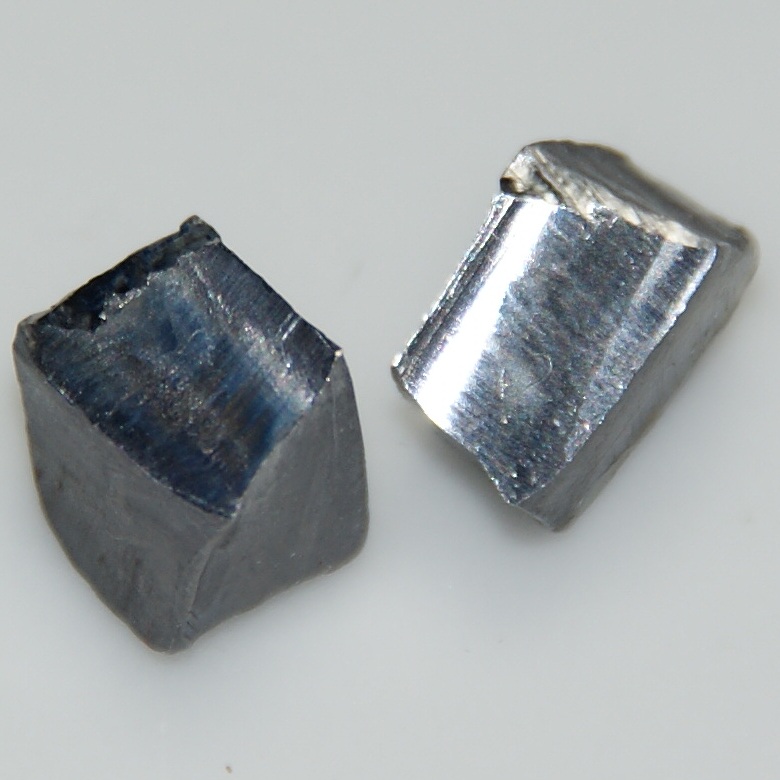
By Hi-Res Images ofChemical Elements – http://images-of-elements.com/lead.php, CC BY 3.0, https://commons.wikimedia.org/w/index.php?curid=28869992