If you are exploring modern magical practice for the first time, three names come up repeatedly: Chaos Magic, Wicca and Hermeticism. They are all part of the broader Western occult tradition but they approach magic, belief and practice in fundamentally different ways. Choosing between them or understanding how they relate to each other is easier once you know what each one actually is and what it asks of its practitioners.
This article is not an argument for one over the others. Each system has genuine strengths and serves different kinds of practitioners. The goal is to give you a clear picture of what distinguishes them so you can make an informed decision about where to direct your study and practice.
What Each System Is
Chaos Magic
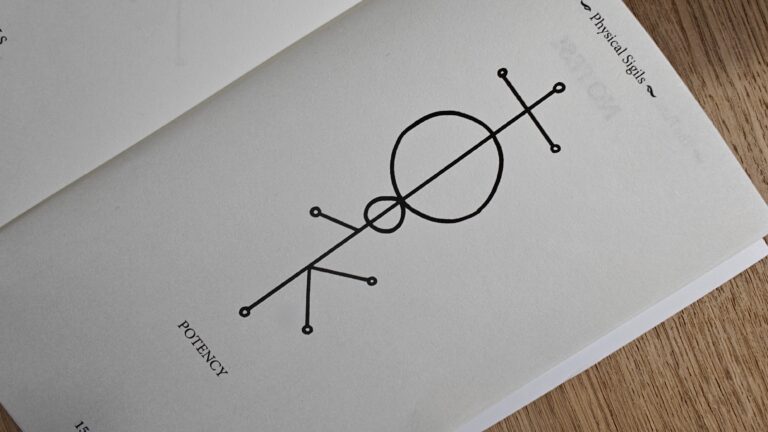
Chaos Magic is a contemporary approach to magic that emerged in Britain in the 1970s, developed primarily by Peter J. Carroll and Ray Sherwin. It has no fixed theology, no required deity or spirit work and no single correct method. Its central principle is that belief is a tool rather than a fixed truth. Practitioners adopt whatever beliefs, symbols or techniques serve their current intention and discard them when they no longer work.
The defining characteristic of Chaos Magic is pragmatism. Results matter more than tradition. If a technique produces results it is valid regardless of where it comes from or how old it is. This means a Chaos Magic practitioner might invoke a Norse deity in one ritual and work with a fictional character from a novel in the next, switching frameworks entirely depending on what the situation calls for.
Wicca
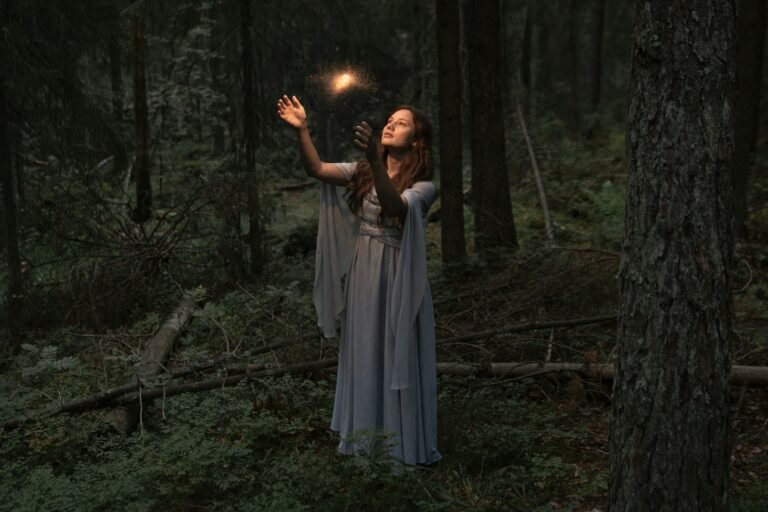
Wicca is a modern pagan religion founded in the mid-20th century, brought to public attention primarily by Gerald Gardner in the 1950s. It is a nature-based practice centered on the worship of a dual divinity, typically a Goddess and a Horned God, and organized around the cycles of the natural year through eight seasonal celebrations called sabbats.
Unlike Chaos Magic, Wicca is a religion as well as a magical system. It involves genuine devotional practice, ethical commitments and in many traditions a formal initiation structure. The most widely known ethical principle is the Wiccan Rede, summarized as “an it harm none, do what ye will,” which places a clear moral constraint on magical practice.
Wicca has both initiatory lineages, most notably Gardnerian and Alexandrian Wicca, and a much broader tradition of solitary practice that developed through the 1980s and 1990s largely through the influence of authors like Scott Cunningham.
Hermeticism
Hermeticism is the oldest of the three, rooted in a body of texts from Hellenistic Egypt known as the Hermetic Corpus, attributed to the legendary figure Hermes Trismegistus. These texts, compiled roughly between the 1st and 3rd centuries CE, deal with cosmology, the nature of the divine and the path of spiritual ascent through knowledge.
The philosophical foundation of Hermeticism is the idea that the universe is fundamentally mental in nature, that the material world is an expression of divine mind and that the practitioner can work with this correspondence through the famous principle “as above so below.” This principle holds that the macrocosm and the microcosm mirror each other, which means influencing one level of reality influences the others.
In practical terms Hermeticism gave rise to much of the ceremonial magic tradition that followed, including the Kabbalah-integrated system of the Golden Dawn in the 19th century and the Thelema of Aleister Crowley in the 20th. Modern Hermetic practice typically involves detailed ritual work, study of planetary and elemental correspondences, and a structured path of spiritual development.
The Core Differences
Relationship to Belief
This is where the three systems diverge most sharply.
Hermeticism and Wicca both involve genuine belief in specific realities. A Hermetic practitioner believes in the mental nature of the universe, in the correspondence between cosmic and human levels of reality and in the existence of a divine source from which all proceeds. A Wiccan practitioner believes in the Goddess and the God as real divine presences and in the living spiritual character of the natural world.
Chaos Magic treats belief as a functional tool rather than a truth claim. A practitioner does not need to believe anything permanently. They adopt beliefs temporarily for the purpose of a specific working and release them afterward. This is called paradigm shifting and it is both the most liberating and the most disorienting aspect of Chaos Magic for newcomers.
Structure and Tradition
Hermeticism is the most structured of the three. It has a rich body of foundational texts, a detailed system of correspondences built up over centuries and a tradition of initiatory organizations such as the Golden Dawn and its successors that transmit specific methods and frameworks. Serious Hermetic practice typically involves years of systematic study.
Wicca sits in the middle. It has clear structural elements including a liturgical calendar, recognized ritual forms and in initiatory traditions a formal degree system. At the same time the solitary tradition is highly accessible and many practitioners work entirely independently without initiation or formal instruction.
Chaos Magic has the least structure by design. There is no required curriculum, no mandatory ritual form and no authority that can tell you whether you are practicing correctly. This is its greatest advantage for self-directed practitioners and its greatest challenge for those who benefit from clear guidance.
Ethics and Responsibility
The Wiccan ethical framework is explicit and central to the practice. The Rede places a clear constraint on harmful magic and the concept of the threefold law, the idea that what you send out returns to you threefold, reinforces this through a karmic mechanism.
Hermeticism has its own ethical dimension rooted in the idea of spiritual progression. Harmful or selfish magic is understood to impede the practitioner’s development toward the divine, which serves as a natural disincentive without requiring a specific rule.
Chaos Magic has no built-in ethical framework. Practitioners are entirely responsible for their own moral reasoning. This is consistent with its philosophy of personal responsibility and freedom but it means that questions of ethics must be worked out individually rather than inherited from the tradition.
Deity and Spirit Work
Wicca centers deity work. The Goddess and the God are the heart of Wiccan practice and building a devotional relationship with them is not optional, it is the point.
Hermeticism works with planetary intelligences, angels and the divine source in ways that are more philosophical and cosmological than devotional. The relationship to divine beings is real but framed within a specific theological understanding of how the universe is structured.
Chaos Magic treats deities and spirits as optional tools. A practitioner might invoke a deity for a specific working as a useful symbolic framework without holding any belief in that deity’s actual existence. Or they might develop genuine devotional relationships with specific beings. The tradition does not prescribe either approach.
Who Each System Suits
Chaos Magic suits practitioners who value creative freedom, prefer results-oriented methods and enjoy experimenting across traditions without committing to any single one. It works particularly well for people who are skeptical of fixed belief systems but want to engage seriously with magical practice. The lack of structure that puts some people off is exactly what draws others in.
Wicca suits practitioners who want a complete spiritual path rather than just a set of magical techniques. If connection to nature, devotional practice, seasonal ritual and a sense of belonging to a living tradition matter to you, Wicca offers all of these. It is also the most accessible entry point for people coming to magic through an interest in spirituality rather than philosophy or psychology.
Hermeticism suits practitioners who want to understand the theoretical foundations of Western magic in depth and who are drawn to a structured path of development. If you want to know why magical techniques work at a cosmological level rather than just how to perform them, Hermeticism provides that framework. It rewards serious study and sustained commitment.
Can You Practice More Than One?
Yes and many practitioners do, though the degree of overlap varies.
Chaos Magic by design borrows from everything so a Chaos Magic practitioner may incorporate Wiccan or Hermetic elements into their work freely. The reverse is less common because Wicca and Hermeticism are more self-contained systems with their own internal logic, but many practitioners combine elements from both with personal study and practice.
The important thing is to have enough grounding in whichever system you are working with to use its elements coherently rather than grabbing symbols at random without understanding their context.
A Quick Comparison
| Chaos Magic | Wicca | Hermeticism | |
|---|---|---|---|
| Origin | 1970s Britain | 1950s Britain | Hellenistic Egypt, 1st-3rd century CE |
| Belief | Tool, not truth | Genuine religious faith | Philosophical and theological |
| Structure | None required | Moderate to high | High |
| Ethics | Personal responsibility | Wiccan Rede, threefold law | Spiritual progression |
| Deity work | Optional | Central | Philosophical |
| Best for | Freedom, experimentation | Spiritual path, nature connection | Deep study, structured development |
To explore Chaos Magic in depth read our complete guide to Chaos Magic. For the sigil techniques at the heart of Chaos Magic practice read our guide to sigil magic. For a deeper look at Wicca as a complete spiritual path read our guide to Wicca.
Photo by Artem Maltsev on Unsplash