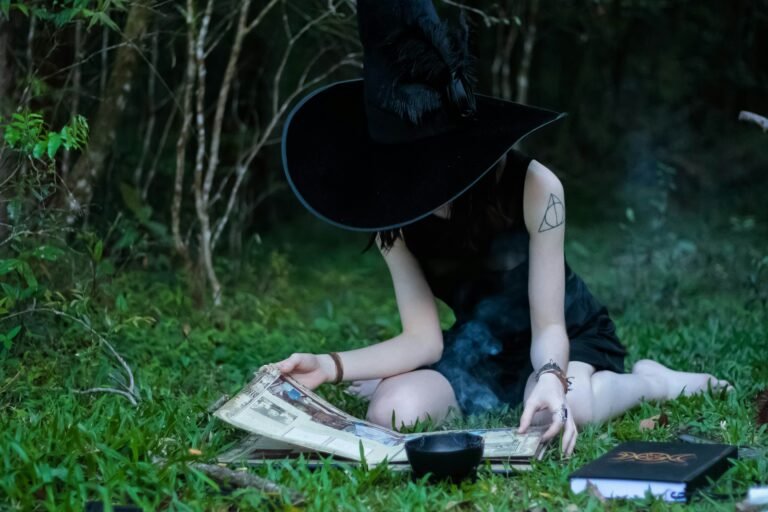
Pop culture magic is the practice of using characters, symbols and narratives from films, books, television, games and other contemporary media as genuine magical tools. It sits firmly within the Chaos Magic tradition, which holds that any symbol or framework can serve as a vehicle for magical work provided the practitioner invests it with genuine intention and focus.
The theoretical basis is straightforward. In Chaos Magic, deities and spirits are understood as symbolic constructs that gain power through the focused belief and attention directed at them. From this perspective there is no fundamental difference between invoking an ancient deity who has been worshipped for centuries and invoking a fictional character who has captured the imagination of millions of readers or viewers. Both exist as powerful symbolic presences in the collective consciousness. Both carry specific qualities, associations and energetic characters that a practitioner can work with.
Grant Morrison, whose work on pop culture magic through his essay Pop Magic! and his use of The Invisibles as a hypersigil helped establish the approach, argued that figures like Hermes, Mercury and Thoth are simply different cultural names for the same underlying archetypal force and that contemporary pop culture icons carry equivalent symbolic weight. The Flash or Batman, understood as pure archetypes rather than licensed characters, operate in the same symbolic register as any figure from classical mythology.
How Pop Culture Magic Works in Practice
Working with a pop culture figure follows the same basic structure as any other invocation or magical working. You identify the specific qualities or energetic character you want to draw on, build a symbolic relationship with the figure through sustained attention and focus, and invoke those qualities within ritual or magical work.
The advantage of pop culture figures is familiarity. Most practitioners know these characters in extraordinary depth, having absorbed their stories, motivations, strengths and contradictions across hours or years of engagement. This depth of relationship makes for unusually vivid and responsive magical work. You do not need to study obscure mythology or learn ancient languages. The relationship with the figure is already built.
It is worth distinguishing between working with a character as a symbolic construct and literal belief in the character as a real external being. Most practitioners in this tradition take a pragmatic view: the character is real as a symbolic and psychological force and working with it produces real results, regardless of the metaphysical status of the entity.
| Character | Source | Common uses |
|---|---|---|
| Anansi | American Gods (West African folklore) | Cunning, trickster energy, navigating complex situations |
| Batman | DC Comics | Protection, discipline, shadow work, transforming trauma |
| Circe | Madeline Miller’s Circe (Greek mythology) | Herbalism, transformation, boundary setting, feminine power |
| Doctor Strange | Marvel Comics | Protection, magical study, ego dissolution, reality navigation |
| Gandalf | J.R.R. Tolkien | Wisdom, guidance, transformation through ordeal |
| Harley Quinn | DC Comics | Liberation, reclaiming agency, chaos as tool, shadow work |
| Hermione Granger | Harry Potter | Study, magical discipline, intellectual confidence |
| The Joker | DC Comics | Breaking stuck situations, dissolving rigid structures |
| Loki | Marvel Comics (Norse mythology) | Transformation, cunning, identity work, trickster energy |
| Merlin | Various adaptations (Arthurian legend) | Divination, magical craft, wisdom, long-term workings |
| Morgan le Fay | Various adaptations (Arthurian / Celtic mythology) | Healing, shadow work, reclaiming suppressed power |
| Morpheus / Dream | Neil Gaiman’s The Sandman | Dreamwork, creative inspiration, unconscious mind |
| Odin | Marvel Comics (Norse mythology) | Leadership, wisdom, sacrifice, complex decisions |
| Prospero | Shakespeare’s The Tempest | Study and knowledge, elemental work, ethical power |
| Scarlet Witch | Marvel Comics | Chaos magic, grief work, shadow integration, reality manipulation |
| The Doctor | BBC Doctor Who | Curiosity, transformation, identity reinvention, protection |
| Wonder Woman | DC Comics | Strength, protection, justice, feminine warrior energy |
| Yoda | Star Wars | Patience, discipline, presence, ego dissolution |
Characters Used in Pop Culture Magic
The following characters appear frequently in pop culture magical practice. Each entry notes the source, the qualities they are typically worked with for and common magical applications.
Anansi
Source: Neil Gaiman’s American Gods and Anansi Boys (originally West African and Caribbean folklore)
Anansi is the spider trickster figure of Akan tradition, one of the most widely known trickster archetypes across the African diaspora. In pop culture magic he is worked with primarily through his portrayal in Neil Gaiman’s fiction, which draws heavily on his folkloric roots. If you are drawn to working with Anansi as a genuine spiritual being within his original cultural context, that is a separate and deeper practice rooted in African traditional religion and the diaspora traditions that carry his worship.
In pop culture magic he is worked with for cunning, storytelling, the manipulation of circumstances and situations, turning apparent disadvantage into advantage and navigating complex social dynamics. His spider symbolism connects him to weaving, pattern recognition and the construction of traps. Practitioners invoke him when they need to think several moves ahead or when a situation requires lateral rather than direct action.
Batman
Source: DC Comics
Batman carries the archetype of the self-made protector, a figure who transforms personal trauma into extraordinary capability through discipline, intelligence and will. He has no supernatural powers. Everything he achieves comes from training, preparation and relentless focus. In magical practice he is worked with for protection, strategic thinking, overcoming fear, discipline and the transformation of weakness or pain into strength. His shadow work applications are particularly noted by practitioners because his entire existence is built on confronting and channeling his deepest wound.
Circe
Source: Madeline Miller’s novel Circe (originally Greek mythology, Homer’s Odyssey)
Circe is the witch-goddess of Greek mythology, daughter of Helios, who transforms men into animals and masters the natural world through pharmacology and magic. Madeline Miller’s novel brought her to a new generation as a fully developed character in her own right. Working with Circe as a pop culture figure draws on Miller’s interpretation and the broader cultural resonance she now carries. Working with her as a genuine Greek deity is a different practice rooted in Hellenic polytheism.
In pop culture magic practitioners work with her for herbalism and plant magic, transformation, boundary setting, reclaiming personal power and protection. Her association with the island of Aeaea makes her a strong figure for working with liminal spaces.
Doctor Strange
Source: Marvel Comics and films
Doctor Strange begins as a supremely arrogant surgeon and is transformed through injury, humility and years of rigorous magical study into the Sorcerer Supreme. His arc makes him a useful figure for magical learning and development, the cultivation of patience and the surrender of ego in service of something larger. He is worked with for protection of spaces and persons, the navigation of complex or multi-dimensional situations, the bending of reality and time, and magical study and discipline.
Gandalf
Source: J.R.R. Tolkien’s The Lord of the Rings and The Hobbit
Gandalf embodies the archetype of the wise guide: a figure of immense power who nonetheless works primarily through catalyzing the potential of others rather than through direct force. His transformation from Gandalf the Grey to Gandalf the White following his confrontation with the Balrog makes him a strong figure for death and rebirth, transformation through ordeal and the emergence of greater power after crisis. Practitioners work with him for wisdom, guidance, the protection of journeys, the discernment of what is essential and the courage to face apparently overwhelming opposition.
Harley Quinn
Source: DC Comics and films
Harley Quinn began as the Joker’s psychiatrist and became one of the most recognizable figures in pop culture through her rejection of that relationship and reconstruction of her identity on her own terms. In magical practice she is worked with for liberation from toxic dynamics, reclaiming agency after manipulation or abuse, chaos and unpredictability as a tool rather than a liability and finding joy and humor within difficult circumstances. Her combination of genuine psychological damage and fierce independence makes her a complex and powerful figure for shadow work.
Hermione Granger
Source: J.K. Rowling’s Harry Potter series
Hermione is the archetype of the dedicated student of magic: someone who achieves extraordinary results through study, preparation and the disciplined application of knowledge. In magical practice she is worked with for academic and intellectual work, magical study, the mastery of complex systems, problem-solving under pressure and confidence in one’s own intelligence and capability. Her Muggle-born status and the discrimination she faces for it also make her a figure for practitioners who feel like outsiders within established structures.
The Joker
Source: DC Comics and films
The Joker represents pure chaos and the dissolution of social order, rules and fixed meaning. He is a deeply difficult figure to work with and practitioners approach him with significant caution. He carries no agenda beyond chaos itself and does not distinguish between constructive and destructive outcomes. He is occasionally worked with for breaking through stuck situations, dissolving rigid structures that are genuinely obstructing development and accessing the kind of radical freedom that comes from having nothing left to lose. Most practitioners recommend working with trickster figures like Loki or Anansi instead, as these carry chaos within a more navigable framework.
Loki
Source: Marvel Comics and films (originally Norse mythology)
Loki draws on both his Norse mythological roots and his contemporary Marvel incarnation which has given him a much wider symbolic range and a massive modern following. It is worth being clear about the distinction. The Norse Loki is a complex, morally ambiguous figure within a living polytheistic tradition that still has active devotional practitioners today. Working with him as a genuine deity within Norse paganism or Heathenry is a different and more demanding practice than pop culture magic. Many Heathen practitioners are vocal about this distinction.
The Marvel Loki is a substantially different character, more sympathetic, more focused on identity and belonging, and shaped by decades of comic and film storytelling. In pop culture magic practitioners work with the Marvel version for transformation, cunning, creative problem-solving, identity work, shadow work around belonging and the disruption of stagnant situations. Those drawn to the mythological Loki should research Norse paganism directly.
Merlin
Source: Countless adaptations (originally Arthurian legend, Geoffrey of Monmouth)
Merlin is the foundational wizard archetype of Western culture. Unlike Odin or Loki he does not belong to a living devotional tradition in the same way, making the distinction between pop culture and mythological work less sharp. His origins in Arthurian legend are literary rather than religious. In pop culture magic he is worked with across his many adaptations including the BBC series, films and novels.
Practitioners work with him for wisdom, divination, the development of magical craft, connecting with the land and natural forces, mentorship and guidance and the patience required for long-term magical work whose results may not be immediately visible.
Morgan le Fay
Source: Countless adaptations (originally Arthurian legend, with roots in Welsh and Celtic mythology)
Morgan le Fay has roots in Welsh mythology as Modron and carries connections to the Morrigan of Irish tradition. Like Merlin her primary existence is literary rather than within a single living devotional tradition, though practitioners working within Celtic reconstructionist or Morrigan devotional contexts would approach her very differently. In pop culture magic she is worked with across her many fictional portrayals.
Practitioners work with her for healing, the magic of the land and natural world, shadow work, the reclamation of power that has been condemned or suppressed, liminal spaces between life and death and protective magic that operates outside conventional moral frameworks.
Morpheus / Dream
Source: Neil Gaiman’s The Sandman
Morpheus, the King of Dreams in Neil Gaiman’s Sandman, rules over the realm of dreams and story. He is a figure of immense ancient power who is nonetheless capable of profound change and who ultimately meets his end through his own inflexibility. In magical practice he is worked with for dreamwork and lucid dreaming, creative and artistic inspiration, the magic of story and narrative, accessing the unconscious mind and shadow work around rigidity and the resistance to change. His sister Death, also from the Sandman, is worked with separately for acceptance, transition and the peace that comes from confronting mortality directly.
Odin
Source: Marvel Comics and films (originally Norse mythology)
This entry concerns Odin as a pop culture figure, primarily through his Marvel portrayal as the Allfather and father of Thor and Loki. It is important to be clear: Odin is a living deity within Norse paganism and Heathenry with an active devotional community. Working with him as a genuine god within those traditions is a substantially different and more demanding practice. Many Heathen practitioners draw a sharp distinction between the Marvel version and the mythological Odin and this distinction deserves respect.
The Marvel Odin carries the archetype of the wise but flawed patriarch, a figure of immense power navigating the tension between duty, love and wisdom. In pop culture magic he is worked with for leadership, the weight of difficult decisions, wisdom earned through sacrifice and the navigation of complex family or organizational dynamics. Those drawn to the mythological Odin should seek out resources on Norse paganism and Heathenry directly.
Prospero
Source: William Shakespeare’s The Tempest
Prospero is the magician-scholar of Shakespeare’s final play, an exiled duke who commands spirits through his art and ultimately chooses to relinquish his magical power. He is one of the earliest figures in Western literature to embody the archetype of the practitioner who deliberately sets aside their power at the completion of a working. In magical practice he is worked with for the magic of study and accumulated knowledge, commanding elemental spirits, the ethics of magical power over others and the wisdom of knowing when a working is complete and releasing it.
Scarlet Witch
Source: Marvel Comics and films
Wanda Maximoff’s arc across the Marvel universe, particularly in the WandaVision series, makes her one of the most psychologically rich figures in pop culture magic. Her power is rooted in chaos magic within the Marvel framework and her story centers on grief, trauma, the unconscious creation of reality from emotional need and the eventual painful acceptance of loss. She is worked with for chaos magic practice, reality manipulation, grief work, the integration of shadow material that has been unconsciously projected outward and the recovery of agency after significant loss.
The Doctor
Source: BBC’s Doctor Who
The Doctor, particularly in their incarnations as a wandering cosmic figure who intervenes to protect the vulnerable and celebrate the wonder of existence, carries a distinctive energy in magical practice. They are worked with for curiosity, the dissolving of fear through wonder, the protection of others, time and its navigation, transformation through regeneration and the kind of radical optimism that persists despite full knowledge of how dark things can become. The regeneration concept makes The Doctor a useful figure for major life transitions and the reinvention of identity.
Wonder Woman
Source: DC Comics and films
Wonder Woman carries the archetype of the warrior who fights from love rather than anger or conquest. Her Amazonian origins connect her to a tradition of feminine power, discipline and the protection of the innocent. In magical practice she is worked with for strength and courage, the protection of self and others, justice, the integration of warrior energy within a compassionate framework, feminine power and self-possession and the willingness to enter conflict when it is necessary rather than avoiding it.
Yoda
Source: George Lucas’s Star Wars
Yoda embodies the master teacher archetype in one of its most recognized contemporary forms: the deceptively small and unassuming figure of immense wisdom and power who teaches through paradox, patience and the dissolution of ego. His teachings on the Force have direct correspondence with many magical principles around intention, presence and the dangers of attachment and fear. In magical practice he is worked with for the development of patience and discipline, the cultivation of presence, teaching and the transmission of knowledge, the navigation of fear as an obstacle and the understanding that power comes from alignment with something larger than the individual will.
Choosing Which Figures to Work With
The most important criterion is genuine resonance. The figures that produce the strongest results in pop culture magic are those with whom the practitioner has a real and deep relationship built through engagement with their source material. A character you have grown up with, thought about deeply or felt genuinely moved by carries more accessible energy than one you have only encountered briefly.
Archteypal alignment matters too. Identify the specific quality or energy you need for a given working and then ask which figure most powerfully embodies that quality for you personally. Two practitioners might choose entirely different figures for the same working based on their individual relationships with the material and both choices can be equally valid.
Photo by Balazs Koren on Unsplash