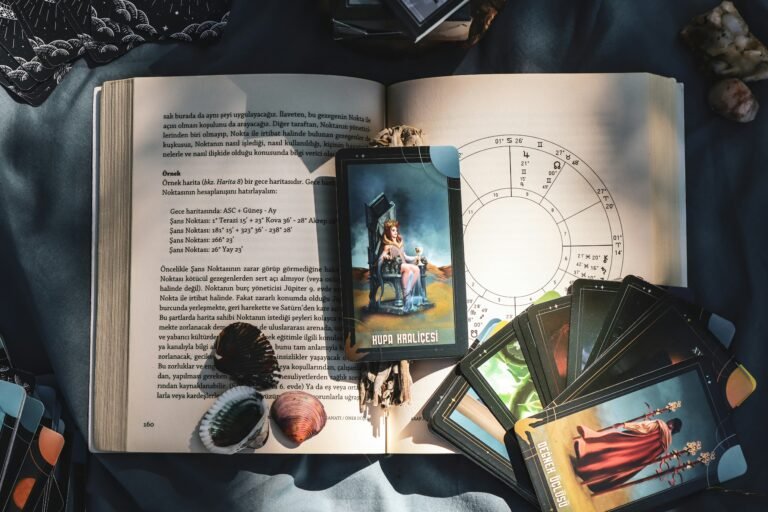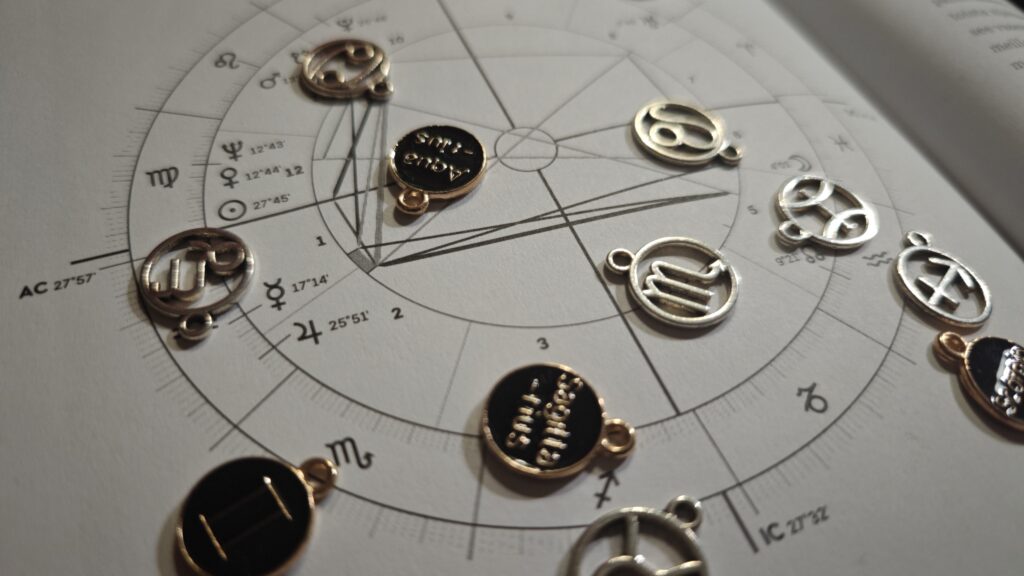
Astrology is the study of how celestial movements influence human life and events on Earth. It connects the positions of the Sun, Moon and planets with patterns that reflect personality, behavior and destiny.
Across cultures, astrology has developed in many forms. From the zodiac wheels of Greece and India to the animal cycles of China and the sacred calendars of the Maya, each system offers a unique way to read the cosmos.
What Is Western Astrology?
Western astrology is the most widespread form today. Rooted in Babylonian and Hellenistic traditions, it uses the twelve zodiac signs: Aries, Taurus, Gemini, Cancer, Leo, Virgo, Libra, Scorpio, Sagittarius, Capricorn, Aquarius and Pisces.
It follows the tropical zodiac, which aligns with the Earth’s seasons rather than the stars themselves. The zodiac begins every year at the spring equinox, marking 0° Aries at that point. However, because of a slow astronomical shift known as the precession of the equinoxes, the constellations have moved about 23 degrees from where they were thousands of years ago.
This means the tropical zodiac no longer matches the actual positions of the constellations in the sky. When Western astrology says the Sun is in Aries, astronomically it often sits in Pisces. Critics call this a timing problem, while many astrologers see it as symbolic rather than literal. The tropical zodiac reflects seasonal and energetic cycles, not the physical sky.
Both Western and sidereal systems use the same zodiac signs and planetary meanings, but they measure them differently: tropical astrology follows the rhythm of the seasons while sidereal astrology follows the constellations themselves.
A person’s birth chart maps the Sun, Moon and planets at the moment of birth to reveal personality, emotional patterns and potential life paths.
Subfields include natal astrology for birth charts, mundane astrology for global events, horary astrology for specific questions and electional astrology for choosing the best timing.
What Is Sidereal Astrology?
Sidereal astrology measures the zodiac using the actual constellations visible in the sky. This system acknowledges that the stars have shifted over time due to the Earth’s axial precession.
Many astrologers prefer this method for its astronomical precision. Sidereal astrology is especially used in Vedic (Indian) astrology but also by a growing number of Western practitioners who wish to reconnect astrology with the real star field.
Both tropical and sidereal astrologies share the same symbols and planetary meanings. They simply use different reference points to anchor those meanings in time.
What Is Vedic Astrology (Jyotish)?
Vedic astrology, or Jyotish, is one of the oldest astrological systems, originating in ancient India. It uses the sidereal zodiac and focuses on karma, spiritual purpose and timing cycles called dashas.
Unlike Western astrology, it places strong emphasis on the Moon’s sign and on how planetary influences unfold through life. Vedic astrology aims to guide individuals toward balance, awareness and fulfillment of their dharma, or soul purpose.
Vedic astrology also includes the use of lunar mansions called nakshatras and life periods known as dashas, which describe how planetary energies unfold through time. These cycles reveal the timing of major life themes and karmic lessons.
What Is Chinese Astrology?
Chinese astrology is based on a twelve-year lunar cycle, each year ruled by an animal: Rat, Ox, Tiger, Rabbit, Dragon, Snake, Horse, Goat, Monkey, Rooster, Dog or Pig.
Each animal combines with one of the five elements, wood, fire, earth, metal or water, creating a 60-year cycle. It reveals personality traits, compatibility and fate based on the year, month, day and hour of birth.
It is closely linked to Chinese philosophy, medicine and feng shui, forming a holistic view of life and destiny.
What Is Mayan Astrology?
Mayan astrology is based on the Tzolk’in, a 260-day sacred calendar that links human life with cosmic energy cycles. The Tzolk’in combines 20 day signs with 13 galactic numbers, creating a matrix of 260 unique energies used for divination and spiritual alignment.
Each combination defines personality, life path and destiny. It focuses less on planets and more on energetic resonance between humans and the natural world. Mayan astrology is often used for spiritual insight and understanding of one’s role within greater cosmic rhythms.
What Is Hellenistic Astrology?
Hellenistic astrology emerged in the ancient Mediterranean around the 3rd to 2nd century BCE, developing rapidly under the cultural fusion of Greek philosophy and Babylonian astronomical tradition following Alexander’s conquests. It introduced many foundations of modern astrology, including houses, aspects and planetary rulerships.
Its philosophy viewed astrology as a bridge between the divine and the material world. Many modern astrologers study Hellenistic texts to rediscover authentic symbolism and traditional techniques.
What Is Evolutionary Astrology?
Evolutionary astrology sees the birth chart as a map of the soul’s evolution. It explores karma, past lives and the psychological lessons of this incarnation.
This modern system focuses strongly on Pluto and the lunar nodes, interpreting them as indicators of transformation, growth and personal empowerment. It draws inspiration from the archetypal psychology of Carl Jung, interpreting planetary symbols as expressions of inner growth and transformation.
What Is Medical Astrology?
Medical astrology, historically known as iatromathematics, studies how planetary positions correspond to the human body. Each zodiac sign rules specific organs and systems, from Aries (the head) to Pisces (the feet).
In ancient times, doctors used astrology to diagnose illnesses and choose treatment times. Today, it is used symbolically to understand energetic imbalances and mind-body connections.
What Is Celtic Astrology?
Celtic astrology as it is commonly presented today, where each birth period corresponds to a sacred tree such as oak, birch or willow, is largely a modern creation. The system was popularized by the poet Robert Graves in his 1948 work The White Goddess, where he constructed a tree calendar based on his interpretation of ancient Celtic and druidic sources. Graves himself acknowledged significant creative reconstruction in his work.
This does not make the system without value. Many people find deep resonance in its imagery of natural cycles and elemental forces. However, it should be understood as a neo-druidic or modern earth-centered tradition rather than a directly inherited ancient practice.
What Is Egyptian Astrology?
Egyptian astrology has a complex history that is often oversimplified in popular presentations. Ancient Egypt developed its own astronomical traditions, including the use of decans, 36 star groupings that governed ten-day periods of the year and were deeply embedded in religious and funerary practice.
From around the Ptolemaic period onward, Egyptian and Babylonian astrological ideas merged significantly, and what we call Hellenistic astrology emerged from this cross-cultural exchange. The idea of twelve Egyptian deities each governing a birth period, such as Ra, Thoth or Isis, is primarily a modern construction that draws loosely on ancient symbolism rather than reflecting a unified historical system.
The authentic Egyptian contribution to astrology lies in its decan tradition, its integration of astronomy with sacred time and its influence on the Hellenistic synthesis that shaped all Western astrology.
What Is Tibetan Astrology?
Tibetan astrology blends influences from Indian, Chinese and indigenous Bon traditions. It uses both solar and lunar calculations to determine karmic patterns, health tendencies and auspicious dates.
It is deeply integrated into Tibetan medicine and Buddhist philosophy, emphasizing balance, compassion and spiritual awareness.
What Is the Real Purpose of Astrology Today?
Astrology remains a mirror of human experience. Beyond prediction, it offers tools for self-understanding, reflection and timing. Whether through the Western zodiac, Vedic dashas or Mayan cycles, astrology connects people to the greater order of the universe.
Its enduring power lies in its ability to turn the movements of the cosmos into a language of meaning, a language that continues to inspire curiosity and wonder in every age.