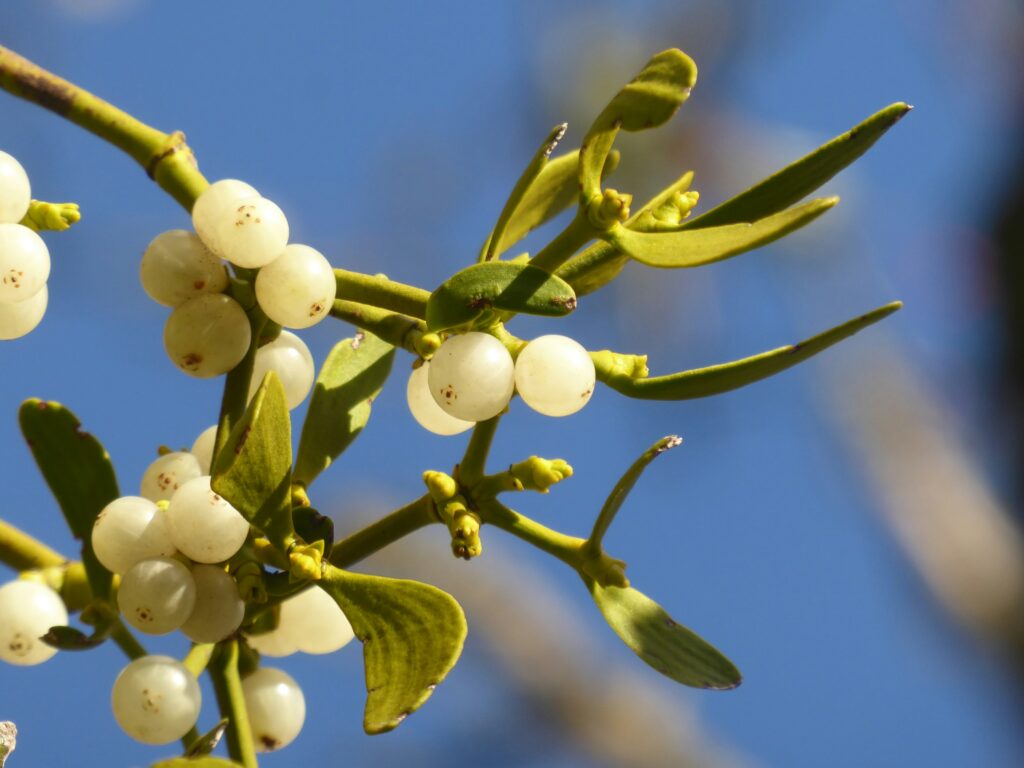
Mistletoe is a parasitic evergreen plant that has fascinated cultures for millennia. Found clinging to trees like oak, apple, and poplar, it thrives in winter when most vegetation fades. Its waxy green leaves and translucent white berries have made it a symbol of vitality, mystery, and magic.
How Was Mistletoe Used in Ancient Traditions?
Mistletoe held sacred status among Celtic druids, Norse mythologists, and Roman celebrants. Its use varied across regions, but common themes included fertility, protection, and divine favor.
- Druidic rituals: Celtic druids considered mistletoe growing on oak trees especially sacred. They harvested it with golden sickles during solstice ceremonies, believing it could cure illness, promote fertility, and protect against evil spirits.
- Norse mythology: In the myth of Baldur, the god of light, mistletoe was the only plant capable of harming him. Loki used it to craft a deadly arrow, making mistletoe a symbol of both death and rebirth.
- Roman Saturnalia: During this winter festival, mistletoe was hung to represent peace and goodwill. Enemies who met beneath it were expected to lay down arms and embrace.
Why Do People Hang Mistletoe at Christmas?
The tradition of hanging mistletoe during the holiday season evolved from ancient customs and gained popularity in Victorian England.
- Symbol of love and luck: Kissing under the mistletoe became a romantic gesture. Each kiss was said to bring good fortune, and some traditions required removing a berry after each kiss until none remained.
- Decorative charm: Mistletoe’s evergreen nature made it a natural choice for winter decoration. It was often paired with holly and ivy to adorn homes and churches.
- Social ritual: In some cultures, mistletoe was hung in doorways to invite guests into a space of peace and hospitality.
How Is Mistletoe Used in Modern Witchcraft and Folk Magic?
In contemporary witchcraft and folk practices, mistletoe retains its mystical aura. It is used in spells, rituals, and talismans for protection, healing, and spiritual insight.
- Protection spells: Dried mistletoe is burned or carried in sachets to ward off negative energy and psychic attacks.
- Fertility and love magic: Mistletoe is included in charms to attract love, enhance passion, or promote conception.
- Divination: Some practitioners use mistletoe in solstice rituals to gain clarity or connect with ancestral spirits.
- Altar offerings: Mistletoe is placed on altars during Yule to honor the cycle of death and rebirth.
Important note: Due to its toxicity, mistletoe should never be ingested or used in teas, oils, or potions unless under expert guidance!
Is Mistletoe Poisonous?
Yes, mistletoe is toxic to humans and animals. Its berries and leaves contain compounds that can cause serious health issues if consumed.
- Symptoms of poisoning: Nausea, vomiting, diarrhea, slowed heartbeat, and seizures. In severe cases, mistletoe ingestion can be fatal.
- Pets at risk: Dogs and cats are especially vulnerable. Even small amounts can lead to gastrointestinal distress or worse.
- Safe handling tips: Always keep mistletoe out of reach of children and pets. Use artificial mistletoe for decorations if safety is a concern!
Can You Use Mistletoe Safely in Rituals and Decor?
Absolutely, with care and respect. Here are safe ways to incorporate mistletoe into your seasonal or spiritual practices:
- Hang it high: Place mistletoe above doorways or mantels, away from curious hands and paws.
- Use dried mistletoe: For magical work, dried mistletoe can be stored in jars or pouches. Burn only outdoors in well-ventilated areas!
- Choose faux mistletoe: Artificial versions offer the same symbolic value without the risk.
- Label clearly: If storing mistletoe for ritual use, mark it as toxic and keep it separate from edible herbs.