
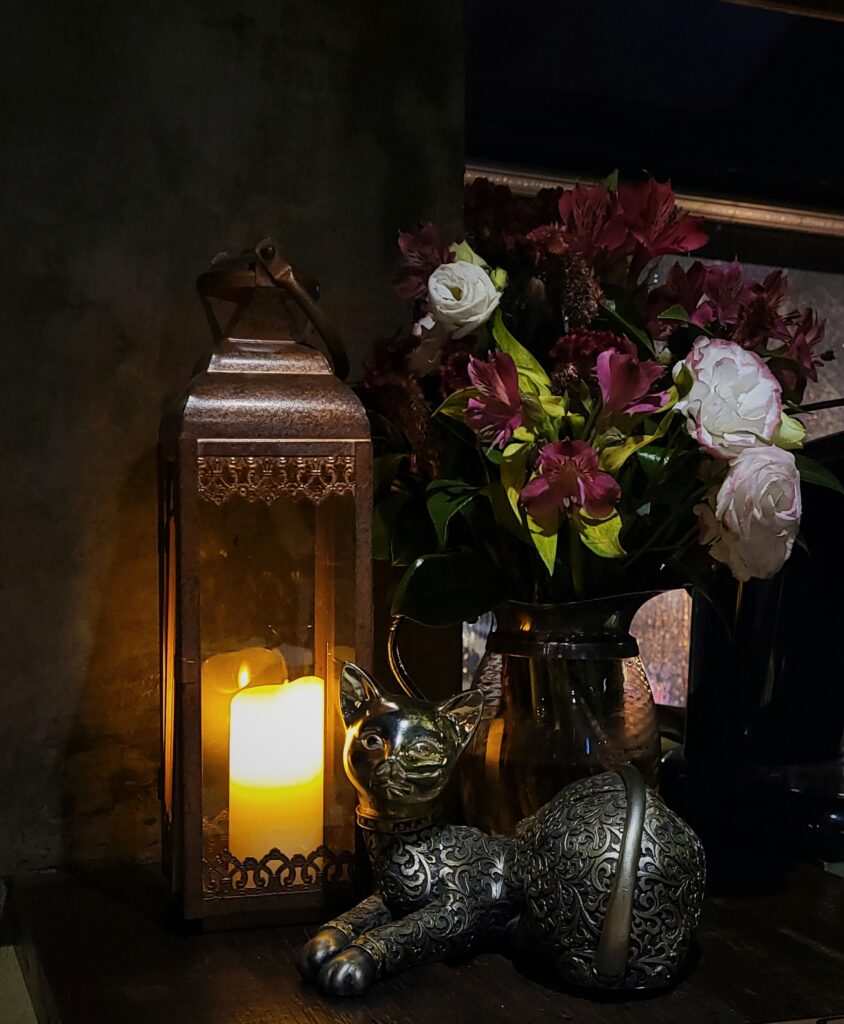
A servitor is a magical entity created by a single practitioner through intention, symbolism and focused energy. It is essentially a programmed thought-form designed to carry out a specific task: protection, focus, energy management, emotional support or whatever purpose you define. Unlike an egregore which arises from collective belief and develops autonomously over time, a servitor is built by one person, remains under their direct control and is given a defined lifespan and purpose from the start.
Servitors appear most prominently in Chaos Magic but the underlying concept of constructing and directing intentional thought-forms appears across many traditions. What Chaos Magic contributes is a stripped-down practical framework that makes the process accessible without requiring initiation into a specific lineage or system.
What a Servitor Is and How It Works
A servitor operates by influencing the energetic environment around you and interacting with your subconscious mind. You define its purpose, design its form and activate it through ritual or focused intent. From that point it functions with a degree of autonomy within the parameters you have set, working toward its goal without requiring your constant conscious attention.
The degree to which this is understood as a genuinely external entity versus a structured extension of your own subconscious depends on the practitioner’s framework. Both interpretations produce real results and neither needs to be resolved before you begin working.
Physical Anchors
Servitors do not have to remain purely energetic. Many practitioners anchor them to a physical object which provides a stable home for the entity and makes it easier to interact with, recharge and eventually decommission.
Common vessels include figurines, crystals, jewelry, handmade objects and even toys or stuffed animals, which work particularly well for servitors designed around comfort or emotional support. A physical anchor also tends to make the servitor more durable over time because it has a consistent energetic reference point rather than existing purely in mental space.
How to Create a Servitor
Step 1: Define the Purpose
Start with a clear and specific statement of what you want the servitor to do. Vague purposes produce vague results. “Absorb negative energy from my home” is better than “make things feel better.” “Increase my focus during work hours” is better than “help me concentrate.”
Write the purpose down before you begin. A well-defined servitor is easier to build, more stable once active and simpler to decommission when its task is complete.
Step 2: Design Its Identity
Before creating the servitor, decide on the following:
Purpose: The specific task already defined above.
Energy source: Where does it draw power from? Options include your own energy directed during periodic recharging sessions, ambient environmental energy or a charged object placed near its vessel.
Lifespan: How long should it remain active? Setting a defined period such as thirty days or until a specific goal is reached prevents servitors from drifting beyond their intended scope. You can always renew it deliberately if needed.
Boundaries: Define explicitly what it can and cannot do. Should it act only when called or continuously? Are there areas of your life it should not touch? Clear boundaries are one of the most important parts of the design process.
Shutdown mechanism: Choose a phrase, gesture or ritual that deactivates it. This could be as simple as speaking “your task is complete” while burning its sigil or dismantling its vessel.
Name and personality: A name is optional but helps with focus and connection. Personality traits that suit the servitor’s role, calm for a protection entity or sharp and alert for one designed to support creative work, can also make it easier to interact with intuitively.
Step 3: Create a Sigil
Design a sigil that represents the servitor’s name and purpose. This acts as its energetic anchor and focal point during charging. Use the letter reduction method to combine elements of its name and intention into a single abstract symbol, then place it on or near the vessel if you are using one.
Step 4: Charge and Activate
Bring the servitor to life through focused energy. The charging method can be whatever produces a genuine shift in your state of awareness: deep meditation, chanting its name or purpose, visualization, movement or emotional intensity. Speak or visualize its instructions clearly during the activation. You can write them down and place them with the vessel as a physical record of its programming.
Step 5: Maintain It
Unless you have designed the servitor to be self-charging, recharge it periodically through brief focused sessions. Check in with its behavior over time and adjust if something feels off. Cleanse the vessel if it begins to feel energetically heavy.
Advanced Options
Self-Charging Servitors
You can design a servitor to sustain itself from a specific ambient energy source rather than requiring regular input from you. Common sources include environmental energy in a particular space, the energy of specific moon phases or even residual emotional energy in a room. A servitor anchored to a decorative object could, for example, be designed to absorb and neutralize tension from people who enter the space, keeping itself charged through the very energy it is clearing.
Approach this with care. Servitors designed to feed from other people’s emotional states should be framed as absorbing ambient energy rather than drawing from specific individuals.
Upgrading Over Time
If your servitor is anchored to a physical object you can expand and refine its capabilities over time by adding new symbols, charms or written instructions to the vessel, incorporating crystals or other charged materials and decorating or altering the physical form in ways that reflect its evolving purpose.
Decommissioning a Servitor
When a servitor’s task is complete or if it begins acting outside its intended parameters, close it down properly.
Speak or write a clear statement of completion: “Your task is complete. I thank you and release you.” Visualize its energy either returning to you through meditation or dissolving into the environment. If the servitor is tied to a sigil, burn or erase it. If it is housed in a physical object, cleanse the item and either repurpose it or dispose of it with intention. Clear your own energy afterward using whatever cleansing practice you normally use.
Setting a programmed lifespan and shutdown mechanism at the creation stage makes this process much simpler and prevents servitors from becoming diffuse or semi-autonomous over time.
Servitors and Egregores
The most important distinction between servitors and egregores is one of origin and control. A servitor is created intentionally by a single practitioner, is task-specific and remains under direct personal control. An egregore arises from collective energy across many people, is identity-based rather than task-based and develops autonomy that no single person controls.
Both operate through the same underlying principle: sustained focused energy creates real effects. Understanding the difference helps you choose the right approach for the work you are doing.
To understand how collective versions of these thought-forms work and how egregores form around groups, movements and public figures, read our guide to egregores.
Photo by Pedro Nogueira on Unsplash









[…] For a deeper look at individually created thought-forms and how to build and manage them, read our guide to servitors. […]
[…] go deeper on either concept, read our complete guides to servitors and […]