The moon does not simply light the night sky. It pulls at the oceans, shifts the tides and moves through a cycle that mirrors the rhythm of growth, peak and release that underlies all living things. In magical practice, the lunar cycle is one of the most reliable frameworks for timing spellwork, setting intentions and understanding where your energy naturally wants to go.
This guide covers all eight phases of the moon, what each one supports in spellwork and daily practice and how special lunar events like eclipses and void-of-course moons affect your work.
Quick Reference: The Eight Lunar Phases
| Phase | Energy | Best For |
|---|---|---|
| New Moon | Dark, still, beginning | Intentions, new starts, planting seeds |
| Waxing Crescent | Building, hopeful | Attraction, early momentum |
| First Quarter | Active, determined | Action, overcoming resistance |
| Waxing Gibbous | Refining, focused | Adjusting, boosting ongoing spells |
| Full Moon | Peak, powerful, visible | Manifestation, divination, charging tools |
| Waning Gibbous | Grateful, releasing | Gratitude work, beginning to let go |
| Last Quarter | Decisive, clearing | Breaking habits, cutting ties |
| Waning Crescent | Quiet, restorative | Rest, reflection, preparation |
New Moon
The new moon is the darkest point of the lunar cycle. The sky offers no reflected light and in that darkness there is a particular kind of stillness that is unlike any other phase. This is not emptiness. It is potential that has not yet declared itself.
Magically, the new moon is the moment of planting. Whatever you want to grow over the coming cycle begins here. Intentions set at the new moon have the entire waxing period ahead of them to build momentum, which makes this phase ideal for anything you want to attract, build or bring into being over the coming two to four weeks.
New moon energy is inward-facing. It supports journaling, meditation, clarifying what you actually want rather than what you think you should want and identifying the beliefs or habits that might obstruct the intention you are setting.
Best for: Setting intentions, beginning new projects, clarifying desires, shadow work that uncovers what needs to change, workings that require quiet focus over long-term results.
Candle colors: White, black, silver.
Avoid: High-energy rituals that require external momentum. The new moon supports internal work more than outward action.
Waxing Crescent
Three days after the new moon, a thin sliver of light appears on the right side of the moon. This is the waxing crescent and it marks the moment when energy begins to move outward. The seed has broken the surface.
The waxing crescent is hopeful energy. It carries the quality of early commitment, the decision to move toward something even when results are not yet visible. Spells cast here support attraction, growth and the early stages of any undertaking where you need faith before proof.
This is a good phase for speaking your intentions aloud, writing them down in a place you will see them and taking the first concrete action toward a goal. The magic of this phase responds well to effort and to stated commitment.
Best for: Attraction spells, early-stage goal work, love and relationship intentions, prosperity spells in their opening phase, anything requiring steady growth over time.
Candle colors: White, pink, light green.
Avoid: Banishing or releasing work. The energy here moves toward, not away.
First Quarter
At the first quarter moon, exactly half of the moon’s face is illuminated. This is the phase of action and challenge. The intention has been set and the initial enthusiasm of the waxing crescent has met the first real resistance. The first quarter is where commitment is tested.
Magically this phase supports courage, decision-making and pushing through obstacles. It is the right time for protection spells, for work that requires willpower and for any ritual aimed at overcoming a specific block that stands between you and your goal. The energy here is dynamic and forward-moving but it requires your active participation. Passive spells tend to underperform at the first quarter.
This is also a good phase for spells involving communication and truth, particularly in situations where you need to stand your ground or speak clearly in a difficult conversation.
Best for: Overcoming obstacles, protection, courage spells, decision-making rituals, communication and truth work, spells that require direct action.
Candle colors: Red, orange, yellow.
Avoid: Slow, long-term workings that require patience. This phase wants movement.
Waxing Gibbous
The waxing gibbous moon is more than half full but has not yet reached its peak. The light is strong but still building. This phase carries a quality of refinement and focused effort, the moment when you assess how things are progressing and make adjustments before the culmination.
In spellwork, the waxing gibbous is the time to revisit intentions set at the new moon and examine whether they still align with what you want. It is the phase for boosting spells that are already in motion, adding additional layers of intention to existing work and fine-tuning your approach when results are close but not yet fully arrived.
Healing spells respond particularly well to the waxing gibbous phase. The increasing light carries a quality of building vitality that aligns with physical and energetic recovery work.
Best for: Boosting existing spells, healing, refining intentions, success and achievement spells, any working where the groundwork has been laid and you want to accelerate results.
Candle colors: Green, gold, blue.
Avoid: Releasing or banishing work. Save that for the waning phases.
Full Moon
The full moon is the most energetically potent phase of the lunar cycle. The moon sits directly opposite the sun and reflects maximum light. Every magical tradition across cultures has recognized the full moon as a time of heightened power, visibility and culmination.
Whatever was set in motion at the new moon reaches its fullness here. Manifestations become visible. Situations that were building beneath the surface come into the open. The full moon illuminates both what has grown in the direction you intended and what has not.
Full moon energy is abundant, amplifying and somewhat unpredictable. It strengthens the effect of any spell cast under it but it also intensifies emotions and can bring things to a head before you feel ready. Working with full moon energy requires clarity of intention more than any other phase because the power is available to strengthen whatever is present, including fears, doubts and contradictions in your intention.
Full moon nights are traditionally used for charging tools, crystals and moon water. Leave items under the open sky or on a windowsill that receives moonlight to clear accumulated energy and restore their power. This works particularly well for crystals like selenite, clear quartz, amethyst and moonstone.
Best for: Manifestation, empowerment rituals, divination, charging tools and crystals, making moon water, protection work, any spell that has been building since the new moon and is ready to be released.
Candle colors: White, gold, silver, purple.
Avoid: Nothing is technically off-limits but binding and banishing work is better left for the waning phases when the energy naturally supports release.
Waning Gibbous
The night after the full moon, the light begins to pull back. The waning gibbous carries the energy of the full moon but in a softer, more reflective mode. It is the phase of gratitude and the beginning of release.
Magically the waning gibbous supports gratitude rituals, forgiveness work and the initial stages of letting go. If the full moon brought something to light that you now need to release, this is where that process begins. The energy does not demand immediate action. It asks you to acknowledge what was, appreciate what served you and begin to loosen your grip on what no longer does.
This phase also supports cord-cutting work in its gentler form, particularly where you are releasing attachment to outcomes rather than severing a relationship or cutting ties with a person.
Best for: Gratitude rituals, forgiveness, releasing attachment, gentle cord cutting, reflection on what the full moon revealed, beginning banishing work.
Candle colors: Blue, gray, white.
Last Quarter
The last quarter mirrors the first quarter in appearance but its energy moves in the opposite direction. Where the first quarter asks you to push forward, the last quarter asks you to clear out. Half of the moon’s face is lit and the other half is dark. This is the phase of decisive endings.
The last quarter is the most powerful phase for breaking habits, removing obstacles you have been carrying too long and severing ties that have outstayed their purpose. Spells cast here carry a quality of finality. If you want something to end, this phase supports that with real force.
This is also the phase for reversing spells, unbinding workings and removing anything that has been placed on you or your space that does not belong there. The diminishing light actively supports this kind of work in a way that the new moon’s stillness does not.
Best for: Breaking habits, ending relationships or situations, hex breaking and reversal work, removing stagnant energy, banishing, cutting cords.
Candle colors: Black, red, brown.
Avoid: Attraction and growth spells. This phase moves energy away, not toward.
Waning Crescent
The waning crescent is the final phase before the cycle returns to darkness. Only a thin sliver of light remains on the left side of the moon. This is the most quietly powerful phase of the entire cycle and the most overlooked.
The waning crescent supports rest, surrender and the kind of deep preparation that has no visible activity. In magical practice it is the time to clear your altar, cleanse your space, rest your energy and allow yourself to be empty before the new cycle begins. Spells cast here tend to be simple and personal: releasing what was not accomplished, forgiving yourself for what did not go as intended and creating the internal space required for a new intention to take root.
This phase also corresponds to the dark goddess energy found in traditions across cultures, the aspect of the divine that governs endings, wisdom through experience and the threshold between cycles.
Best for: Deep cleansing, releasing what was not achieved, forgiveness of self, dream magic, rest and recovery, preparing for the next new moon.
Candle colors: Black, silver, indigo.
Eclipses in Magic
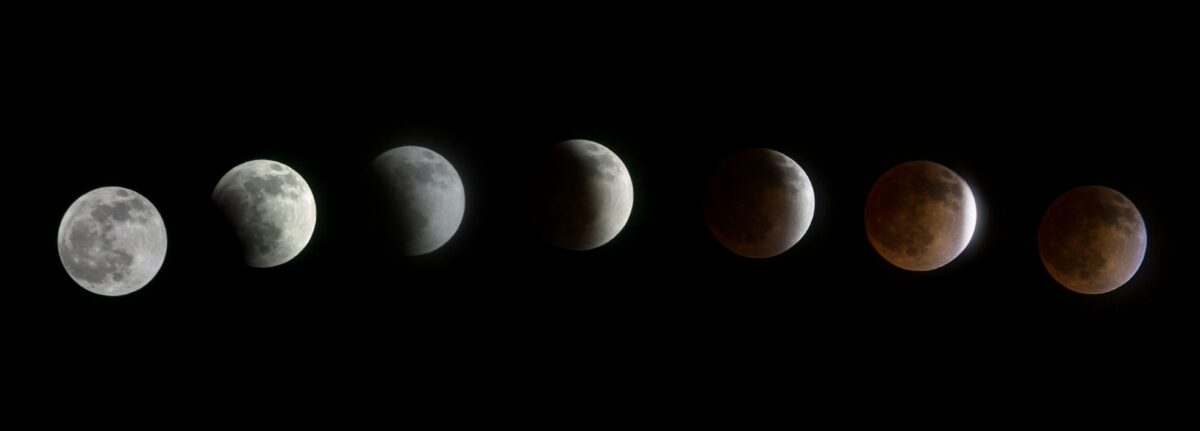
Eclipses are among the most intense celestial events in any magical calendar. They occur when the Sun, Moon and Earth align precisely enough to cause one to shadow the other, amplifying and disrupting the normal lunar cycle in ways that most practitioners feel even if they cannot always explain.
Lunar eclipses occur at the full moon when the Earth’s shadow falls across the moon. The energy of a lunar eclipse is deeply internal. It accelerates whatever needs to be released, often by bringing hidden things forcefully into view. Emotions surface unexpectedly, patterns become impossible to ignore and situations that have been building for months can reach a breaking point within days of a lunar eclipse. Shadow work done during a lunar eclipse tends to go deeper and move faster than at any other time.
Solar eclipses occur at the new moon when the Moon passes between Earth and the Sun. This is a new beginning energy but magnified many times over. Solar eclipses reset things. They can close a long chapter and open a new one simultaneously. The intentions set at a solar eclipse carry unusual weight and tend to unfold in unexpected directions over the months that follow.
Most traditions advise against casting spells during the eclipse itself. The energy is too volatile and unpredictable for precise intention work. Instead, use the day or two before an eclipse to close out what needs ending and the day or two after to set what you want to begin. The eclipse itself is a threshold, not a working.
Eclipses arrive in pairs roughly every six months and their effects are felt in the days surrounding them, not only at the moment of exactness.
Void-of-Course Moon
Between each sign transition, the moon enters what astrologers call a void-of-course period. This is the time after the moon makes its final major aspect to another planet in the current sign and before it moves into the next sign. Void-of-course periods can last a few minutes or up to two days.
In magical practice the void-of-course moon is generally considered an unfavorable time for spellwork. Intentions set during this period tend to lose momentum or fail to manifest in the way intended. The energy is unmoored and lacks direction.
However, the void-of-course moon is not a time to avoid entirely. It is excellent for rest, meditation, reviewing plans without making final decisions and any practice that benefits from a lack of forward momentum. Cleansing rituals, journaling and dreamwork all work well in this window.
Keeping a lunar calendar that includes void-of-course times allows you to plan important spells and rituals during periods of active lunar energy and reserve the void periods for inner work.
Frequently Asked Questions
Does the moon phase really affect spellwork?
The moon’s gravitational influence on water is measurable and documented. Since the human body is largely water and since magic works with intention and energy, many practitioners find that aligning with lunar cycles amplifies their work. Whether you view this as literal physics or symbolic framework, the practice of working with moon phases creates a natural rhythm for magical and personal development.
What is the most powerful moon phase for spellwork?
The full moon is traditionally considered the most powerful phase due to its peak illumination and energy. However, the most powerful phase depends on what you are working toward. For new beginnings the new moon is most potent. For releasing and banishing the last quarter and waning crescent are more effective than the full moon.
Can I do magic on any moon phase?
Yes. While aligning with the lunar cycle strengthens spellwork, your intention and focus matter more than perfect timing. If you need to do a releasing spell during a waxing moon, do it. The phase is a support, not a requirement.
What is moon water and how do I make it?
Moon water is water that has been left under moonlight to absorb the lunar energy of a particular phase. Leave a sealed glass jar of water on a windowsill or outdoors overnight during the phase whose energy you want to capture. Full moon water is the most commonly made but each phase produces water with its own quality. Use it in rituals, for watering plants, in floor washes or in bath magic.
How do eclipses differ from regular full and new moons?
Eclipses amplify the energy of the phase they occur in by several magnitudes and tend to bring sudden or accelerated change rather than the gradual unfolding of a regular lunation. They are turning points rather than waypoints and their effects are felt over weeks rather than days.
What does void-of-course moon mean for magic?
A void-of-course moon period is the window between the moon’s last major astrological aspect in one sign and its entry into the next. Spells cast during this period frequently do not manifest or develop in unexpected directions. It is generally recommended to avoid important magical workings during void-of-course periods and use the time for rest and reflection instead.
Photo by Daniel Sinoca on Unsplash