

Few figures in Western spiritual history have been as thoroughly transformed by time, translation and political theology as Lucifer. The name today carries an almost reflexive association with evil, darkness and the adversary of God. But that association is the result of a specific, traceable sequence of events: a mistranslation, a series of theological leaps, centuries of artistic elaboration and the gradual conflation of several distinct figures into one. Understanding how it happened reveals not only who Lucifer is but also how cultural narratives about light, knowledge and rebellion are constructed and weaponized.
For practitioners of witchcraft and occult traditions, this history matters in a specific way. Lucifer appears across magical traditions as something quite different from the Christian Satan: a figure of illumination, initiation and the morning light that precedes the sun. Reclaiming the original complexity of this figure is part of how contemporary practitioners understand their own relationship to light, shadow and the forces that Western religion has systematically demonized.
Where Does the Name Lucifer Come From?
The name Lucifer is Latin. It means light-bringer or light-bearer, from the words lux (light) and ferre (to carry). In classical Roman usage it had a single, straightforward referent: the planet Venus as it appears in the sky before dawn, outshining everything around it, heralding the approach of the sun. Lucifer was the morning star. It was not a name, not a title and not a supernatural entity. It was an astronomical description. A beautiful one.
The Romans were not alone in giving Venus this kind of significance. The ancient Greeks called the same celestial body Eosphoros meaning dawn-bearer or Phosphoros meaning light-bringer. These are direct structural equivalents of the Latin Lucifer. The Babylonians associated Venus with Ishtar, goddess of love and war. Across the ancient world, this specific planet, because of its brightness, its position at the boundary between night and day and its cyclical appearance as both morning star and evening star, held a uniquely liminal quality. It belonged to neither the night nor the day but to the threshold between them.
In this context there was nothing sinister about the word Lucifer. A Roman poet could call a torch Lucifer. A new emperor could be welcomed as Lucifer in the sense of one who brings light to a darkened world. The word was simply a quality of radiance.
What Did Isaiah Actually Write?
The transformation of Lucifer from an astronomical description into a supernatural figure begins with a single passage in the Hebrew Bible, Isaiah 14:12 and it begins with a mistranslation.
The original Hebrew text of Isaiah 14 is a taunt song, a bitter and scornful poem addressed specifically to the king of Babylon. Isaiah 14:4 states this explicitly: “You will take up this taunt against the king of Babylon.” The poem mocks the tyrant who considered himself divine, who crushed nations and enslaved peoples and who now faces humiliation and death. At verse 12 the poet uses a striking metaphor: the king is compared to Helel ben Shachar, the Hebrew phrase meaning shining one, son of the dawn, a reference to the morning star, Venus, which blazes brilliantly but is extinguished when the sun rises. The image captures the king’s overreach: he shone intensely but briefly and now he falls.
The Hebrew word helel appears only once in the entire Hebrew Bible. Modern biblical scholars are in broad agreement that it refers to the morning star as a poetic metaphor for the Babylonian king’s hubris and downfall. The text itself supports this: verses 16 and 17 immediately following describe the fallen figure as a man: “Those who see you stare at you, they ponder your fate: Is this the man who shook the earth and made kingdoms tremble?”
A man. Not an angel.
When the Hebrew scriptures were translated into Greek, the Septuagint rendered helel ben shachar as Eosphoros, the Greek word for the morning star, maintaining the astronomical metaphor. When Jerome translated the Bible into Latin in the late 4th century to produce what became the Vulgate, he rendered Eosphoros as Lucifer, the Latin equivalent. This was not necessarily a distortion: it was a translation of a metaphor using the Latin equivalent. But it created a linguistic overlap with enormous consequences. The word Lucifer was now in the Bible as a name and names in sacred texts acquire a gravity that astronomical descriptions do not.
Who First Made Lucifer a Fallen Angel?
The critical interpretive leap, connecting the Isaiah 14 metaphor to a supernatural fallen being rather than the king of Babylon, did not happen immediately. It developed gradually through several early Christian writers working in the 2nd and 3rd centuries.
Tertullian of Carthage, writing around 200 CE, appears to be among the first to apply the words of Isaiah 14 to the devil rather than to a human king. He used the passage in his arguments about the nature of evil but without yet attaching the name Lucifer specifically to Satan.
The more systematic leap was made by Origen of Alexandria, writing around 230 CE in his work De Principiis. Origen is the first writer we have clear record of explicitly connecting Isaiah 14:12 with Luke 10:18, in which Jesus says “I saw Satan fall like lightning from heaven.” Origen concluded that Isaiah’s falling morning star and Jesus’s falling Satan were the same event, the same figure. He then read Isaiah 14 not as political satire about a Babylonian king but as a theological biography of a being who had once been luminous and fell through pride. This was a significant exegetical decision. Isaiah’s text addresses its subject in second person and places him clearly in a human political context. Origen’s reading required looking past all of that.
Augustine of Hippo, writing in the early 5th century, developed the theology further. Augustine argued in his monumental City of God that the devil’s rebellion was the first and ultimate cause of evil and that pride was the original sin: loving oneself above God. For Augustine, the rebellion of the Devil was the first and final cause of evil. By the time Jerome’s Vulgate was circulating widely, the interpretive tradition connecting Lucifer to Satan was established, though it had not yet fully hardened into the singular demonic identity it would become.
It is worth noting that not everyone in the Christian tradition accepted this interpretation. Protestant reformers John Calvin and Martin Luther both explicitly rejected the identification of Lucifer with Satan. Calvin wrote that this reading “has arisen from ignorance: for the context plainly shows these statements must be understood in reference to the king of the Babylonians.” Luther called it a gross error. Modern biblical scholarship broadly agrees with them on the textual grounds, though the folk theology of Lucifer as fallen angel has proven far more persistent than the scholarly correction.
The Translation Chain That Changed Everything
Understanding what happened to Lucifer requires following a specific sequence of translation decisions, each reasonable in isolation, catastrophic in combination.
The Hebrew helel ben shachar, a poetic metaphor meaning shining one, son of the dawn, was rendered by Greek translators as Eosphoros, the Greek name for the morning star (Venus). Jerome then translated Eosphoros as Lucifer, the Latin equivalent. When English translators working from the Latin Vulgate rather than the original Hebrew produced the King James Bible in 1611, they kept the Latin word intact, translating it as the proper name Lucifer rather than as morning star or shining one.
That sequence, Hebrew poetic epithet to Greek mythological term to Latin astronomical name, created linguistic overlap between a celestial metaphor and a personal label.
The result is that the King James Bible says “O Lucifer, son of the morning” while most modern translations, working from the original Hebrew, say “O morning star, son of the dawn” or “O shining one, son of the dawn.” The KJV’s rendering made Lucifer look like a proper name, one that already carried, by 1611, four centuries of theological association with Satan.
Modern translations corrected this. The New International Version, the English Standard Version and most contemporary scholarly translations do not use the word Lucifer at all in Isaiah 14:12. This was not, as some have claimed, an attempt to suppress truth. It was a more accurate rendering of the original Hebrew.
How Did Three Separate Texts Become One Figure?
The Lucifer theology that dominates Western imagination is built from three distinct biblical passages, originally addressing three different figures, woven together into a single narrative.
The first is Isaiah 14:12-15, the taunt against the king of Babylon already discussed: the falling morning star.
The second is Ezekiel 28:12-17, a lament addressed to the king of Tyre: “You were the seal of perfection, full of wisdom and perfect in beauty. You were in Eden, the garden of God. Every precious stone adorned you… You were blameless in your ways from the day you were created till wickedness was found in you.” This passage is also a poem about a human king, using the rhetorical device of comparing the king to an idealized being to intensify the indictment of his corruption. It places the figure in Eden and describes a fall from a state of perfection.
The third is Revelation 12:7-9, which describes a cosmic war in heaven and a dragon being cast down: “And the great dragon was cast out, that old serpent, called the Devil and Satan, which deceiveth the whole world.”
Early Christian theologians, including Origen and later Augustine, read these three passages as describing the same event and the same being: a once-glorious angel named Lucifer who rebelled against God and was cast from heaven. The identification required considerable interpretive effort. Isaiah is about a Babylonian king, Ezekiel about a Tyrian king and Revelation about an apocalyptic dragon. Jerome’s Latin Vulgate and patristic allegorizing merged and Lucifer became embedded in Western Christian imagination as the pre-fall name of Satan, even while many modern scholars and several historical commentators insist the original passages addressed human rulers.
By the medieval period, this synthesis was complete and largely unquestioned within mainstream Christianity. Lucifer was Satan, Satan was Lucifer and both were the adversary of God, the principle of evil and the ruler of hell.
What Did Medieval and Renaissance Culture Do to Lucifer?
The theological identification became the raw material for an extraordinary outpouring of artistic, literary and popular imagination. The medieval Lucifer was no longer simply an adversary but a complex figure: the most beautiful and intelligent of God’s creations, brought low by a single act of pride. This paradox, that the greatest beauty and intelligence could produce the greatest evil, fascinated medieval theologians and artists alike.
Dante Alighieri’s Divine Comedy, written in the early 14th century, placed Lucifer at the absolute center of Hell, frozen in ice at the earth’s deepest point, endlessly chewing the three greatest traitors in history: Judas, Brutus and Cassius. This Lucifer is not the cunning, active adversary of medieval folklore. He is entirely passive, enormous and grotesque, weeping from his six eyes while his wings beat a freezing wind over the entire frozen lake. Dante’s image captured something theologically precise: for him, evil is not active but purely negative, the ultimate absence of divine light, motion and warmth. The great rebel is now simply frozen.
John Milton’s Paradise Lost, published in 1667, did something quite different. Milton’s Satan is magnificent, eloquent and genuinely tragic. His famous declaration “Better to reign in Hell than serve in Heaven” captured the imagination of generations of readers who found in it something uncomfortably compelling. Milton did not intend his Satan to be admired. But the character he created was far more interesting than the God he depicted and many readers, including the Romantic poets who came after him, read Paradise Lost as an inadvertent vindication of the rebel.
William Blake wrote that Milton was “of the Devil’s party without knowing it.” The Romantic movement in the late 18th and early 19th centuries embraced Lucifer and Satan as symbols of human aspiration, creative defiance and intellectual freedom. Byron, Shelley and Blake found in the fallen angel a mirror for their own sense of alienation from convention and authority. This is the moment when Lucifer begins to shift from theological adversary to cultural archetype of the free thinker.
Lucifer in Occult and Witchcraft Traditions
Within esoteric and occult traditions, Lucifer has occupied a very different position from the one assigned by orthodox Christianity. Here the original meaning, light-bringer, has never been entirely lost and has been actively reclaimed.
In Hermetic and Gnostic currents of thought, the figure of the lightbringer who brings illumination to humanity regardless of divine prohibition connects directly to the myth of Prometheus, who stole fire from the gods for human use. In some Gnostic systems the material world is not the creation of the true God but of a lesser, flawed deity and the serpent of Eden who offered knowledge to humanity was not the enemy of humanity but its benefactor. Lucifer as the bringer of light and knowledge belongs to this counter-tradition: the one who offers the fruit of gnosis rather than enforcing ignorance.
The planet Venus, Lucifer’s astronomical identity, carries specific correspondences in magical practice. Venus rules love, beauty, desire, creative power and aesthetic sensibility. Its dual nature as both morning star and evening star, appearing at dawn to herald the sun and at dusk to accompany the first hours of darkness, gives it a specifically liminal quality: it stands at the boundary between opposites and belongs fully to neither. This liminality maps naturally onto the figure of Lucifer as understood in esoteric practice: not purely light or dark but occupying the threshold between them.
In modern Luciferian practice and in some streams of left-hand path magic, Lucifer is understood as an initiatory principle rather than as a deity to be worshipped in the conventional sense. He represents the capacity for self-illumination: the refusal to remain in ignorance, the willingness to question authority and the courage to seek knowledge even when that seeking comes at a cost. This is not Satanism, though the two are often confused.
Luciferianism, as a modern spiritual movement, does not worship Lucifer as an external deity demanding reverence. Rather, Lucifer serves as an aspirational archetype: a model for intellectual independence, personal transformation and the cultivation of one’s own light through conscious effort rather than divine grace. The emphasis is on the self as the primary agent of its own illumination. Luciferians distinguish clearly between their practice and Satanism, which itself comes in multiple forms. LaVeyan Satanism, established by Anton LaVey in 1966, uses Satan as a symbol of human individuality and the rejection of conformity without literal theistic belief. Theistic Satanism involves actual devotion to Satan as a spiritual being. All three, Luciferianism, atheistic Satanism and theistic Satanism, are distinct traditions that are frequently collapsed together in popular discourse.
For witches who work with Lucifer as a deity or spiritual ally, his domains tend to center on illumination, knowledge, truth-seeking, independence, beauty, transformation through challenge and the morning light that follows darkness. He is not universally worked with in witchcraft and many practitioners have no connection to him at all. For those who do work with him, the historical understanding of his name and origins forms a meaningful foundation for the relationship.
Lucifer and Venus: The Astronomical Dimension
The identification of Lucifer with Venus is not merely etymological. It illuminates the deeper symbolic logic of the figure in ways that the purely theological account obscures.
Venus is the third brightest object in the sky after the sun and moon. Because of the angle of its orbit relative to the Earth, it is always visible within approximately 47 degrees of the sun, meaning it appears either just before dawn in the east or just after dusk in the west. The ancients observed this and initially believed the morning and evening manifestations to be two separate bodies: the morning star Phosphoros or Lucifer and the evening star Hesperos or Vesper. The Pythagoreans are credited with recognizing that they were the same planet.
This duality is itself mythologically rich. The same celestial body that heralds the day also accompanies the night. It belongs to both realms. The figure of Lucifer as light-bringer carries this dual nature: neither purely solar (daytime, masculine, conscious, ordered) nor purely lunar (nighttime, feminine, unconscious, cyclical) but standing at the threshold between the two. In the context of a cosmology that equates darkness with evil and light with good, this liminality makes Lucifer threatening. In a more nuanced cosmology, it makes him one of the most complex and interesting figures available.
In magical practice, Venus’s day is Friday and its metal is copper. Its correspondences include love, desire, beauty, aesthetic pleasure, creative power, attraction and the magnetism that draws opposites together. Working with Lucifer through Venusian magic means engaging with these qualities: the creation of beauty, the attraction of what is desired and the illumination of what has been in darkness.
The Samael Connection
Jewish mysticism offers an additional layer to Lucifer’s genealogy. In Kabbalistic tradition and in various strands of Jewish apocalyptic literature, a figure called Samael occupies a role somewhat parallel to the Christian Satan: an angel of death and accusation, a prosecutorial force within the divine court. Samael and Lucifer are not identical and the traditions about them developed separately, but early Christian writers were aware of the figure of Samael and the similarities between his role as a divine adversary and the emerging portrait of Lucifer contributed to the synthesis.
In some Kabbalistic texts Samael is married to Lilith, another figure who was systematically demonized by being associated with the feminine aspects of creative power that patriarchal theology found threatening. The parallel trajectories of Lucifer and Lilith, both originally complex figures associated with light and creative power, both relentlessly darkened by centuries of theological condemnation, make them natural companions in the modern reclamation of these energies.
Lucifer in Pop Culture
The distance Lucifer has traveled from his origins as an astronomical Latin adjective can be measured partly by his presence in contemporary popular culture, where he appears primarily as a complex antihero rather than as straightforwardly evil.
The television series Lucifer, adapted from Neil Gaiman’s comic book character who himself appeared in The Sandman, depicts Lucifer Morningstar as a charming, witty, occasionally exhausted former ruler of Hell who has retired to Los Angeles to run a nightclub. The show’s theology is Miltonic: Lucifer as the rebel who chose sovereignty in Hell over submission in Heaven. But it is played as comedy and drama rather than horror and the character is presented with genuine sympathy. The show ran for six seasons and developed a large and devoted following.
David Bowie explored Luciferian themes throughout his career, particularly in his Ziggy Stardust persona, which drew on the figure of the fallen star to explore alienation, androgyny and artistic transcendence. His final album Blackstar, released two days before his death in 2016, included imagery connected to the morning star and the threshold between life and death.
In literature, the Lucifer of Paradise Lost has proven the most enduring. Academic discussions of Satan’s characterization in that poem remain lively and the question of whether Milton’s Satan is genuinely heroic or merely compelling is still debated. What is beyond debate is that Milton gave the figure a voice, interiority and rhetoric that made him far more human and therefore far more interesting than any of the figures around him.
FAQ
Is Lucifer the same as Satan?
Not originally. The conflation of Lucifer with Satan is the result of specific translation choices and theological interpretations made primarily between the 2nd and 5th centuries CE. The name Lucifer appears only once in the Bible, in Isaiah 14:12, where it translates the Hebrew helel and describes the falling of the king of Babylon using the metaphor of the morning star. Early Christian writers including Origen connected this passage to New Testament references to Satan falling from heaven and built a unified narrative. Modern biblical scholars broadly agree that Isaiah 14 addresses a human king and that the identification with Satan is a later interpretive development. Many denominations and most contemporary biblical translations do not use the word Lucifer at all in Isaiah 14.
Why do modern Bibles not use the word Lucifer?
Because modern translations work from the original Hebrew text rather than from Jerome’s 4th-century Latin Vulgate. The Hebrew word helel in Isaiah 14:12 means shining one or morning star and is not a proper name. Modern translations render it as morning star, day star or shining one, which is what the Hebrew actually says. Only the King James Version (1611) and its direct descendants, which translated from Jerome’s Latin rather than the Hebrew, retain the word Lucifer. This is a translation accuracy issue rather than a theological one.
What is the difference between Lucifer, Satan and the Devil?
These three names are often used interchangeably in popular culture but they have distinct origins. Lucifer is the Latin translation of a Hebrew astronomical metaphor. Satan is a Hebrew title meaning adversary or accuser, used in the Hebrew Bible for a prosecutorial figure in the divine court and in the New Testament for the adversary of Christ and humanity. The Devil is a Greek-derived English word meaning slanderer or accuser. In orthodox Christian theology all three are identified as the same being. In historical, academic and occult contexts, they are usefully kept distinct because they have different origins, different original meanings and different mythological functions.
What does Lucifer represent in witchcraft?
In witchcraft and occult traditions that work with Lucifer, he typically represents illumination, the pursuit of knowledge regardless of authority, initiation through darkness into light, the morning star as a liminal figure standing between night and day and the Venus principle of beauty, desire and creative power. He is an optional figure, not universally worked with. For practitioners who do engage with him, the emphasis tends to be on self-illumination, intellectual courage and the willingness to seek truth in uncomfortable places. This understanding draws on the original meaning of the name and the astronomical identity of Venus rather than on the theological tradition that made him into the adversary of God.
What is Luciferianism and how does it differ from Satanism?
Luciferianism is a modern spiritual movement that uses Lucifer as an aspirational archetype of self-illumination, intellectual independence and personal transformation. It does not necessarily involve worship of Lucifer as a deity and generally emphasizes the cultivation of one’s own light through conscious effort and self-knowledge. LaVeyan Satanism, founded by Anton LaVey in 1966, uses Satan as a symbol of human individuality and the rejection of conformity without theistic belief. Theistic Satanism involves actual devotion to Satan as a spiritual being. All three traditions are frequently conflated in popular discourse but they have distinct theologies, practices and cultural origins.
Who was Origen and why does he matter to this history?
Origen of Alexandria (c. 185-254 CE) was one of the most influential early Christian theologians and biblical interpreters. He is significant to the history of Lucifer because he was among the first to systematically identify the falling morning star of Isaiah 14 with Satan, connecting that passage to Luke 10:18 (where Jesus says “I saw Satan fall like lightning from heaven”) in his work De Principiis. This interpretive move, reading Isaiah’s political taunt about the king of Babylon as a cosmic biography of a fallen angel, was enormously influential and laid the groundwork for the theological tradition that eventually produced the Lucifer we know. Tertullian made a similar move independently around the same period. It is worth noting that John Calvin and Martin Luther, among others, explicitly rejected this interpretation as a reading error.
Is the morning star symbol used positively anywhere in the Bible?
Yes, notably in Revelation 22:16 where Jesus says: “I am the Root and the Offspring of David and the bright Morning Star.” The morning star is also used positively in 2 Peter 1:19 to describe spiritual illumination. This creates a remarkable theological irony: the same celestial image is applied both to Christ as the bringer of divine light and to the fallen Lucifer. Jerome’s decision to translate helel as Lucifer rather than as morning star helped paper over this overlap, since the Latin word Lucifer did not appear in the New Testament passages that used the morning star imagery for Christ. When that distinction is removed by returning to the underlying Hebrew and Greek, the shared symbolism becomes apparent and significantly complicates the simple identification of the morning star with evil.







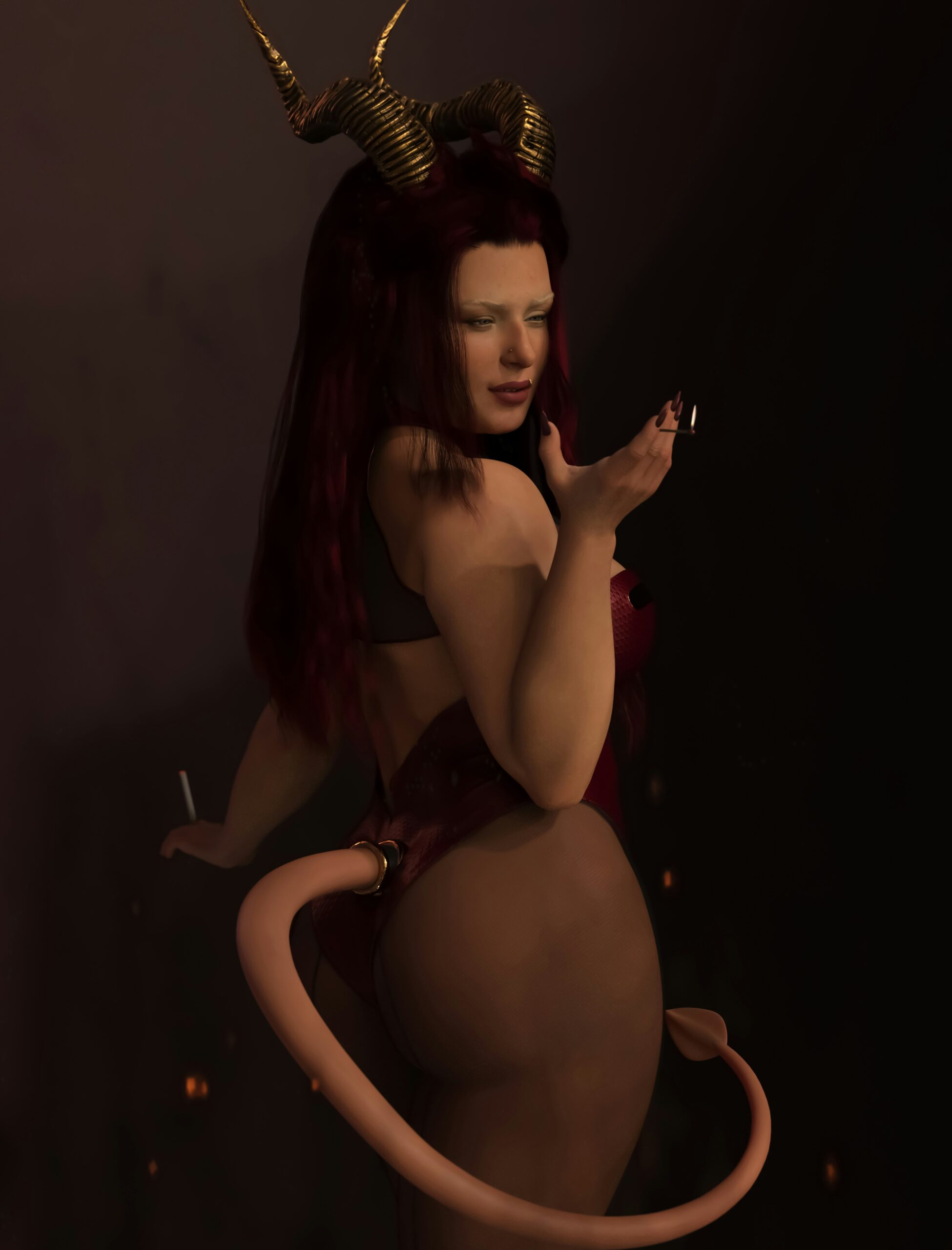

[…] For a detailed exploration of Lucifer’s true nature and historical evolution, see our comprehensive article: Who Is Lucifer? Understanding the Misunderstood Figure in Myth and Symbolism. […]
[…] name Lucifer appears in the Latin Vulgate translation of Isaiah. The original passage almost certainly refers to […]
[…] For practitioners who work with the Lucifer figure, the Inferno’s Satan is a significant departure from that tradition. Dante’s frozen, weeping, mechanical Satan is specifically the result of betrayal: the ultimate cutting off from divine connection. The Lucifer of occult tradition, the morning star, the light-bringer, is a very different figure from the frozen engine at the bottom of Dante’s Hell. Understanding the distinction is part of understanding how the figure of Lucifer has been transformed by centuries of theological and artistic elaboration, as covered in Who Is Lucifer? Understanding the Misunderstood Figure in Myth, History and Symbolism. […]