Kitsune are supernatural fox spirits deeply rooted in Japanese mythology and folklore. These enigmatic creatures have captivated imaginations for centuries with their shape-shifting abilities, magical powers and complex nature that encompasses both benevolence and mischief.
Origins and Cultural Significance
The word “kitsune” (狐) simply means “fox” in Japanese, but in folklore it refers specifically to magical foxes that possess supernatural abilities. These spirits have been part of Japanese culture since ancient times, appearing in countless stories, art and religious practices. Kitsune hold a unique position in Japanese spirituality as they are neither wholly good nor evil, existing instead in a fascinating gray area that reflects the complexity of nature itself.
Shape-Shifting Abilities
One of the most renowned characteristics of kitsune is their ability to transform into human form. According to tradition, foxes gain this power as they age and accumulate wisdom. The transformation is often described as being so perfect that kitsune can live among humans undetected for extended periods.
Kitsune typically prefer to take the form of beautiful women, though they can assume any human appearance. Some tales describe kitsune maintaining small fox-like features even in human form, such as a tail they cannot fully conceal or a reflection that reveals their true nature. The most powerful kitsune can create elaborate illusions, conjure fire and even bend reality to their will.
Types of Kitsune
Japanese folklore distinguishes between different types of kitsune based on their nature and allegiances.
Zenko (善狐), meaning “good foxes,” are benevolent spirits that serve the Shinto deity Inari. These celestial foxes act as messengers and guardians, protecting rice fields, ensuring bountiful harvests and watching over humans. Zenko are revered and welcomed, often depicted with white or golden fur.
Yako (野狐), also called nogitsune, are wild foxes that exist independently of divine service. These spirits tend toward mischief and trickery, though they are not inherently evil. Yako might play pranks on humans, possess people or create illusions for their own amusement. Their behavior ranges from harmless jest to genuinely malevolent actions depending on how they have been treated by humans.
Connection to Inari
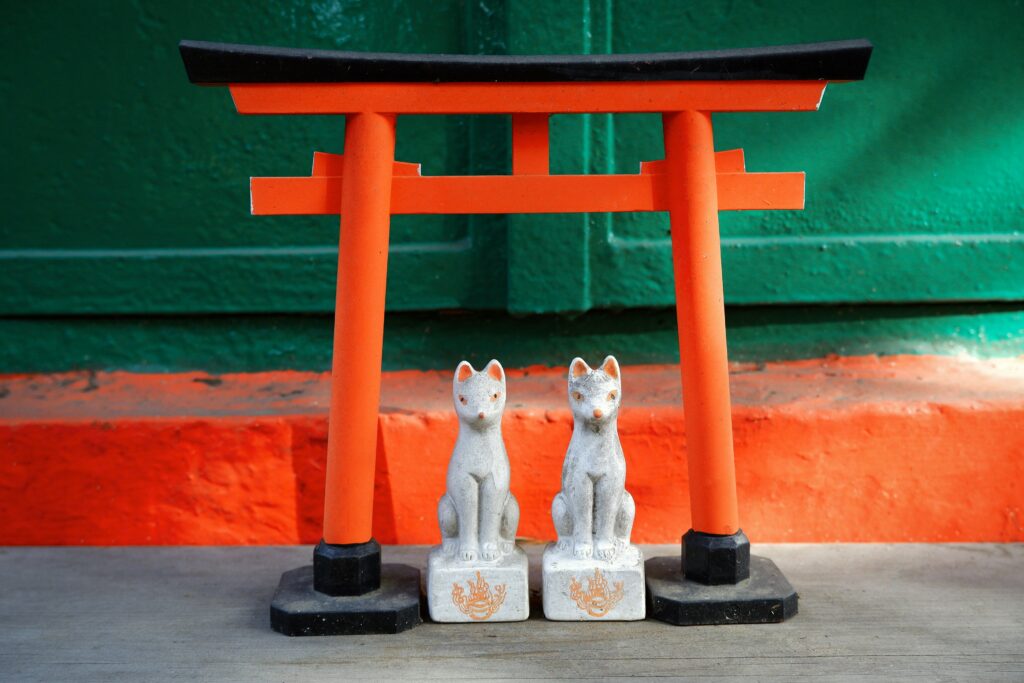
Kitsune share an intimate connection with Inari, one of the most important deities in the Shinto religion. Inari is the kami (god or spirit) of rice, fertility, agriculture, foxes and prosperity. Thousands of Inari shrines dot the Japanese landscape, and nearly all of them feature fox statues flanking the entrance.
These fox guardians are considered messengers and servants of Inari rather than the deity itself, though the relationship is sometimes blurred in popular understanding. The kitsune at Inari shrines are always zenko and are treated with great respect. Worshippers often leave offerings of rice, sake and fried tofu (believed to be a favorite food of foxes) at these sacred sites.
Powers and Abilities
As kitsune age, they grow in both wisdom and power. This progression is often marked by the number of tails they possess. A kitsune can have anywhere from one to nine tails, with nine-tailed foxes (kyūbi no kitsune) being the most powerful and ancient. Each additional tail represents centuries of life and accumulated magical ability.
Beyond shape-shifting, kitsune possess various supernatural powers including:
Kitsune-bi (fox fire) is a mystical flame that kitsune can create and control. These eerie lights, often seen floating in the darkness, have led many travelers astray. The fire can be used for illumination, creating illusions or as a weapon.
Kitsune can possess humans, a state called kitsunetsuki. Victims might behave strangely, speak in different voices or display knowledge they could not normally possess. Traditional exorcisms and rituals exist to free people from fox possession.
Many stories describe kitsune as having near-omniscient knowledge. They can see the future, read thoughts and know secrets hidden from ordinary beings. This wisdom increases dramatically with age.
Kitsune in Stories and Legend
Japanese folklore overflows with kitsune tales. Some stories portray them as faithful lovers who take human form to marry mortals, only to eventually return to their fox nature. Other narratives feature kitsune as tricksters who outwit arrogant humans or punish those who harm foxes or nature.
One famous legend tells of a kitsune named Tamamo-no-Mae, a nine-tailed fox who disguised herself as a beautiful woman and became a courtesan to the emperor. Her true nature was eventually discovered, and she fled, but not before causing great turmoil. This tale exemplifies the dual nature of kitsune as both alluring and dangerous.
Another common theme involves kitsune wives. A man might marry a beautiful woman, unaware she is actually a fox in disguise. They live happily together, sometimes for years, until something reveals her true nature. In many versions, the kitsune flees in sorrow, leaving behind a heartbroken husband and sometimes half-fox children.
Modern Cultural Impact
Kitsune remain enormously popular in contemporary Japanese culture. They appear frequently in anime, manga, video games and literature. Modern interpretations range from faithful recreations of traditional folklore to creative reimaginings that explore new aspects of these mythical beings.
The enduring appeal of kitsune lies in their complexity. They are neither heroes nor villains but beings of nature with their own motivations, capable of great kindness and terrible tricks. This ambiguity makes them endlessly fascinating and allows each generation to find new meanings in these ancient spirits.
Recognizing a Kitsune
Traditional folklore offers several ways to identify a disguised kitsune. Foxes fear and hate dogs, so a kitsune in human form might show unusual anxiety around canines. Reflections in water or mirrors might reveal a fox’s true form. Some stories mention that kitsune cast no shadow or that their shadow appears fox-shaped even when they look human.
Sake is said to make kitsune lose control of their transformation, potentially revealing tails or fox ears. Rain falling while the sun shines is sometimes called “kitsune no yomeiri” (fox wedding) and is considered a time when foxes are particularly active.
Respecting the Fox Spirits
In Japanese tradition, treating foxes with respect is essential. Harming a fox, destroying their dens or showing disrespect can invite supernatural retribution. Conversely, showing kindness to foxes might earn their gratitude and protection. Many tales tell of people who helped injured foxes and were later rewarded with good fortune or saved from danger by their vulpine friends.
This respectful relationship extends to the natural world more broadly. Kitsune folklore encourages humans to live in harmony with nature and recognize that the world contains mysteries and powers beyond human understanding.
The Eternal Mystery
Kitsune embody the Japanese appreciation for the mysterious and unknowable aspects of existence. They remind us that not everything can be explained or controlled, that nature possesses its own intelligence and agency. Whether appearing as divine messengers at Inari shrines or as tricksters leading travelers astray with fox fire, kitsune continue to captivate and inspire wonder.
These fox spirits represent the boundary between the human and natural worlds, the seen and unseen, the mundane and the magical. In their golden eyes and swishing tails lies an invitation to look beyond the ordinary and acknowledge the extraordinary that might be hiding in plain sight.
Photo by Susann Schuster on Unsplash