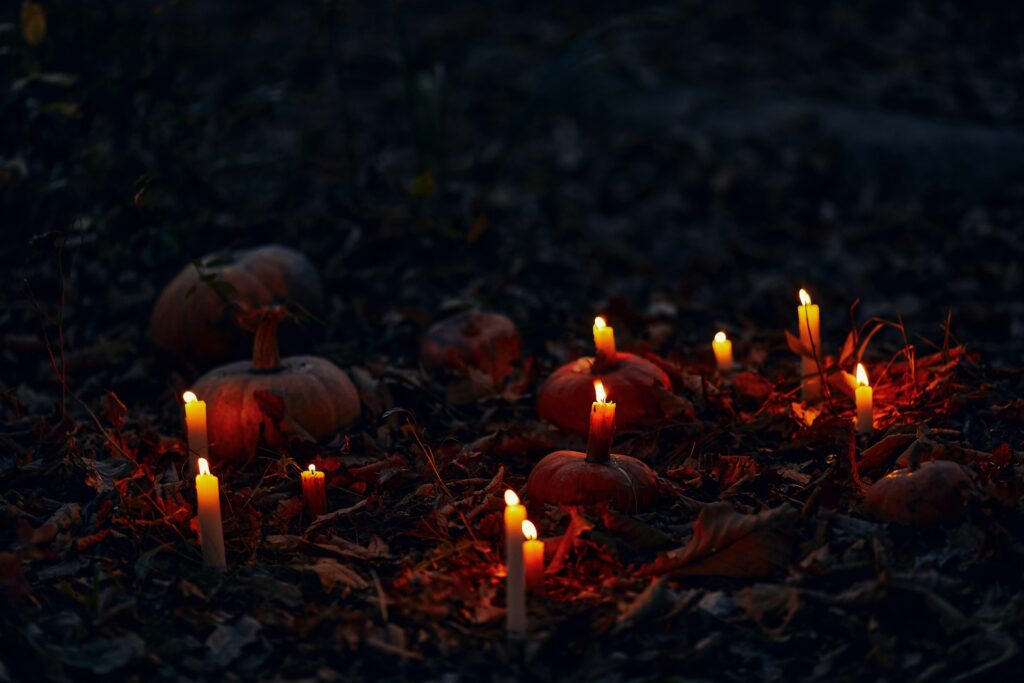
The pumpkin arrived in European magical tradition relatively late. Before the Americas were colonized, the Celtic Samhain lanterns were carved from turnips and rutabagas, grotesque faces cut into root vegetables and lit from inside with embers or tallow candles. When Irish and Scottish immigrants brought the tradition to North America in the 19th century, they found the native pumpkin: larger, easier to carve and already a central harvest crop of Indigenous peoples who had cultivated it since at least 3500 BCE. The carved lantern tradition shifted to pumpkins almost immediately and within a few decades the pumpkin had become the defining symbol of autumn in North American culture.
What those immigrants brought with them, without necessarily articulating it in those terms, was a magical lineage. The carved face was originally protective magic. The light inside was meant to represent the souls of the departed and to frighten wandering spirits away from the doorstep. That protective intention is still available to anyone who works with pumpkins deliberately at Samhain rather than simply decorating with them.
Pumpkins carry correspondences of protection, abundance, fertility, transformation and connection to the dead. At Mabon they represent the harvest at its peak. At Samhain they serve as vessels for protective magic, ancestor offerings and intention work. Their hollow form makes them natural containers for spell ingredients. Their seeds carry the energy of potential and new growth. Their flesh connects to nourishment, generosity and the cycle of the earth.
What Is the Magical History of the Jack-O-Lantern?
The carved lantern tradition traces to Ireland and Scotland where it was practiced at Samhain specifically. The folk explanation centers on the legend of Stingy Jack, an Irish trickster who outwitted the devil twice and secured a promise that his soul would never be claimed by hell. When Jack died, heaven refused him for his sins and hell honored the agreement. He was condemned to wander the earth forever with nothing but a burning coal placed inside a hollowed turnip to light his way. People began carving turnips with frightening faces to represent his wandering spirit and to warn other wandering souls away from the door.
The older layer beneath the folk story is more directly magical. The head was considered the most sacred part of the body in Celtic tradition: the seat of the soul and of personal power. Carving a face into a vegetable created a symbolic guardian head to be placed at the threshold. The light inside animated it. This is the same logic that drives much threshold protection work: you place something powerful at the boundary between inside and outside to screen what crosses it.
When the tradition arrived in North America and shifted to pumpkins, the magical logic stayed intact. The jack-o-lantern is still a threshold guardian, still a protective working, still an act of magic whether or not the person carving it recognizes it as such.
How to Use a Pumpkin as a Protection Spell
Carving a pumpkin with deliberate magical intention transforms a Halloween tradition into an active working. The principle is exactly the same as the original Samhain turnip lanterns: you are creating a guardian for your threshold.
Choose a pumpkin that feels solid and vital. Before you begin carving, hold it with both hands and state your intention clearly: this pumpkin will guard this threshold through the Samhain season and return to the earth when its work is complete.
Instead of or alongside a conventional face, carve protective symbols into the pumpkin’s surface:
- Algiz (ᛉ) for warding and protection, the most commonly used protective rune. The full meanings of each rune are in Runes: Modern Meanings and Uses
- A pentagram for elemental balance and protection
- Your own protective sigil, designed specifically for this threshold. Sigil Magic: A Complete Practical Guide to Creating and Charging Sigils covers how to create one
- The eye symbol, in the same tradition as the evil eye amulet, to watch what approaches
Before placing the candle inside, add a small amount of dried protective herbs to the interior: rosemary, sage, black pepper or salt. These reinforce the protective intention through the heat of the candle as it burns. Salt in particular has been used across traditions as a foundational protective ingredient. Salt in Witchcraft covers its properties in depth.
If carving feels too involved, draw the symbols directly onto the pumpkin’s surface with a thick permanent marker or a paint pen. The protective intention is the same regardless of whether the symbol is cut into the flesh or drawn on the surface.
Place the pumpkin at your main entrance with the carved face or symbols facing outward. Light the candle at dusk on Samhain night and allow it to burn through the evening. The light radiating through the carved symbols carries your protective intention outward through the threshold.
How to Use a Pumpkin for Abundance and Gratitude
Pumpkins symbolize the harvest at its completion: everything that was planted in spring and tended through summer has now been gathered. This makes them ideal vessels for gratitude work and abundance magic that honors what has already been received rather than simply asking for more.
Gratitude vessel ritual:
Choose a small to medium pumpkin. Cut off the top and scoop out the interior, keeping the seeds for separate use. Write on small pieces of paper the specific things you are grateful for from the year now ending: relationships, opportunities, moments of unexpected grace, things that were hard but taught you something. Be specific rather than general.
Place the papers inside the pumpkin along with any crystals connected to abundance and gratitude (citrine and green aventurine work well for this) and anything else that represents what you want to honor. Replace the top. Leave the pumpkin on your altar or in a place of prominence through the three days of Allhallowtide.
After November 2nd, bury the entire pumpkin in the earth, papers and all. The decomposition of the pumpkin returns everything inside it to the soil, completing the symbolic cycle: gratitude becomes compost becomes future abundance.
How to Use a Pumpkin for Ancestor Offerings at Samhain
The Samhain season is the primary time in the year when ancestor work is most available, as the veil between the living and the dead thins at the cross-quarter point between the autumn equinox and winter solstice. For full context on why this thinning happens and how to work with it, Samhain: Honoring the Cycle of Life and Death covers the festival’s history and practices in depth.
Pumpkins have been used as ancestor offerings within Indigenous and folk traditions across cultures that cultivated them. The harvest context is significant: you are offering the fruit of the earth’s generosity to those who came before you, acknowledging the continuity between the living and the dead.
A simple pumpkin ancestor offering involves placing a small whole pumpkin or pumpkin-based food on your ancestor altar alongside photographs, candles and other offerings for the dead. You can also hollow a small pumpkin, add a candle and use it as the altar’s central light source for the Samhain three-day period. The flickering light through the pumpkin’s skin serves the same function as the original lanterns: guiding the beloved dead toward the warmth of the living.
How to Use Pumpkin Seeds in Magic
Pumpkin seeds are often discarded when carving but they carry a distinct magical quality separate from the pumpkin itself. The seed contains the entire blueprint of what will grow: it holds potential before it has manifested. This makes pumpkin seeds particularly suited to intention work, new beginnings and prosperity magic where the emphasis is on planting rather than harvesting.
Intention seeds: Take a handful of cleaned, dried pumpkin seeds. For each seed, hold a specific intention in mind and speak it aloud or write it on a small slip of paper. These seeds can be buried in the garden or in a pot of soil as a literal planting of your intentions, carried in a charm bag or placed on your abundance altar through the winter until you plant them in spring.
Prosperity charm: Place pumpkin seeds in your wallet or in a small pouch alongside a coin and a piece of citrine. The seeds represent growing potential, the coin represents existing abundance and the citrine amplifies the energy of the combination.
Pumpkin seed runes: Pumpkin seeds make a natural set of Samhain-specific divination tokens. Clean and dry the seeds thoroughly, then mark each one with a rune symbol using a thick permanent marker or by burning the mark lightly with a hot needle or wood-burning tool. You need 24 seeds for a complete Elder Futhark set. The seeds are small so the marks need to be simple and clear rather than elaborate.
Use them the same way as cast runes: hold a question in mind and drop or shake the seeds onto a flat surface. Read only the seeds that land symbol-side up, as these are the ones that have presented themselves. Seeds that land face-down are not part of the reading. At Samhain specifically, pumpkin seed runes carry the energy of the harvest threshold and the thinning veil, which many practitioners find makes the readings unusually direct. For the full meanings of each Elder Futhark rune, Runes: Modern Meanings and Uses is the reference.
Offering to the earth: Scatter pumpkin seeds outdoors near a tree or in a garden as an offering to the earth at the end of the Samhain season. This closes the harvest cycle with a gesture of return and renewal.
How to Use a Pumpkin for Manifestation
The hollow interior of a carved or whole pumpkin makes it one of the most natural vessel-type tools for manifestation magic. You are literally placing your intentions inside something that was once a seed, grew from the earth’s abundance and carries harvest energy.
Manifestation vessel:
Write your intentions on paper. Be specific about what you are calling in and why. Add herbs, oils or crystals that correspond to your intention. Rose petals for love, cinnamon for success and acceleration, rosemary for clarity, clear quartz to amplify intention. Place everything inside the pumpkin and light a candle inside it. As the candle burns, visualize what you are calling in not as something absent but as something in process, already moving toward you.
This working is particularly potent at Samhain when the thinning of the veil allows intentions to move more freely across the threshold between what is and what is becoming. The rituals in Witchy Halloween Rituals: Embrace the Magic of Samhain include additional ways to layer this kind of working into your Samhain practice.
Disposing of Ritual Pumpkins
A pumpkin used in magical work carries whatever energy was directed into it. When its work is complete, return it to the earth. Bury it in your garden or in a natural space rather than putting it in household waste. The pumpkin’s decomposition becomes fertilizer for whatever grows next, which mirrors the magical logic of the working itself: what you invested returns transformed into something new.
If your pumpkin was used for protection and begins to rot before you are ready to dispose of it, cleanse the space where it stood and replace it. A rotting protective pumpkin has usually done what it was meant to do.
FAQ
Are pumpkins native to Europe?
No. Pumpkins are native to the Americas and have been cultivated there for at least five thousand years. They arrived in Europe after Spanish colonization beginning in the 16th century. The original Celtic Samhain lanterns were carved from turnips and other root vegetables, not pumpkins. The association of pumpkins with Halloween developed specifically through Irish and Scottish immigration to North America in the 19th century, where pumpkins were already a central harvest crop.
What do pumpkins symbolize in witchcraft?
Pumpkins carry correspondences of protection, abundance, transformation, fertility and connection to the harvest cycle and the dead. At Samhain specifically they are associated with the thinning of the veil and ancestor work. Their hollow form connects them to vessel magic and intention-setting. Their seeds carry the energy of potential and new growth.
Can I use any pumpkin variety for magic?
Yes. The traditional orange carving pumpkin is most commonly used because of its Samhain associations, but other varieties carry their own energies. White pumpkins are associated with purification and ancestral connection. Small sugar pumpkins are well suited to kitchen magic and hearth-based workings. Unusual varieties like black or red pumpkins can be used for shadow work or protection magic specifically.
What do I do with a pumpkin after a ritual?
Return it to the earth. Bury it in a garden or in natural soil where it can decompose and become part of the earth’s cycle again. This disposal is itself part of the working: the pumpkin completes its cycle from seed to fruit to earth and back to potential. Avoid putting ritual pumpkins in household waste where the intention is simply discarded rather than returned.
Can pumpkin seeds be eaten as part of magical practice?
Yes. Kitchen magic treats the act of eating as an extension of the working. Roasted pumpkin seeds eaten with intention take the protective and fertile energy of the pumpkin into the body. Adding protective herbs to the seasoning (rosemary, black pepper) reinforces the intention. The Kitchen Witchery: Stirring Magic into Everyday Meals article covers how to incorporate this kind of intentional cooking into practice.
Photo by Олег Мороз on Unsplash