
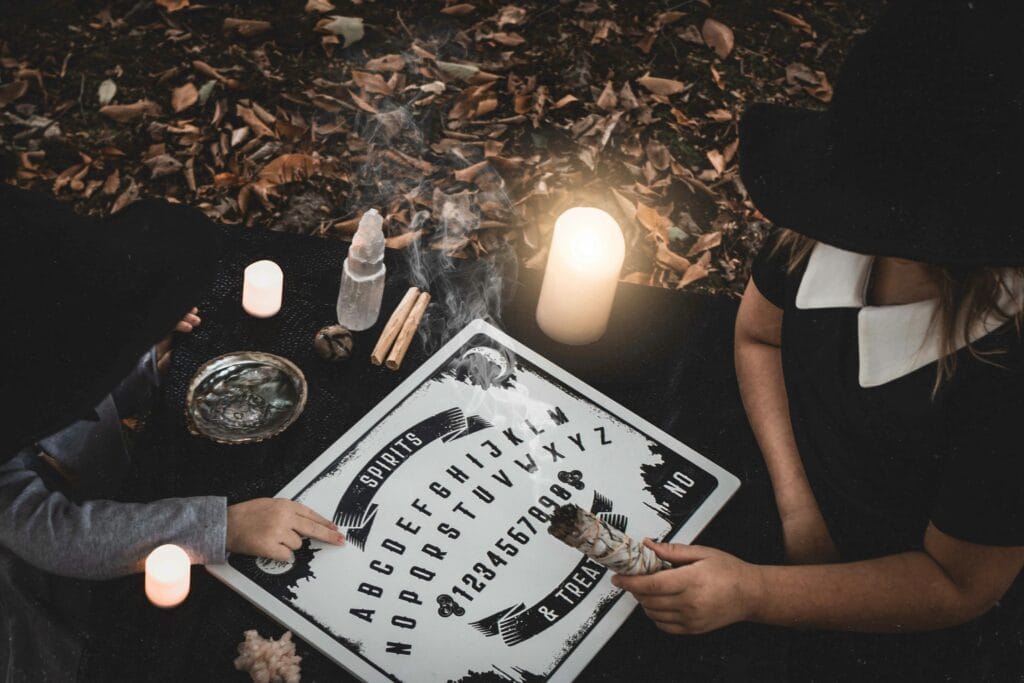
Halloween night carries genuine power regardless of what you call it. The veil between the living and the dead is at its thinnest, the year is turning toward its dark half and the entire culture is, for one night, giving collective attention to death, mystery and the unseen. For a witch, that convergence of the personal, the seasonal and the cultural is something to work with rather than ignore.
What follows is a collection of rituals and practices specifically suited to October 31st, whether you are marking the night purely as Samhain or weaving your spiritual practice through a Halloween that also includes costumes, candles and children at the door. The practices range from simple single-candle observances to more involved rituals and from purely solitary work to things that work in the middle of a gathering. If you want to understand how Samhain and Halloween differ and where the modern holiday actually came from, see Samhain vs Halloween: What’s the Difference?.
Why Halloween Night Is the Most Powerful Night for Magic
The concept of the thinning veil is not metaphor. In the Celtic understanding of the world and in the experience of practitioners across centuries, the boundary between the living and the dead is a real and permeable thing and at Samhain it reaches its most open state of the year.
The reason is seasonal and astronomical. Samhain sits at the cross-quarter point between the autumn equinox and the winter solstice, the moment when the year tips definitively into its dark half. The natural world at this point has withdrawn: the leaves have fallen, the harvest is in, the birds have left, the light is shortening rapidly. The living world is contracting and the barrier between what is alive and what has passed is genuinely thinner at this contraction point than at any other time of year.
What this means practically for a witch:
Divination is sharper. Readings, scrying and any form of seeking information from beyond ordinary perception carry unusual clarity at Samhain. The thinning that makes ancestor communication easier also makes other forms of perception more available. Practitioners who work with tarot or oracle cards regularly notice that Samhain readings tend to be more direct, less ambiguous and more immediately applicable than readings done at other times of year.
Ancestor communication is genuinely possible. This is not about dramatic visitations or mediumship in the theatrical sense. It is about the felt presence of the dead, the clarity of impressions that arise during ancestor work and the sense of contact that experienced practitioners describe as distinct from imagination. At Samhain this contact is available in a way that the same practices performed in, say, March simply do not have access to.
Spellwork for endings and releases lands cleanly. The energy of the season supports the completion of what has run its course. Releasing work, banishing work and any magic oriented toward ending rather than beginning is backed by the full weight of the seasonal turning. What Beltane is to creation and new beginning, Samhain is to completion and release.
The presence of the unseen is heightened generally. This cuts both ways. It means the beneficial presences are more available and it means entities you have not invited are also more active. This is why protective practice is part of responsible Samhain work, not an optional addition. The same thinning that opens communication with the beloved dead also reduces the friction that normally keeps less welcome presences at a distance.
The entire culture cooperates with this energy on Halloween night in its own way. The collective attention given to death, horror and the unseen for one night a year creates a kind of resonance field that practitioners can work with. The veil would thin at this cross-quarter point regardless of whether anyone celebrated Halloween. The fact that millions of people are collectively oriented toward fear, mystery and the darkness on the same night adds something to the overall energetic atmosphere that a solitary practitioner can choose to use or ignore.
Setting Up Your Samhain Altar
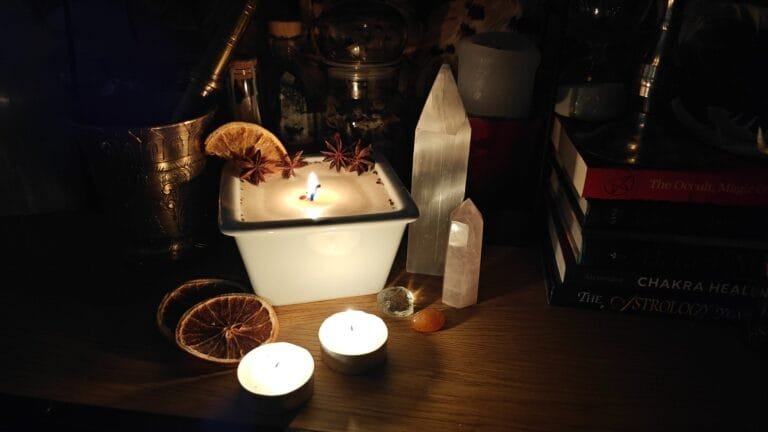
The altar is the foundation of Samhain work. Set it up before dark on October 31st and leave it active through November 2nd, the full span of Allhallowtide.
What belongs on a Samhain altar:
Photographs or objects of the dead. Family members, friends, teachers, beloved animals: anyone whose memory you want to honor. If you have no photographs, a written name on paper serves the purpose.
Offerings. Fresh water is always appropriate. Beyond that, bring what the person enjoyed in life: a small glass of whiskey for a grandfather who drank it, a cup of tea, a piece of chocolate, flowers from a garden they tended. Food offerings are left overnight and disposed of the following day by returning them to the earth or compost.
Candles. One for each person you are honoring or a single central candle representing all your dead. Black candles for the shadow and transformation of the season, white for the souls of the departed, orange for the fire and vitality of the living.
Seasonal items. Pomegranates, dried herbs, fallen leaves, acorns, any natural object that has arrived in your landscape with the turning of the season. These ground the altar in the actual earth energy of the time.
Divination tools. A tarot deck, oracle cards, runes or a scrying mirror kept on the altar during the three days of Allhallowtide is charged by proximity to the thin place.
Light the altar candles at dusk. Speak the names of your dead aloud. This is not performance: the act of saying a name across the threshold is the core of the practice.
The Ancestor Candle Ritual
This is the simplest complete Samhain ritual and can be done in fifteen minutes in the middle of a busy Halloween evening.
You need one candle, a quiet moment and your dead.
Light the candle at dusk or when you are ready. Sit with it in silence for a moment, letting the quality of the night settle around you.
Speak aloud the names of everyone you want to invite. Take your time. Say the full names if you know them. If you did not know someone’s name, describe them: “the grandmother I never met on my mother’s side” is a real invitation.
Speak to them directly. Tell them something about your life since they left. Ask if they have anything for you. Then be quiet and simply notice what arises: images, feelings, words that come, a physical sensation, a memory that surfaces unexpectedly. Not everything that comes through the thin place is dramatic. Most ancestor communication is quiet.
Close the ritual with a deliberate thank you and a statement that the threshold is now closed for this session. Blow out the candle or let it burn down safely.
The Dumb Supper
The dumb supper is a formal ancestor meal eaten in complete silence. It is one of the oldest documented Samhain practices and remains one of the most powerful because of its simplicity.
Set the table as normal. Include one additional place setting for the dead, positioned at the head of the table or at a place of honor. This setting receives a portion of every dish served.
Serve the dead first. Then eat your own meal in complete silence, no conversation, no music, no screens. The silence is what creates the space: it removes the ordinary noise of the living and leaves room for the felt presence of those who are gone.
Notice what arises during the meal. Memories that surface unbidden, emotions that move through, a sense of presence at the empty place, particular thoughts that feel less like your own thinking and more like something received. The dumb supper does not produce theatrical encounters. It produces a quality of attention that is itself the practice.
After the meal, dispose of the food from the ancestor plate by returning it to the earth.
A Releasing Ritual for What Has Ended
Samhain marks the end of the Celtic year in practice. The energetic invitation is to release what has genuinely ended in the year now closing: relationships complete, projects abandoned, versions of yourself you have grown past, grief you have been carrying that is ready to move.
What you need: Paper, a pen and a fireproof dish. Matches or a lighter.
Write on the paper everything you are releasing. Be specific: not “I release negativity” but “I release the version of myself that believed I had to earn rest” or “I release my grief for this relationship, which is complete.” Write until the list feels honest rather than just aspirational.
When the list is complete, read it aloud once.
Burn the paper in the fireproof dish. Watch it go.
Sit for a moment in the space the fire creates. This is not the time to immediately fill the space with intention-setting for the new year. The burning is the practice. Let it be complete.
If fire is not possible in your space, tearing the paper into small pieces and burying it or releasing it into running water carries the same intention.
Samhain Divination
The thinning of the veil makes Samhain the most powerful divination window of the year. The practices below range from the traditional to the more structured.
The year-end tarot spread. A reading specifically structured for Samhain asks: what has completed in the year now ending? What is being carried forward? What is the energy of the year beginning now? What message do the ancestors or the unseen have for this threshold? A simple four-card spread covering these questions is one of the most useful readings of the year.
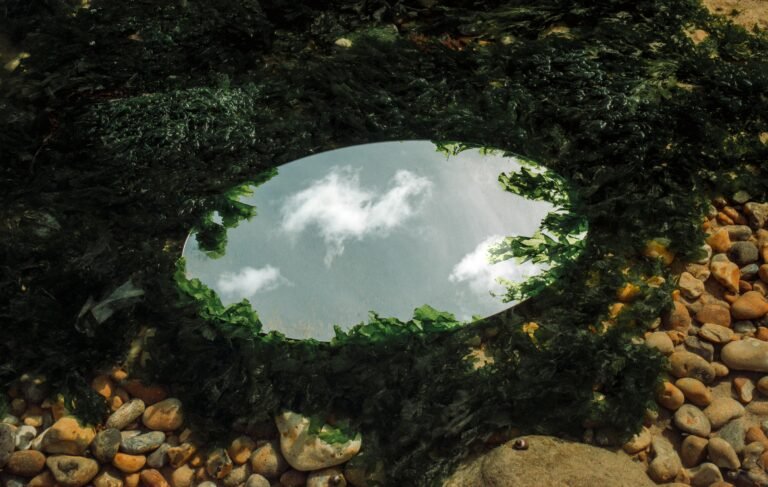
Scrying. Halloween night is an excellent time for mirror or water scrying. A black mirror or a bowl of dark water with a single candle reflected in its surface, worked in silence after the house is quiet, consistently produces clearer results at Samhain than at other times of year. Do not try to force images. Soft focus, relaxed attention and patience are the method.
Apple divination. Bobbing for apples and apple-peeling games at Halloween are direct descendants of Samhain divination practices. The old custom of peeling an apple in one continuous unbroken strip and dropping the peel on the floor to read the letter it forms was used to divine the first letter of a future partner’s name. These folk games were originally genuine divination tools before they became party entertainment.
The ancestor message practice. Set out paper and a pen beside your ancestor altar. Ask a specific question of the dead or simply ask what they want you to know. Then write without stopping, without editing, for ten minutes. This is not channeling in the dramatic sense; it is creating a condition in which impressions can surface that your ordinary thinking suppresses. Read what came after you stop.
Working with Costume as Magic
Halloween costume has lost its protective meaning through commercialization but that meaning can be deliberately reinstated by a practitioner who chooses to work with it consciously.
The Celtic practice of disguise at Samhain was magic: wearing an animal skin or a frightening mask was a technique for moving through the thinned veil without being recognized and targeted by entities you had no wish to encounter. The costume functioned as a kind of energetic camouflage.
A modern version of this approach involves choosing your Halloween costume with magical intention. You might choose what you want to become in the year opening now, wearing it as an act of sympathetic magic. You might choose something that represents the boundary you want to project, a guardian figure, a fierce animal, an archetype of protection. You might choose something that honors a god or ancestor you are working with, wearing their attributes as a form of invocation.
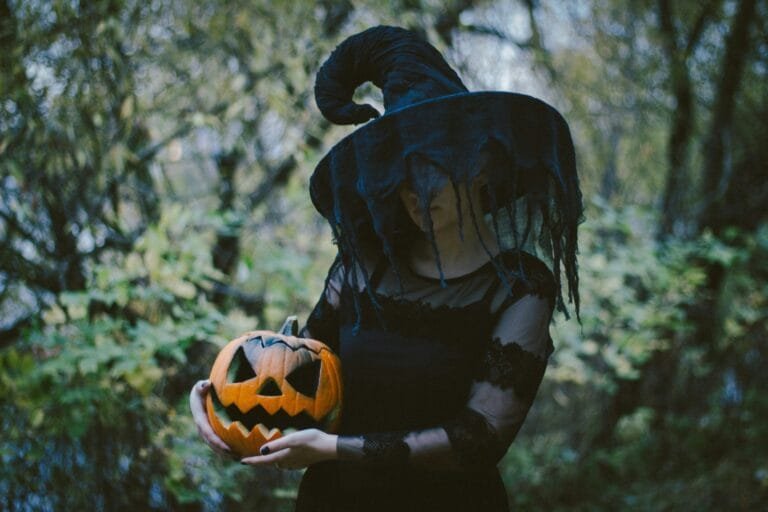
The intention is what transforms a costume from entertainment into practice. Dressing as a witch with genuine attention to the Samhain energy you are stepping into is a different act than dressing as a witch for a party photo, even if the costume is identical.
Protective Work for Halloween Night
Because the veil is genuinely thinner at Samhain, grounding and protection are worth establishing before the night’s work begins, especially if you are leaving your home, attending gatherings or working with the dead in any form.
Salt at the threshold: a line of salt across the doorstep, renewed on Halloween evening, maintains a clear energetic boundary. It does not prevent the invited dead from entering; it screens what you have not invited.
A cleansing of your space before ritual begins: smoke, sound, breath or any clearing method you work with prepares the container for intentional work.
A deliberate opening and closing: if you call the dead to your space, close the working with an equally clear farewell and a statement that the threshold is now closed. Do not leave ancestor work open-ended. A deliberate closing is part of respectful practice.
If you plan to do substantial work with the unseen on Halloween night, grounding before and after is worth the time. The thinned veil is genuinely useful for the work it is designed for. It also means that maintaining your own clarity and rootedness matters more on this night than on most others.
A Simple Halloween Night Ritual for Busy Practitioners
Not everyone has an uninterrupted evening on October 31st. Children to take trick-or-treating, gatherings to attend, the ordinary texture of life with the noise turned up rather than down: Samhain falls on a busy night for a reason. The following practice takes fifteen minutes and can be done after the Halloween activity has settled or during a quiet pocket in the evening.
Light a single candle.
Speak three names of the dead: someone you knew personally, someone from further back in your lineage who you did not know but whose choices shaped your life and someone from history or the wider world whose death mattered to you.
For each name: a moment of acknowledgment. Not a formal prayer. Just recognition.
Then sit in silence for the length of time it takes the candle to burn down one inch or for a count of twenty slow breaths.
Close with a deliberate thank you and blow out the candle.
This is enough. The quality of your attention on this night, however briefly given, is the practice.
The Three Days of Allhallowtide
Samhain energy is not confined to October 31st. The full observance runs through November 2nd, which corresponds to the original three-day communal gathering of the festival and to the Christian All Saints’ and All Souls’ Days. Spreading your Samhain work across these three days is both traditional and practically manageable.
This three-day window is observed across many cultures simultaneously, which adds to its collective energetic weight. In Mexico and Latin America, Día de los Muertos is celebrated on November 1st and 2nd with family altars, cemetery visits and offerings for the returning dead. In Finland, Pyhäinpäivä falls on the first Saturday of November: families visit cemeteries and light candles on graves, filling cemeteries across the country with small flames burning in the November dark. Finland’s pre-Christian Kekri festival observed the same ancestral return at the same time of year before Christianity arrived. Germany and Austria observe Allerheiligen on November 1st with the same pattern of cemetery candles and family remembrance. Poland’s Zaduszki on November 1st and 2nd is virtually identical. Korea’s Chuseok in late September or October combines harvest and ancestor honoring with ritual food offerings at cleaned graves. India’s Pitru Paksha, a 16-day Hindu ancestor period timed to the autumnal equinox, precedes Samhain by a few weeks but follows the same logic: autumn is when the dead are most accessible and the living are obligated to respond. The Celtic world, the Finnish world, the Latin world, the East Asian world and the South Asian world all independently arrived at the same understanding of this seasonal window.
October 31st: the active work. Ancestor altar lit, rituals performed, the threshold addressed directly.
November 1st: the middle day. Keep the altar active, revisit it, notice what has shifted. This is a good day for reflection and for any divination that felt incomplete on Halloween night.
November 2nd: closing. Thank the dead and release them with a clear farewell. Dispose of food offerings. The altar can remain up if you choose to leave it through the season, but the active calling is formally closed.
Frequently Asked Questions
Can I observe Samhain if I am not Wiccan or pagan?
Yes. Samhain as an ancestor festival and threshold observance belongs to the pre-Christian Celtic tradition and to earth-based spiritual practice more broadly. Many witches, folk practitioners and people with no formal religious affiliation observe it. The practices of ancestor honoring, divination and seasonal reflection are available to anyone who finds them meaningful.
How do I set up an ancestor altar for the first time?
Start with a photograph or object belonging to someone who has died that you feel a genuine connection to. A candle, a small offering of food or drink and a quiet place to sit with it are all you need. You do not need special equipment or formal training. The practice is fundamentally simple: you are acknowledging the dead and creating a space where communication is possible.
Is it dangerous to work with the dead at Samhain?
Working with your own beloved dead is generally not dangerous. The ancestors you are calling have a relationship with you and an interest in your wellbeing. The appropriate caution is in working with unknown spirits or entities you have not invited, which is why grounding, protective practices and a clear closing are part of responsible Samhain work. Do not leave ritual space open-ended and maintain clear boundaries about what you are inviting and what you are not.
What if I don’t know who my ancestors are?
The ancestors of your blood are not the only ancestors available to you. The ancestors of your spiritual lineage, teachers who shaped your practice, people whose work or lives have mattered to you regardless of personal connection, are all legitimate presences to honor. You can also honor unknown ancestors directly: “all those who came before me in my bloodline whose names I do not know” is a real and meaningful invocation.
Can I combine Halloween celebrations with Samhain practice?
Many practitioners do exactly this. The festive elements of Halloween, the community, the costumes, the seasonal atmosphere, are not in conflict with a sincere Samhain practice. A common approach is to hold the outer celebration in the early evening and the more inward ancestor work later in the night when the house is quiet. The full three days of Allhallowtide also give ample time for spiritual practice alongside the Halloween celebration.
Photo by Alexia Rodriquez on Unsplash



[…] a simple ancestor candle that takes fifteen minutes to the full dumb supper and releasing work, see Witchy Halloween Rituals: Embrace the Magic of Samhain. For the deeper history of Samhain itself, its Celtic roots, its global parallels and how it became […]