Atheopaganism is a spiritual path for people who don’t believe in deities, spirits, or the supernatural, but still feel drawn to ritual, symbolism, and the cycles of nature. It’s where science meets ceremony, and where meaning is built from the real world, not imagined realms.
So… is it witchcraft without gods?
Kind of. Atheopaganism shares a lot with modern witchcraft, the use of ritual, seasonal celebration, personal intention, but it leaves out the divine. There’s no invoking deities, no belief in magic as a supernatural force. Instead, it’s about:
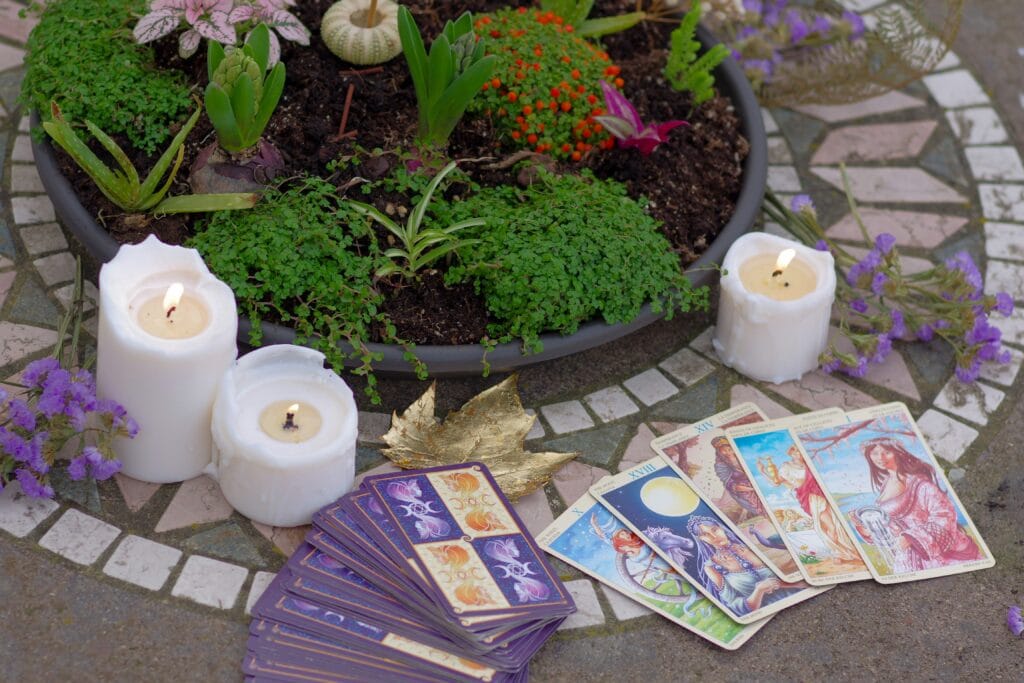
– Symbolic ritual: Lighting candles, creating altars, casting circles, not to summon, but to focus
– Seasonal cycles: Celebrating solstices, equinoxes, harvests, grounded in astronomy and ecology
– Personal transformation: Using ritual and reflection to mark change, growth, and healing
– Community and connection: Sharing practices with others, without hierarchy or dogma
Where did atheopaganism come from?
The term was coined by Mark Green in the early 2000s. He was looking for a way to live spiritually without compromising his rational worldview. Inspired by pagan traditions, but grounded in science and ethics, he began writing about a practice that could be both meaningful and honest.
Since then, atheopaganism has grown into a global community. It’s not an organized religion, there’s no central authority, but it’s a shared approach to living with intention, reverence and realism.
What do atheopagans actually do?
There’s no single way to practice, but common elements include:
– Celebrating the Wheel of the Year: Eight seasonal festivals that mark the turning points of nature
– Creating altars: With natural objects, personal symbols, and seasonal themes
– Writing rituals: For grief, gratitude, renewal, or transition, often poetic, always personal
– Gathering in circles: Sometimes in person, sometimes online, to share, reflect, and celebrate
Some atheopagans use tarot, astrology, or herbalism, not as mystical tools, but as symbolic systems for reflection. Others avoid anything that feels too “woo.” The point is: you choose what resonates.
Is it just atheism with candles?
Not quite. Atheopaganism isn’t just about rejecting belief, it’s about building something in its place. It’s a way to live with depth and rhythm, even when you don’t believe in higher powers.
It asks:
– What makes life sacred, if not gods?
– How do we mark time, change, and emotion without religion?
– Can ritual still matter, even if it’s metaphor?
The answer, for many, is yes.
Why does it matter?
In a world that often feels disconnected, atheopaganism offers a way to reconnect with nature, with others, and with yourself. It’s a path for those who want to feel the turning of the seasons, honor their emotions, and live with intention, without needing to believe in anything supernatural.
It’s not for everyone. But for those who’ve left religion and still crave ritual, or for skeptics who feel the pull of the moon, it’s a place to begin
Photo by Elena Mozhvilo on Unsplash