Chernobog, whose name literally translates to “Black God” from the Slavic words čŕ̥nъ (black) and bogъ (god), stands as one of the most enigmatic and controversial figures in Slavic mythology. Despite his prominent place in popular culture and modern interpretations of Slavic paganism, the historical evidence for Chernobog’s existence as an actual deity worshipped by ancient Slavs remains surprisingly thin and heavily debated among scholars.
Historical Sources: What We Actually Know
The Primary Source: Helmold of Bosau
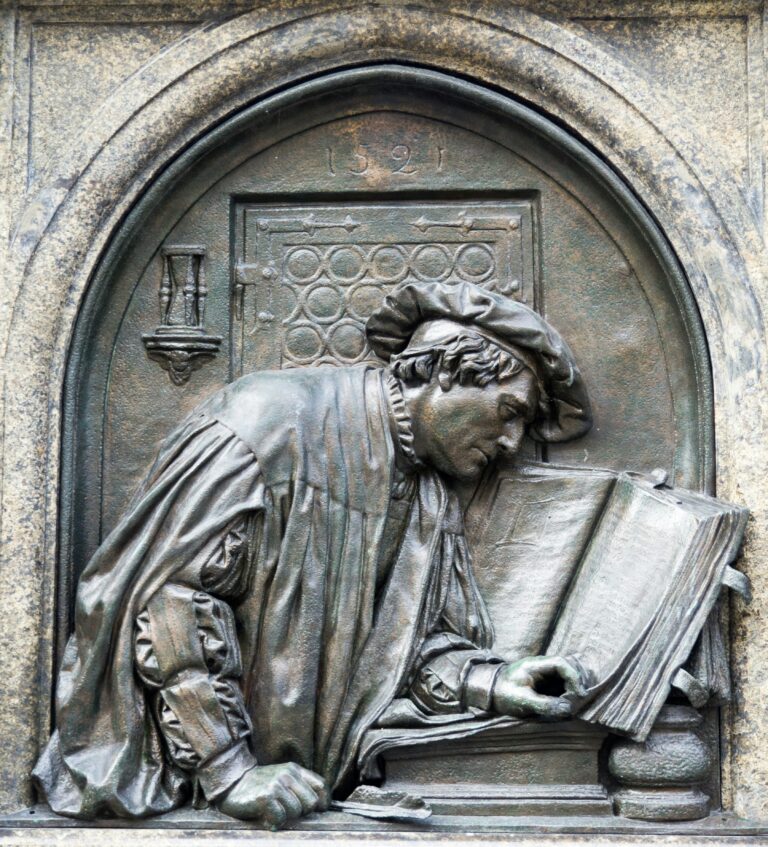
The only reliable historical mention of Chernobog comes from a 12th-century chronicle called Chronica Slavorum (Chronicle of the Slavs), written by German priest Helmold of Bosau around 1168-1169. Helmold was documenting the religious practices of unconverted Wendish and Polabian Slavic tribes in what is now northern Germany.
His account states:
“The Slavs, too, have a strange conviction: At their feasts and carousals they pass about a libation bowl over which they utter words — I should not say of consecration but of execration — in the name of the gods. Of the good one, as well as of the bad one, they profess that all propitious fortune is arranged by the good god, and all adverse by the bad god. Hence, also, in their language they call the bad god Diabol, or Zcerneboch, that is, the ‘Black God’.”
This is essentially all we have from original sources. Helmold mentions Chernobog but never mentions “Belobog” (the White God) by name, only referring to a “good god” in contrast to the black one.
Later Mentions
Historia Caminensis – An anonymous medieval text also mentions Chernobog as the god of the Vandals. However, this work is based on writings by Sebastian Münster, and both sources speak of “the error of the Manichaeans” (a reference to the ancient dualistic religion of Manichaeism). This connection suggests the authors were interpreting Slavic beliefs through a Christian lens, making the source unreliable.
Thomas Kantzow (1538) – The Pomeranian chronicler wrote in his Chronicle of Pomerania: “I have heretofore related all manner of faithlessness and idolatry, in which they had engaged before the time of the German Empire.” His mention of Chernobog is extremely vague and provides no additional details beyond what Helmold recorded.
Around 1530, Dominican friar Johan Lindner from Pirna mentioned Chernobog in his compilation of Slavic gods. However, historians consider this source unreliable because Lindner likely relied on written sources and monastic stories rather than actual field research.
At the end of the 17th century, Abraham Frencel also mentioned Chernobog in his list of Lusatian gods. This information is considered even more dubious because it came into being late when Lusatian paganism was probably completely extinct, and about half of the gods he mentioned are of Prussian origin rather than Slavic.
The Great Scholarly Debate: Did Chernobog Even Exist?
There is no consensus in the academic community about whether Chernobog and Belobog actually existed as deities in pre-Christian Slavic mythology. At least four major theories have emerged:
Theory 1: Christian Reinterpretation
Some scholars argue that “chernobog” and “belobog” were not originally pagan deity names at all. Instead, they were Christian-era terms meaning “bad fate” and “good fate” respectively. The words later evolved into personal names used to describe the Christian Devil and God/Jesus as figures responsible for bad and good fortune.
According to this view, Helmold’s account represents a Christian missionary’s misunderstanding of Slavic expressions. The Slavs may have been cursing their “black fate” rather than worshipping a god named Chernobog.
Theory 2: Actual Slavic Deities
Other researchers maintain that Chernobog and Belobog were genuine Slavic deities, either as actual theonyms (god names) or as epithets of other deities. This view was popularized in the 19th century and remains common in modern Slavic neopagan movements.
Theory 3: Invented Dualism
Some scholars suggest that the dualistic pairing of Chernobog and Belobog is a later invention, possibly influenced by:
- Persian Zoroastrian dualism (Ahura Mazda vs Ahriman)
- Christian concepts of God vs Devil
- Bogomil teachings that reached the Slavs
The idea gained traction in the 19th century when folklorists like Alexander Afanasyev popularized the concept of a strict good-versus-evil binary in Slavic mythology.
Theory 4: Complete Fabrication
The most skeptical scholars argue that both Chernobog and Belobog are pseudo-deities that never existed in either Christian or pagan vocabulary, and that their prominence is entirely a product of modern misinterpretation of Helmold’s text.
What Chernobog Supposedly Represented
Despite the scholarly uncertainty, various sources (mostly from the 19th century onward) have attributed the following characteristics to Chernobog:
Domain and Powers:
- God of darkness, evil and misfortune
- Bringer of disease, disaster and death
- Associated with winter, night and the waning moon
- Embodiment of chaos and destructive forces
Worship Practices: Rather than traditional worship, Chernobog was supposedly placated through appeasement rituals. The Slavs would make offerings and curses to keep his malevolent influence at bay, spitting execrations into bowls during feasts as Helmold described.
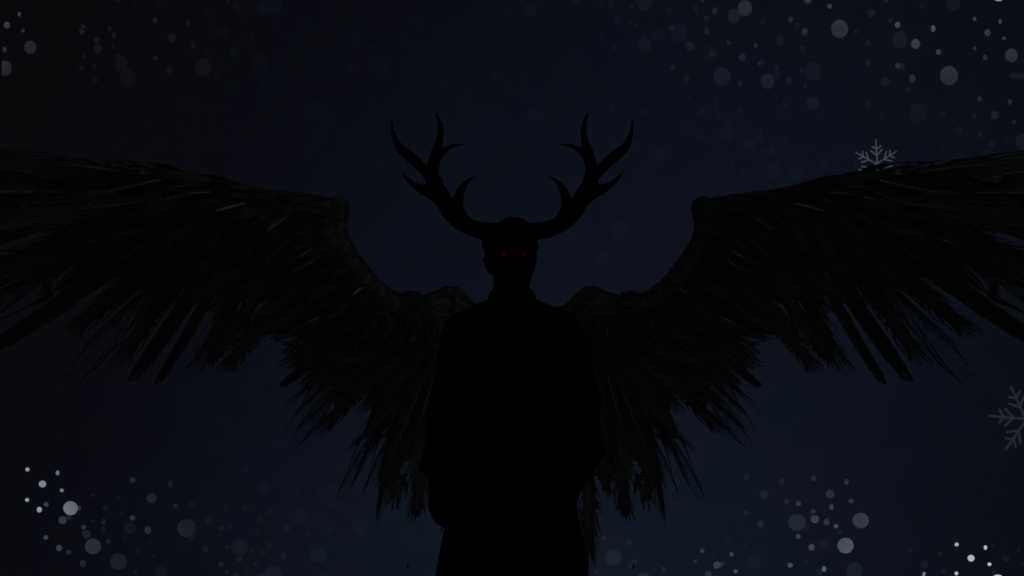
Physical Description: No authentic ancient descriptions exist. Modern depictions typically show him as:
- A figure with black skin or shrouded in darkness
- Sometimes winged or demonic in appearance
- Associated with night and shadow
Symbols:
- Black color
- Night and darkness
- Waning moon
- Winter
- Absence of light
The Chernobog-Belobog Duality
The concept of Chernobog locked in eternal conflict with Belobog (the White God of light and goodness) became popular in 19th-century romanticism but lacks solid ancient foundation. This dualistic framework mirrors other religious systems but may not reflect authentic pre-Christian Slavic beliefs.
Many serious historians note that this duality is likely a later invention influenced by Christian notions of good versus evil. The Slavic worldview may have been more nuanced, with Chernobog representing the darker but natural aspects of existence rather than absolute evil.
Chernobog in Modern Popular Culture
Despite the questionable historical foundation, Chernobog has become a fixture in modern entertainment, fantasy literature and gaming:
Disney’s Fantasia (1940)
The most famous depiction of Chernobog appears in Walt Disney’s Fantasia in the “Night on Bald Mountain” segment. Set to Modest Mussorgsky’s orchestral piece, the segment features “Chernabog” (Disney’s spelling) as a massive winged demon emerging from the peak of Bald Mountain.
In this interpretation:
- He summons ghosts, demons and restless spirits on Walpurgis Night (the Witches’ Sabbath)
- He torments the souls for his amusement, transforming beautiful dancers into vile creatures
- He is ultimately driven back by the sound of church bells and the light of dawn
- The segment transitions into “Ave Maria,” symbolizing the triumph of good over evil
Animator Vladimir Tytla created Chernabog as Disney’s most terrifying villain, described by host Deems Taylor as “Satan himself.” The character remains one of Disney’s most iconic representations of pure evil and continues to frighten children nearly 85 years after the film’s release.
Disney’s Chernabog has appeared in:
- Fantasia 2000 (brief cameo)
- Kingdom Hearts video game series (as a boss character)
- Disney theme parks and attractions
- Various Disney villain merchandise and media
Literature
American Gods (2001) by Neil Gaiman features “Czernobog,” an old Slavic god living in America. In the novel, he works in a slaughterhouse and plays checkers with the protagonist, representing the forgotten old gods struggling to survive in modern America.
Spinning Silver (2018) by Naomi Novik features Chernobog as a demon possessing the Tsar.
The Peshawar Lancers by S.M. Stirling presents an alternate history where the Russian Empire turns to Chernobog worship after a comet impact causes widespread famine and cannibalism.
Heirs of Alexandria series by Mercedes Lackey, Eric Flint and Dave Freer features Chernobog as the main antagonist.
Sandman Slim series by Richard Kadrey includes a version spelled “Chernovog.”
Kate Daniels series by Ilona Andrews features Chernobog’s volhv (priest) as a regular character.
Video Games
SMITE – Chernobog appears as the first playable god of the Slavic pantheon, depicted as a demon-like winged being with crystallized hands, feet and horns.
Blood (1997) – Features Chernobog as an antagonist.
Shin Megami Tensei series – Includes Chernobog among its demon roster.
Fate/Grand Order – Features Chernobog as one of the Divine Spirits.
Kingdom Hearts series – Chernobog appears as a powerful boss battle, set to an arrangement of “Night on Bald Mountain.”
Epic Mickey 2: The Power of Two – Includes a level based on the Fantasia segment.
Modern Slavic Neopaganism
Contemporary Slavic neopagan movements (Rodnovery) often incorporate Chernobog into their pantheons, viewing him as:
- A necessary force of balance rather than pure evil
- The god of the underworld and winter
- A deity deserving respect rather than fear
- Part of a natural cycle of light and darkness
These modern interpretations often diverge significantly from the limited historical evidence and represent a reconstruction or reimagining of pre-Christian Slavic spirituality.
The Mystery Endures
Chernobog remains one of Slavic mythology’s greatest mysteries. We have:
- One reliable mention from a Christian observer
- No primary Slavic sources (the Slavs had no writing system until Christian missionaries created the Cyrillic alphabet)
- Conflicting scholarly interpretations
- Extensive modern cultural impact far exceeding the historical evidence
The truth about Chernobog likely lies somewhere between complete fabrication and well-documented deity. He may have been:
- A minor local deity blown out of proportion
- An epithet or aspect of another god
- A metaphorical expression for misfortune misunderstood by Christian observers
- A genuine but poorly documented figure of Slavic paganism
What we can say with certainty is that Chernobog’s cultural impact has far outstripped his historical footprint. Whether he was truly worshipped by ancient Slavs or not, he has become an enduring symbol of darkness, mystery and the unknowable aspects of pre-Christian European spirituality.
The lack of definitive answers only adds to his mystique, making Chernobog a perfect canvas for modern storytellers, artists and spiritual seekers to project their own interpretations of darkness, balance and the eternal struggle between opposing forces.