
Entities and demons have fascinated and terrified humanity throughout history. Found at the heart of mythology, religion and folklore, these supernatural beings symbolize our deepest fears, desires and moral conflicts. Whether they represent chaos, justice or transformation, their tales transcend cultures, reflecting universal themes that have shaped belief systems across the world.
From protective spirits to malevolent forces, entities and demons have played key roles in the eternal battle between good and evil. This definitive guide presents a comprehensive alphabetical list, exploring their origins, roles and enduring cultural impact. Dive into the world of gods and monsters, uncover ancient myths and discover how these beings continue to inspire imagination and spirituality today.
| Name (Origin) | Role and Attributes | Additional Information |
|---|---|---|
| Aamon (Christian Demonology) | Demon of wrath and reconciliation who commands legions. | Appears in the Ars Goetia as a powerful marquis who can settle disputes but also provoke conflict when summoned improperly. |
| Abaddon (Christian Demonology) | Angel of destruction and leader of the abyss. | Featured in the Book of Revelation; a harbinger of divine judgment often associated with the end times. |
| Adramelech (Assyrian / Christian Demonology) | Sun deity turned demon; symbol of vanity and arrogance. | Originally venerated in Assyrian tradition, later demonized in Christian texts as a cautionary figure against pride. |
| Adze (West African Folklore) | Vampiric firefly spirit that feeds on human blood. | From the Ewe people of Togo and Ghana; can transform between firefly and human form, preying on children and causing illness; represents the dangerous and unpredictable forces of the night. |
| Agares (Christian Demonology) | Demon known for teaching languages and causing earthquakes. | Appears in the Ars Goetia as a wise but dangerous figure associated with knowledge and natural upheavals. |
| Ammit (Egyptian Mythology) | Demoness known as the “Devourer of the Dead.” | A composite creature (crocodile, lion, hippopotamus); devours the hearts of the unworthy in the Egyptian afterlife to prevent their immortality. |
| Andras (Christian Demonology) | Demon who sows discord and strife. | Described in the Ars Goetia as inciting conflict and disrupting harmony among humans. |
| Asag (Mesopotamian Mythology) | Demon linked to illness and widespread destruction. | Feared in Sumerian lore for causing diseases and disasters, often accompanied by an army of stone demons. |
| Asmodeus (Christian Demonology) | Demon of lust, temptation and revenge. | Featured in the Book of Tobit, representing excessive indulgence and moral corruption. |
| Astaroth (Christian Demonology) | Demon associated with knowledge and temptation. | Often invoked for wisdom and guidance, though at a moral cost; a recurring figure in demonological texts. |
| Azazel (Abrahamic Religions) | Fallen angel connected to rebellion and atonement rituals. | Central to ancient Jewish traditions (e.g., Yom Kippur); symbolizes scapegoating and moral failure. |
| Baba Yaga (Slavic Folklore) | Witch-like entity embodying both wisdom and menace. | Dwells in a hut on chicken legs; a multifaceted figure who can guide or threaten depending on the encounter. |
| Baʿal (Canaanite mythology, later Phoenician & Abrahamic) | He was originally worshipped as a storm and fertility god, associated with rain, agriculture and seasonal renewal. | In Christian demonology, Baʿal was reinterpreted as a powerful demon and one of the princes of Hell. |
| Banshee (Irish Folklore) | Wailing spirit that foretells imminent death. | Rooted in Irish tradition as an omen for families facing loss; acts as both protector and harbinger. |
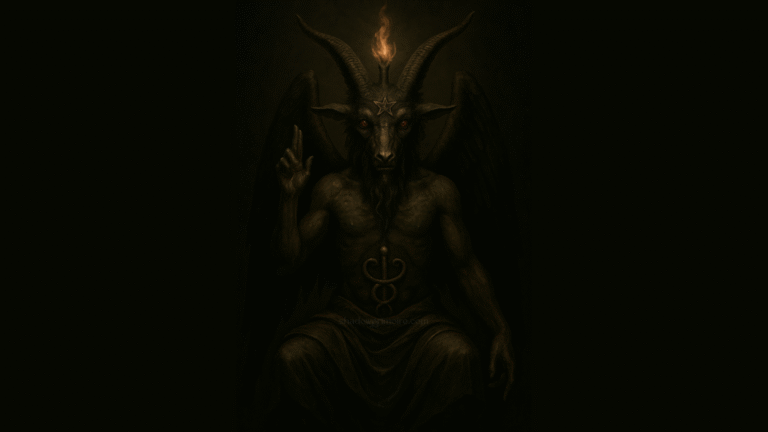
| Baphomet (Occultism) | Symbol representing the balance between opposites. | Originally a misunderstood reference during the Crusades and later fabricated accusations against the Knights Templar; the modern image was created by occultist Éliphas Lévi in 1856 as a philosophical symbol rather than an actual entity worshipped in historical traditions. An androgynous figure merging male and female attributes. |
| Barghest (English Folklore) | Black spectral dog that heralds doom. | A creature of English rural myth, often seen as a forewarning in eerie landscapes. |
| Beelzebub (Christian Demonology) | “Lord of the Flies,” associated with decay, gluttony and pestilence. | Regarded as one of the major demons, his name has become synonymous with filth and corruption in many traditions. |
| Belial (Christian Demonology) | Embodiment of lawlessness and corruption. | Portrayed as representing moral worthlessness, deceit and the collapse of order. |
| Belphegor (Christian Demonology) | Demon of sloth and temptation through invention. | One of the seven princes of Hell representing laziness; offers discoveries and inventions to seduce mortals into idleness and avarice. |
| Bunyip (Australian Aboriginal Mythology) | Fearsome water creature that lurks in swamps and billabongs. | A legendary beast from Aboriginal Dreamtime stories; descriptions vary but often include a dog-like face, dark fur and a haunting cry; warnings of the Bunyip kept people away from dangerous waters. |
| Chernobog (Slavic Mythology) | God of darkness, evil and misfortune. | The “Black God” of Slavic tradition who embodies all negative forces; worshipped alongside Belobog (the White God) in a dualistic cosmology representing the eternal struggle between light and darkness. |
| Churel (South Asian Folklore) | Vengeful spirit of a wronged woman. | Emerges to punish unfaithful or immoral behavior, symbolizing retribution and social justice in South Asian legends. |
| Dagon (Philistine / Christian Demonology) | Former sea deity recast as a demonic figure. | Initially worshiped by the Philistines; later reinterpreted in Christian texts as emblematic of idolatry and decay. |
| Draugar (Norse Mythology) | Undead beings that guard treasures and burial sites. | Vengeful spirits with supernatural strength, enforcing the sanctity of burial grounds and warning against greed. |
| Dullahan (Celtic Folklore) | Headless rider who heralds death. | A terrifying figure from Irish mythology who rides a black horse and carries his own head; seeing the Dullahan is an omen of imminent death, and he cannot be bribed or deterred. |
| Dybbuk (Jewish Folklore) | Possessing spirit representing unresolved earthly matters. | Central to Kabbalistic tradition; a restless soul that inhabits the living to settle unfinished business. |
| Eligos (Christian Demonology) | Demon who reveals secrets and foretells conflict. | Recognized for predicting the outcomes of wars and inciting strife; associated with strategy and foresight in demonological lore. |
| Fae (Celtic Mythology) | Magical beings intimately linked to nature and the otherworld. | Encompasses fairies, sprites and elves; symbolizes the mystical balance between the natural world and supernatural forces. |
| Forneus (Christian Demonology) | Demon of rhetoric and persuasion. | Cited in the Ars Goetia as teaching language and diplomacy while subtly influencing human communication. |
| Gaki (Japanese Buddhism) | Hungry ghost driven by insatiable desire. | Souls punished for greed in life; condemned to eternal, unquenchable hunger as a result of karmic debt. |
| Ghoul (Arabic Folklore) | Shapeshifting demon that dwells in graveyards and deserts. | From Arabian mythology; preys on travelers and consumes the dead, able to assume the form of its last victim; represents the terror of desolate places and the desecration of burial sites. |
| Hel (Norse Mythology) | Goddess ruling over the realm of the dishonored dead. | Daughter of Loki, she presides over Helheim where those who died of sickness or old age reside; depicted as half-living and half-dead, embodying the duality of existence. |
| Hinn (Islamic Tradition) | Elusive supernatural beings beyond the typical Jinn. | Extremely obscure beings mentioned rarely in pre-Islamic Arabian folklore; their nature and existence remain highly uncertain even within Islamic scholarly tradition, with minimal historical documentation. Inhabit remote locales and are largely mysterious. |
| Hundun (Chinese Mythology) | Primordial being of chaos and formlessness. | In Chinese cosmology, Hundun represents the state before creation when all was undifferentiated; sometimes depicted as a faceless creature symbolizing the void before order emerged; its destruction brought forth the organized universe. |
| Incubus (Ancient Mesopotamia, later Medieval Europe) | Male demon that preys on sleeping women. | Linked to nightmares and nocturnal assaults; embodies medieval fears of temptation and moral degradation. |
| Ifrit (Islamic Tradition) | Powerful and cunning class of Jinn made from fire. | Among the most formidable of the Jinn in Islamic mythology; often depicted as rebellious and malevolent, though some can be righteous; known for their strength, intelligence and association with the underworld. |
| Jikininki (Japanese Folklore) | Ghosts condemned to dine on human corpses. | Former mortals punished for selfish or immoral deeds; serve as grim warnings against sacrilege and the corruption of the soul. |
| Jiangshi (Chinese Folklore) | Reanimated corpse that moves by hopping and drains life force. | Known as the “hopping vampire” or “hopping zombie”; rises due to improper burial or violent death, seeks to absorb the qi (life energy) of the living; recognized by its stiff posture, outstretched arms and Qing dynasty official’s robes. |
| Jinn (Islamic Tradition) | Beings with free will, created from smokeless fire. | Integral to Islamic theology; populate a realm parallel to humans and can be benevolent, neutral or malevolent. |
| Kamaitachi (Japanese Folklore) | Sickle-weasel spirits that cause mysterious, sudden cuts. | Often blamed for unexplained injuries in rural Japan; symbolize the unpredictable force of nature. |
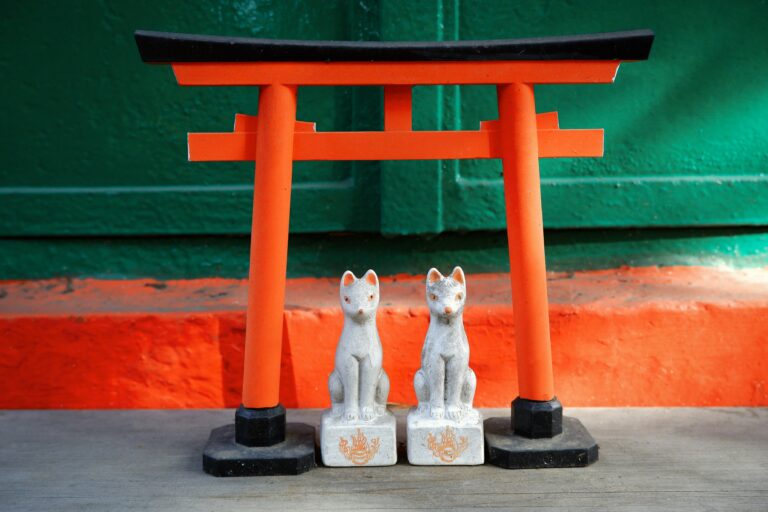
| Kitsune (Japanese Folklore) | Shape-shifting fox spirits known for their cunning and magical abilities. | Revered as both guardians and tricksters in Japanese lore; closely associated with the Shinto deity Inari. |
| Krampus (Alpine Folklore) | Horned demon who punishes naughty children during Christmas. | From Central European Alpine tradition; the dark counterpart to Saint Nicholas, Krampus carries chains and birch rods to discipline misbehaving children, sometimes dragging them away in his basket; celebrated annually on Krampusnacht (December 5th). |
| La Llorona (Latin American Folklore) | The weeping ghost who mourns her drowned children. | A tragic specter used as a cautionary tale about grief, loss and neglect; her legend warns of dire consequences for those who harm the innocent. |
| Lamashtu (Mesopotamian Mythology) | Demoness who preys on mothers and infants. | Feared in ancient Mesopotamia for her malevolent actions, including causing infant mortality and maternal harm. |
| Leviathan (Christian Demonology) | Colossal sea monster symbolizing chaos and destruction. | Referenced in biblical texts as a primordial creature of overwhelming power and disorder, representing untamable forces of nature. |
| Lilith (Jewish Folklore) | Independent, rebellious feminine figure of the night. | Often considered Adam’s first wife in apocryphal texts; now a symbol of feminine empowerment and defiance against patriarchal structures. |
| Lucifer (Christian Demonology) | Fallen angel epitomizing pride, rebellion and the loss of grace. | Known as the “light bringer,” his tragic fall illustrates themes of ambition, moral decay and the heavy cost of defiance. |
| Mammon (Christian Demonology) | Demon of greed and material wealth. | Often depicted as the embodiment of avarice and the corrupting influence of riches in Christian lore. |
| Mare (Germanic & Slavic Folklore) | Malevolent spirit that causes nightmares and sleep paralysis. | Sits on the chests of sleepers, inducing terrifying dreams and suffocating sensations; the origin of the word “nightmare”; prevalent across Northern and Eastern European folklore as an explanation for disturbed sleep. |
| Medusa (Greek Mythology) | Gorgon whose gaze turns victims to stone. | Once a beautiful priestess cursed by Athena; her serpentine hair and petrifying stare make her one of mythology’s most iconic monsters, slain by Perseus. |
| Mephistopheles (European Folklore) | Tempter demon famous for striking Faustian bargains with mortals. | Immortalized by the Faust legend; represents the allure and peril of forbidden knowledge and the seduction of power. |
| Minotaur (Greek Mythology) | Half-man, half-bull monster imprisoned in the labyrinth. | Born from the union of Pasiphaë and a sacred bull; confined beneath Crete’s palace where it devoured tributes until slain by Theseus. |
| Moloch (Canaanite Mythology / Christian Demonology) | Ancient “deity” associated with child sacrifice. | Historical evidence for Moloch worship remains highly controversial among scholars; some argue it refers to a type of sacrifice rather than a specific deity. In later Christian texts, reinterpreted as a demon representing the ultimate corruption of demanding innocent lives. Biblical references and archaeological debates continue regarding the actual nature of ancient practices attributed to this name. |
| Nian (Chinese Mythology) | Ferocious beast that emerges on New Year’s Eve to terrorize villages. | A monstrous creature feared in ancient Chinese folklore; driven away by loud noises, bright lights and the color red, which became the foundation for traditional Chinese New Year celebrations with firecrackers, lanterns and red decorations. |
| Näkki (Finnish Folklore) | Malevolent water spirit that drowns the unwary. | Lurks in lakes, rivers and wells; lures victims, especially children, to their deaths in the water, serving as a warning against approaching dangerous waters alone. |
| Onryo (Japanese Folklore) | Vengeful spirit that seeks retribution for wrongful deaths. | Haunts the living to exact punishment on those responsible for its tragic demise, embodying justice and unyielding grievance. |
| Paimon (Christian Demonology) | King of Hell who commands legions and grants knowledge. | One of the most obedient demons to Lucifer; teaches arts, sciences and secret knowledge, but demands absolute respect and proper ritual observance from those who summon him. |
| Pazuzu (Mesopotamian Mythology) | Demon invoked to ward off malevolent forces, despite his fearsome appearance. | Although terrifying to behold, Pazuzu was traditionally called upon to protect against other more harmful demons, such as Lamashtu, in Babylonian myths. |
| Qalupalik (Inuit Folklore) | Aquatic creature that kidnaps disobedient children. | From Inuit mythology; described as a green-skinned humanoid dwelling in the Arctic waters, wearing an amautik (traditional parka) with a large pouch to carry away children who wander too close to the water’s edge; serves as a cautionary tale about water safety. |
| Penanggalan (Malay Folklore) | Vampiric spirit depicted as a floating head with trailing organs. | A gruesome figure in Southeast Asian lore that preys on the vulnerable, particularly pregnant women and newborns, symbolizing mortality’s dark side. |
| Rahab (Jewish Folklore) | Mythical sea monster symbolizing chaos, pride and rebellion. | Portrayed as a colossal creature opposing divine order, Rahab represents primordial disorder in ancient mythological texts. |
| Rakshasa (Hindu Mythology) | Shape-shifting demons that consume human flesh. | Powerful supernatural beings capable of illusion and transformation; they oppose the gods and righteous mortals, serving as antagonists in epic tales like the Ramayana and Mahabharata. |
| Shinigami (Japanese Folklore) | Spirits that guide souls to the afterlife. | Rooted in Japanese traditions, these entities embody the peaceful transition from life to death without passing judgment, operating as psychopomps. |
| Skinwalker (Navajo Tradition) | Malevolent witch with the ability to transform into animals. | Known as yee naaldlooshii (“by means of it, it goes on all fours”) in Navajo culture; practitioners of harmful magic who gain the power to shapeshift by violating sacred taboos; feared for their ability to mimic voices and appearances, causing paranoia and terror. |
| Succubus (Ancient Mesopotamia, later Medieval Europe) | Female demon who seduces men in their dreams, draining their vitality. | A cautionary figure of lust and temptation, the succubus serves as a reminder of the perils of carnal indulgence in medieval moral literature. |
| Strigoi (Romanian Folklore) | Undead creature or troubled spirit that rises from the grave. | Central to Romanian vampire mythology; can be living witches or the restless dead who drain life from the living; beliefs include various methods of prevention such as garlic, iron and proper burial rites to keep the dead at rest. |
| Tokoloshe (Zulu Folklore) | Mischievous and malevolent dwarf-like spirit. | From Southern African Bantu traditions, particularly Zulu and Xhosa cultures; summoned by witches to cause illness, misfortune or death; believed to be invisible to adults but visible to children, and can be kept at bay by raising one’s bed on bricks. |
| Valefar (Christian Demonology) | Demon associated with trickery and theft. | Listed in the Ars Goetia, though with less historical documentation and more varied descriptions across demonological texts than major figures like Asmodeus or Beelzebub. Known for enticing people into deceit and corruption, exemplifying the corrupting influence of greed and dishonesty. |
| Wendigo (Algonquian Folklore) | Cannibalistic spirit symbolizing greed, insatiable hunger and the loss of humanity. | A monstrous legend that warns against selfishness and overconsumption, the Wendigo represents the darkest aspects of human nature when corrupted by avarice. |
| Yuki-onna (Japanese Folklore) | Ethereal snow spirit who lures travelers to their icy deaths. | Embodying the deadly beauty and harshness of winter, Yuki-onna is as enchanting as she is perilous in Japanese myth. |
| Yara-ma-yha-who (Australian Aboriginal Folklore) | Small red creature with suckers on its hands and feet that drains victims’ blood. | From Aboriginal Dreamtime stories; lurks in fig trees and drops onto unsuspecting travelers, draining their blood and swallowing them whole, later regurgitating them alive but shorter; repeated encounters eventually transform victims into Yara-ma-yha-who themselves. |
| Yurei (Japanese Folklore) | Restless spirit bound by unresolved emotions and tragic circumstances. | These ghosts are said to linger at the sites of their untimely or violent deaths, driven by sorrow, anger or vengeance in classic Japanese haunting lore. |
| Zagan (Christian Demonology) | Demon of transformation and alchemy, imparting forbidden wisdom. | Mentioned in the Ars Goetia, Zagan is revered (and feared) for his ability to transmute substances and his insights into the hidden arts of change. |
Photo by Amirhossein Hasani on Unsplash
[…] For a comprehensive reference covering entities, demons and supernatural beings from mythologies worldwide see The Ultimate Guide to Entities and Demons: Unearthing Myths and Legends. […]