
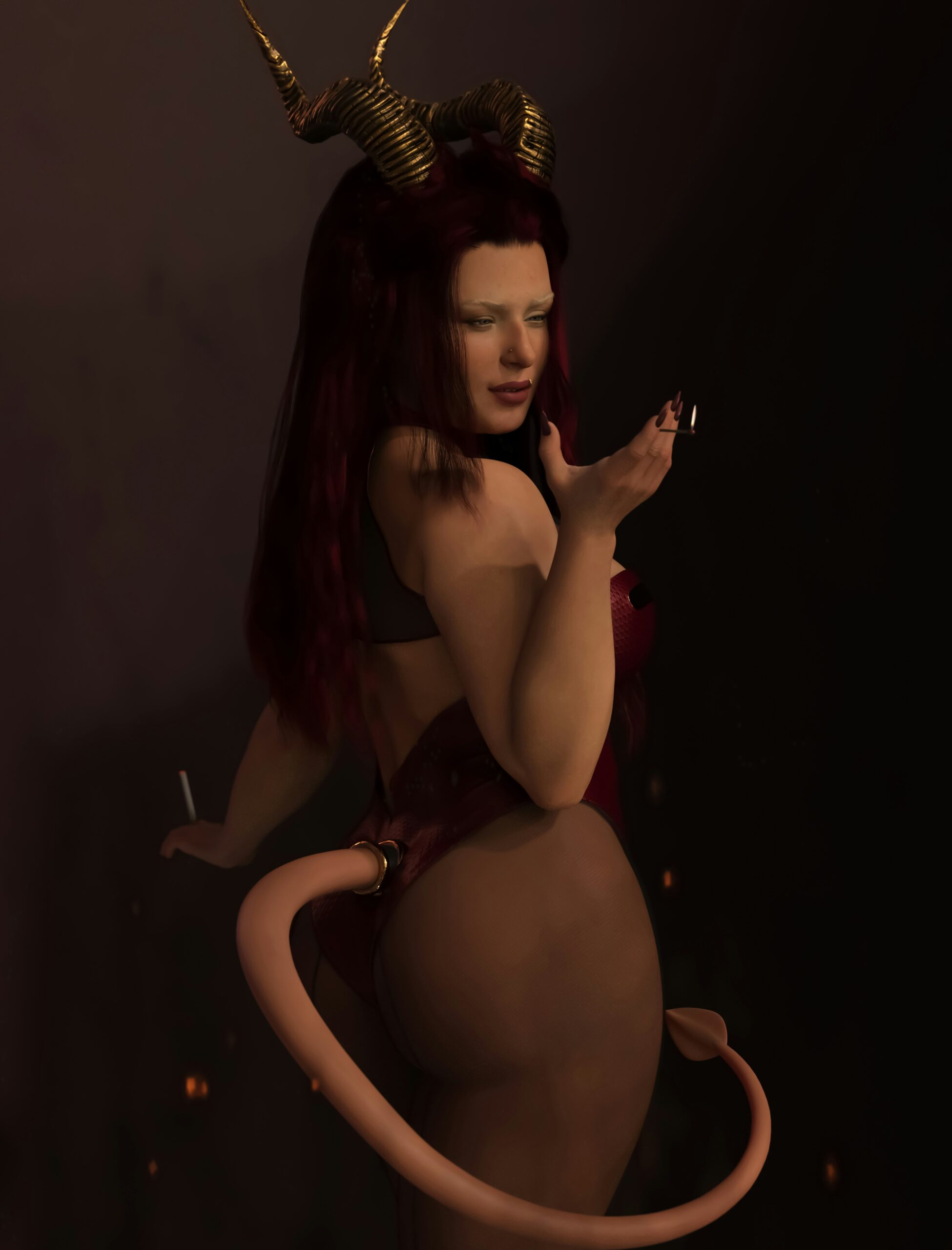
The succubus is one of the most enduring figures in demonological tradition. She is the beautiful predator who arrives after dark, who takes what she wants from sleeping men and leaves them drained. Her legend is ancient, her presence cuts across dozens of cultures and the experiences she was invented to explain are still happening. She is also, historically, deeply intertwined with one of the most complex figures in Jewish mythology: Lilith, the first woman who refused to submit and became something that could not be controlled.
What Does Succubus Mean?
The word comes from the Latin succubare, meaning to lie beneath. It is the feminine counterpart to incubare, to lie upon, which gives us the incubus. The naming already encodes the gendered logic of medieval demonology: the male demon presses down on his victim; the female demon positions herself beneath her prey. Both words share the same Latin root as incubate, and both describe the same essential act of nocturnal oppression.
The succubus as a formal theological category is primarily medieval and Christian in origin, but the figure herself is far older.
Ancient Roots: The Lilitu and the Night Spirits
The earliest ancestors of the succubus appear in Mesopotamian texts as the ardat lili or lilitu, female spirits of the night associated with storms, infertility and predatory sexuality. These were feared entities believed to steal into homes and assault sleeping men. They were also linked to infant death and miscarriage, making them figures of multiple anxieties rather than purely sexual ones.
These spirits fed directly into Jewish folklore through centuries of cultural contact between Mesopotamian and Israelite traditions. The result was Lilith.
Lilith as the Original Succubus
Lilith is not simply adjacent to the succubus tradition. In many respects she is its origin. The Alphabet of Ben Sira, a Jewish folkloric text from roughly the eighth to tenth century CE, describes Lilith as Adam’s first wife who fled the Garden of Eden rather than accept a subordinate position. After her exile she became a wandering night entity, described in some traditions as coming to men in their sleep, seducing them and stealing their vitality. She was also associated with attacks on women in childbirth and on newborn children.
The protective amulets used in Jewish households for centuries, inscribed with the names of the angels Senoy, Sansenoy and Semangelof, were specifically intended to ward off Lilith. The fear was real enough to require a material response.
In later Kabbalistic and mystical traditions, Lilith became associated with Samael, a figure connected to death and accusation, and was described as the mother of demonic offspring. She embodies the succubus archetype before the term existed: a female entity whose sexuality is a weapon, whose autonomy is a threat and whose power comes precisely from refusing the roles assigned to her.
The full depth of Lilith’s mythology is covered in the Lilith mythology.
The Succubus in Medieval Christian Demonology
In medieval Europe the succubus became embedded in Christian theology and took on a more systematic form. She was now a servant of Satan, assigned to corrupt and weaken men through lust. For monks and priests trying to explain nocturnal emissions or intrusive sexual thoughts, the succubus provided an external cause that removed personal responsibility while reinforcing the danger of desire.
Thomas Aquinas addressed the succubus and incubus together in the Summa Theologica, proposing the theory that demons could produce offspring through a two-step process: the succubus collects semen from a man, which the incubus then uses to impregnate a woman. The child would be human by biology but influenced by demonic contact. This framework allowed theologians to explain alleged supernatural pregnancies and demonic lineages without requiring demons to reproduce directly.
The Malleus Maleficarum of 1487, the primary manual used in European witch trials, treated the succubus as a factual entity. Women accused of witchcraft were often charged with consorting with demons, and the succubus represented the demonic side of that transaction. The theological framework made female sexuality categorically suspicious.
Sleep Paralysis and the Succubus
The experiences described by men encountering succubi align closely with what sleep science now calls sleep paralysis. During REM sleep the brain suppresses voluntary movement to prevent the body from acting out dreams. When a person wakes while this suppression is still active they are fully conscious but unable to move, sometimes for a few seconds, sometimes for what feels like much longer.
Research by folklorist David Hufford documented that sleep paralysis is consistently accompanied by specific hallucinations: a presence in the room, a sense of something pressing down, and intense fear or dread. For men in medieval Europe waking in this state beside an apparent female form, the succubus was the available explanation. The neurology is universal and ancient; the demonological label is culturally specific.
The full account of sleep paralysis, including its cultural variations across dozens of traditions worldwide, is covered in the sleep paralysis demon.
The Succubus in Occult Practice
Outside of mainstream demonology, occult traditions occasionally described methods for summoning or contacting succubi, usually framed within the grimoire tradition as a means of acquiring power or knowledge. These rituals were treated as extraordinarily dangerous, carrying the risk of spiritual corruption, energy depletion and obsessive attachment.
The concept of a succubus as an energy-draining entity has persisted into contemporary occult thinking. Practitioners who work with concepts of psychic vampirism or parasitic attachments sometimes describe encounters that functionally resemble the classic succubus account: a presence that generates intense attraction, extracts life-force energy and leaves the person weakened, depleted or destabilized over time. Whether this is interpreted as a literal entity or as a psychological pattern varies by tradition.
What Taboos Does the Succubus Embody?
The succubus crystallized several distinct cultural anxieties at once. She represented the fear of female sexual agency: a woman who initiates, who takes, who is not controllable. She represented the danger of pleasure itself within a religious framework that positioned sexual desire as a gateway to damnation. And she represented the threat of the irrational, the experience that bypasses reason and strikes when defenses are lowest.
In a society where female sexuality was subject to intense social control, the succubus externalized desire as a supernatural attack. This served both to explain troubling experiences and to reinforce the message that yielding to desire led to destruction. The taboo around the succubus was never only about demons. It was about power, about who was permitted to want things and what happened to those who did.
The Succubus in Modern Culture
Contemporary portrayals have largely inverted the medieval framework. The succubus in fiction, games and film is often charismatic, autonomous and morally complex rather than simply monstrous. She may be an antihero, a romantic interest or a figure whose predatory nature coexists with genuine emotional depth. This rehabilitation of the archetype reflects a broader cultural shift toward treating transgressive figures as objects of fascination and identification rather than warning.
What remains constant is the core tension: the succubus offers something intensely desirable while extracting a price. Whether that price is understood as spiritual corruption, physical vitality or psychological dependency, the essential dynamic has not changed since the ardat lili stalked Mesopotamian nightmares. The packaging has changed. The fear underneath it has not.
Frequently Asked Questions
What is a succubus?
A succubus is a female demon or supernatural entity from medieval demonological tradition, described as seducing men during sleep and draining their vitality. The figure has ancient roots in Mesopotamian night-spirit traditions and Jewish folklore, particularly in the mythology of Lilith, and was systematized in Christian theology during the medieval period.
What is the difference between a succubus and an incubus?
A succubus is the female demon who preys on men and an incubus is the male demon who preys on women. In medieval theology they were sometimes described as working together, with the succubus collecting semen to be used by the incubus. In modern culture both have been reimagined as complex archetypes rather than purely malevolent entities. The incubus is covered in full in the incubus.
Is Lilith the same as a succubus?
Lilith is not technically the same as a succubus, but she is the figure whose mythology most directly gave rise to the succubus tradition. Jewish folklore described her as a night-wandering entity who seduced sleeping men and drained their vitality, which is functionally identical to the later Christian concept of the succubus. She predates the Latin terminology and the theological framework but represents the same archetype.
Can a succubus cause sleep paralysis?
Sleep paralysis is a neurological phenomenon in which a person wakes during REM sleep unable to move, often accompanied by hallucinations of a presence and a feeling of pressure. Most researchers who study demonological folklore believe the succubus legend arose from these experiences, which produce exactly the sensations attributed to nocturnal demonic assault. Sleep paralysis is the scientific explanation for what earlier cultures called a succubus encounter.
How do you protect yourself from a succubus?
Folk magic traditions across Europe and the Middle East used similar protective measures: salt near the bed or at entry points, iron objects as wards against supernatural entities and protective herbs such as mugwort or rue burned or placed in sachets. Jewish amulets inscribed with angelic names were historically used specifically against Lilith and related night entities. Modern witchcraft practice typically combines space cleansing with intentional protective work before sleep.
Photo by Makayla Larner on Unsplash




[…] An incubus is a male demon associated with preying on women during sleep. A succubus is his female counterpart, traditionally described as targeting men. In medieval theology the two were sometimes said to work together, with the succubus collecting semen from men that the incubus would then use to impregnate women. In modern culture both figures have been reimagined as morally complex archetypes rather than purely malevolent demons. The succubus is covered in full in the succubus. […]
[…] to explain and name what sleep paralysis feels like. The full stories of both the incubus and succubus are explored in their own articles on this […]
[…] Lilith is in many ways the original figure from which the succubus tradition derived. Her mythology describes her as coming to men during sleep, seducing them and draining their vitality, which is functionally identical to the Christian succubus. She predates the Latin terminology and the medieval Christian demonological framework but represents the same archetype. The succubus is explored in the succubus. […]