
Modern alchemy is not a softer or simplified version of the original. It is the original, applied to the one laboratory that has always been available regardless of era or resources: the self. When Renaissance alchemists wrote that the outer work and the inner work were the same work, they were not speaking metaphorically. They were describing a practice in which the transformation of matter and the transformation of the practitioner were understood as expressions of the same underlying process.
What changes in modern application is not the principle but the emphasis. Where historical alchemy worked with physical substances as its primary medium while understanding the inner dimension as inseparable, modern practice tends to work with the inner dimension directly, using the alchemical framework as its map. The stages, the symbols and the understanding of how transformation actually moves are all inherited from the tradition. The full historical account is in the alchemy history and philosophy article. The laboratory is the interior life.
Why the Alchemical Framework Still Works
The reason the alchemical framework remains useful for modern practitioners is not sentiment or tradition. It is structural. Alchemy developed over centuries a more sophisticated understanding of how transformation actually moves than most modern frameworks offer.
Contemporary self-help culture tends to treat inner change as a problem to be solved, a project with a completion date, something that should become easier and more comfortable as it progresses. The alchemical tradition knew better. Genuine transformation, in the alchemical view, moves through dissolution before it moves toward integration. The material has to break down before it can reconfigure into something new. The darkness of the nigredo is not a sign that something has gone wrong. It is the necessary condition for anything real to happen.
This understanding is practically significant because it changes the relationship to difficulty. When inner work becomes harder rather than easier, when the process surfaces more painful material rather than less, most people interpret this as failure. The alchemical map says otherwise: the intensification of darkness is evidence that the work has reached the material that actually needs transforming. The question is not how to escape the nigredo but how to work within it.
The Three Stages as a Living Practice
Paracelsus and later alchemists described the great work as moving through distinct stages, each associated with a color and a quality of transformation. These stages are not a historical curiosity. They are an accurate description of how inner work moves, and recognizing which stage you are in changes how you engage with what is happening.
The nigredo, or blackening, is the stage of dissolution. Something that was holding together stops holding. A belief about yourself that was organizing your experience loses its credibility. A relationship, a role, an identity or a strategy that was keeping certain painful material out of awareness stops working. The experience of the nigredo is not pleasant. Alchemical texts describe it consistently in terms of putrefaction, death and darkness because that is the accurate phenomenological description of what it feels like when the structures of the false self begin to give way.
Shadow work begins in the nigredo. The confrontation with what has been denied, the material that was too threatening to carry consciously, the qualities that were projected outward because they could not be owned: all of this becomes unavoidable in the nigredo because the defenses that were keeping it out of awareness have broken down. The dissolution is not the damage. The dissolution is the opening.
The albedo, or whitening, is the stage of reflection and beginning integration. The material that surfaced in the nigredo is still present, but it is no longer overwhelming in the same way. The practitioner can look at it rather than simply being overtaken by it. This is the stage in which understanding becomes possible: where the anger can be traced to its source, where the shame can be recognized as something that was assigned rather than earned, where the suppressed quality can be seen as something that belongs rather than something alien.
The albedo is the stage where journaling, active imagination and deliberate reflection are most productive. The darkness has been entered. The material is present. The work now is to illuminate it without immediately reaching for resolution.
The rubedo, or reddening, is the stage of genuine integration. What was experienced as shadow material, threatening and unacceptable, is now recognized as part of the whole. This does not mean the difficult qualities disappear. It means the relationship to them changes fundamentally. The anger that once erupted uncontrollably becomes available as an honest signal about violated boundaries. The fear that drove compulsive behavior becomes recognizable as information about genuine vulnerability that can be addressed rather than suppressed. The gold is not the absence of the lead. It is what the lead becomes when it has been genuinely worked with.
Elemental Work in Modern Practice
The classical alchemical framework organized matter and process through the four elements, which were not simply categories of substance but qualities of transformation. Working with elemental symbolism remains one of the most practical tools in modern alchemical practice because it provides a physical anchor for interior states that can otherwise feel too abstract to work with directly.
Earth in the alchemical tradition is associated with the nigredo, with density, with what is fixed and resistant to change. Earth work involves becoming genuinely present to what is heavy and stuck without immediately trying to change it. Walking on ground, working with soil, holding stones: these physical practices anchor the practitioner in the material reality of what needs transforming. Earth work is not escapist. It is grounding into exactly what is difficult.
Water is associated with the albedo, with dissolution, purification and the emergence of reflection from darkness. Ritual bathing with intention, working at the edge of a body of water, or conscious engagement with water as a medium for releasing what has completed its time, these are water practices with deep roots in the tradition. Water dissolves without destroying: it separates what should be separate and allows new combinations to form. Emotionally, water work involves allowing feeling without being overwhelmed by it, holding what is present in awareness the way water holds whatever is submerged in it.
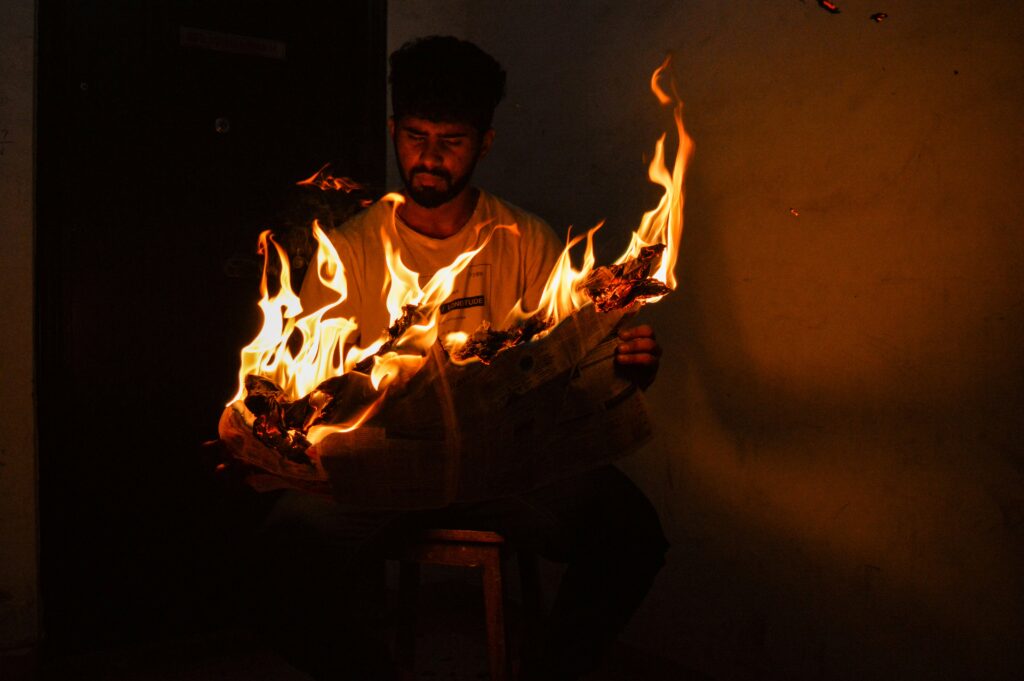
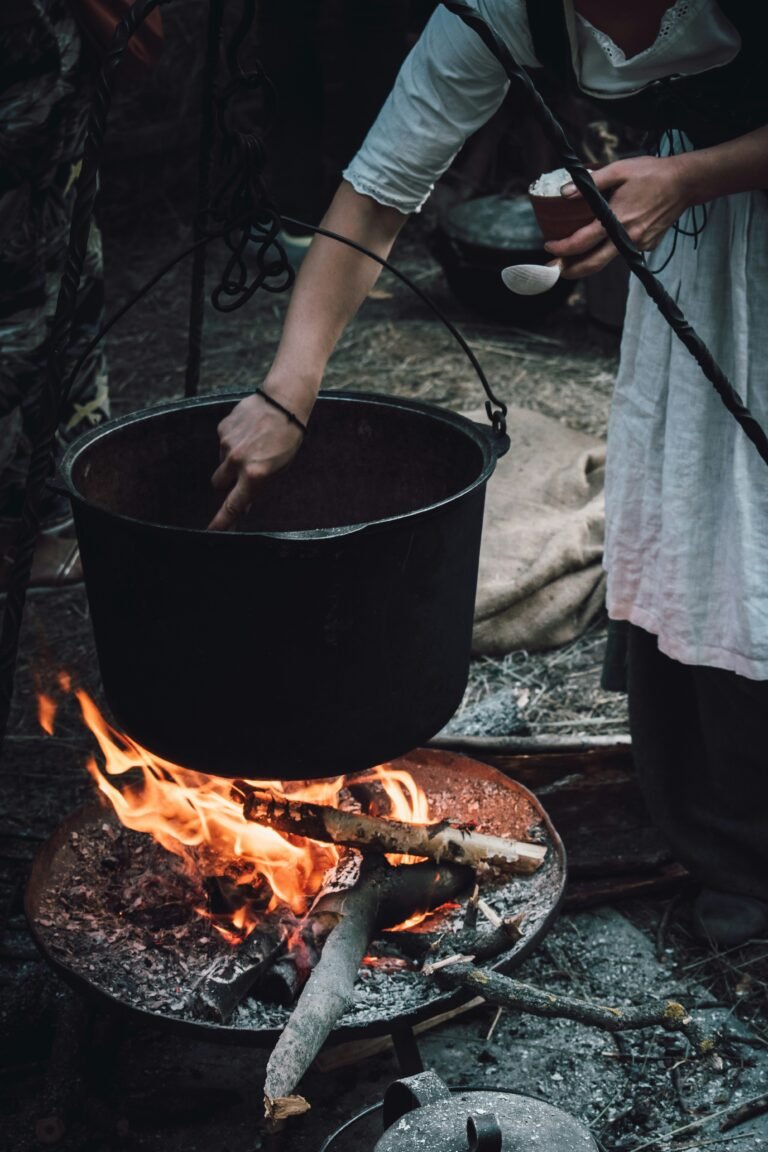
Fire is associated with purification and the rubedo, with the heat that drives transformation and with the destruction that is simultaneously a creation. Fire practices include the literal burning of written material that represents what is being released, candle work in which the flame is understood as an agent of transformation, and the use of heat in ritual preparation. Fire also corresponds to the calcination process in classical alchemy, the reduction of matter to ash, which was sometimes understood as the process of burning away everything that was not essential until only what was true remained.
Air is associated with the alchemical process of sublimation, in which a substance moves directly from solid to vapor, bypassing the liquid stage. Air practices involve breath work, smoke, scent and sound as agents of transformation. The use of incense in magical practice is not decorative. Smoke carries intention through the boundary between the material and the subtle, and different plant materials have different correspondences to different qualities of transformation. Frankincense is associated with purification and spiritual elevation. Mugwort with dreaming and the threshold between states of consciousness. Cedar with protection and ancestral connection.
Correspondence Work: Using the Alchemical Map
The alchemical tradition developed extraordinarily detailed maps of correspondence between the celestial and material levels of reality. Every planet corresponded to a metal, a color, a day of the week, a set of plants and minerals, an organ of the body and a quality of experience. These correspondences were not arbitrary. They were an attempt to map the structural relationships between the macrocosm above and the microcosm below, so that the practitioner working at the material level could engage with the larger forces those materials reflected.
Saturn corresponds to lead and to the qualities of limitation, time, weight and the confrontation with mortality. Working with Saturnine correspondences, on a Saturday, with dark colors, using plants like cypress or mullein, is working within the same energetic field as shadow work itself: the confrontation with what cannot be avoided, with finitude and with the necessity of letting go of what has outlived its purpose.
Venus corresponds to copper and to the qualities of beauty, desire, relationship and creative expression. Venusian work supports the albedo stage, the emergence of genuine feeling and the development of more honest and alive relationship to what is present in experience.
The Sun corresponds to gold and to the qualities of vitality, clarity, creative power and authentic self-expression. Solar work supports the rubedo: the integration that becomes possible when the shadow work has been done, when what was suppressed becomes available as genuine energy rather than something to be managed or hidden.
Understanding which planetary correspondence is most relevant to what you are working with allows you to support the process with material allies: timing work for planetary hours and days, using corresponding colors in candles or clothing, working with plants and minerals that carry the relevant energy. This is applied Hermetic philosophy, the same as above so below principle in practical use.
A Practice for Each Stage
If you are in the nigredo, the most useful practice is not to fix it. Sit with what is breaking down and write about it in its full heaviness, without reframing, without looking for the lesson, without reaching for the silver lining. The descent requires that you actually descend. The light you are looking for is not above the darkness. It is on the other side of it.
If you are in the albedo, use active imagination: the practice Jung adapted from the alchemical tradition of allowing images and figures from the unconscious to appear and engaging them in genuine dialogue rather than simply observing or interpreting them. Write down what the anger would say if it could speak. What the fear is actually afraid of. What the grief knows that the rest of you has been avoiding. This is the reflective work of the whitening, and it requires a quality of careful, non-defensive attention that is different from ordinary introspection.
If you are approaching the rubedo, the practice is integration rather than further excavation. The question changes from what is this shadow material to what becomes possible when I carry this honestly rather than suppressing it. The gold is not the absence of difficult qualities. It is the conscious use of them in service of something real.
Frequently Asked Questions
What is modern alchemy?
Modern alchemy is the application of the classical alchemical framework, particularly its understanding of staged transformation and the correspondence between inner and outer processes, to the work of personal and spiritual development. It draws on the Hermetic tradition’s insight that material transformation and inner transformation are expressions of the same underlying process, working primarily with the interior life as its laboratory.
What are the stages of alchemical transformation?
The classical alchemical work moved through three primary stages: the nigredo or blackening, in which the original material is dissolved and the confrontation with shadow material becomes unavoidable; the albedo or whitening, in which reflection and the beginning of integration become possible; and the rubedo or reddening, in which genuine integration produces what the tradition called the philosopher’s stone, the capacity for ongoing transformation. These stages are an accurate map of how inner work actually moves.
How do the four elements relate to alchemical practice?
Earth, water, fire and air in the alchemical tradition were not simply categories of substance but qualities of transformation with specific correspondences to both inner states and outer processes. Earth corresponds to density and the confrontation with what is fixed. Water to dissolution and reflection. Fire to purification and the heat of genuine change. Air to sublimation and the movement across thresholds. Working with physical elements deliberately in practice is a way of engaging the corresponding inner processes through material correspondence.
How does alchemy connect to shadow work?
The connection is direct and documented. Jung’s study of alchemical manuscripts led him to conclude that the alchemists had been mapping the territory of the unconscious for centuries, describing the same processes he observed in psychological transformation in the symbolic language of material chemistry. The nigredo corresponds precisely to the initial shadow confrontation. The full relationship between alchemy and shadow work is explored in depth in the alchemy and shadow work.
What is the philosopher’s stone in psychological terms?
In Jungian terms, the philosopher’s stone represents the capacity for ongoing self-transformation: the relationship to the inner life that becomes possible after shadow work has been genuinely engaged, in which new difficult material can be met with recognition rather than resistance. It is not a fixed achievement or a permanent state. It is an ongoing capacity, renewed each time the cycle returns to a new level of the same fundamental work.
How does planetary correspondence work in modern alchemical practice?
Each planet in the classical alchemical system corresponds to a metal, a color, a set of plants and minerals and a quality of inner experience. Timing work according to planetary days and hours, choosing materials that carry specific planetary correspondences and working within the relevant energetic field allows the practitioner to align material and inner processes. This is a direct application of the Hermetic principle that what is arranged above corresponds to and influences what is possible below.
Photo by Sarthak Shewale on Unsplash




[…] alchemy history and philosophy. For the practical techniques of modern alchemical practice, see the modern alchemy practices. The Hermetic principle underlying all alchemical work is explored in the as above so below […]
[…] The Art of Modern Alchemy: Practices for Spiritual Transformation […]