

Alchemy was never only about turning lead into gold. For those who looked deeper, the real work was internal: a systematic process of breaking down what was false, purifying what remained and building something new from the ruins. That process had a map.
The stages of the Magnum Opus, the Great Work, describe the journey from raw unrefined material to something transformed. Whether you read them as laboratory chemistry, spiritual practice or psychological development, they follow a consistent logic. Something must first fall apart before it can become whole.
This article walks through the four main stages in order, the transition phases that appear between them and the operations that later writers mapped onto the work. It also covers where these ideas come from and which historical texts first recorded them.
Where the Stages Come From
The alchemical color stages did not emerge from a single text or tradition. They accumulated over centuries across Greek, Arabic and European sources. For the wider story, see The History of Alchemy.
The earliest descriptions come from Greek alchemical texts written in Roman Egypt. Zosimos of Panopolis, writing around 300 CE, and the authors who followed him described the work as a sequence of color changes: blackening (melanosis), whitening (leukosis), yellowing (xanthosis) and a final violet-red stage called iosis. For Zosimos the blackening was the death of the matter and the necessary beginning of any real change.
The Arabic tradition developed these ideas further. The large body of writings attributed to Jabir ibn Hayyan, traditionally placed in the 8th century but probably written by several authors over the following two centuries, built theories of matter and transformation that later passed into Europe through Latin translation.
The Turba Philosophorum, or Assembly of the Philosophers, was one of the first alchemical texts to reach Latin Europe. Its Arabic original dates from around 900 and its Latin translation from the 12th or 13th century. It presents the work as a dialogue among ancient philosophers and was widely read and cited throughout the medieval period.
The Rosarium Philosophorum, or Rosary of the Philosophers, circulated in manuscript by the 15th century and was first printed in Frankfurt in 1550 as part of the collection De Alchimia Opuscula. Its twenty woodcuts follow the transformation from prima materia to the philosopher’s stone, centered on the union of a king and a queen. The Rosarium is a florilegium: a collection of sayings from earlier authorities including Hermes, Geber and Arnaldus de Villanova, arranged within a symbolic framework.
The Splendor Solis, an illuminated manuscript produced around 1532 and attributed to Salomon Trismosin, presents the work through a series of elaborate paintings. Its imagery of the sun, the moon, a king and a queen is among the richest in the alchemical tradition.
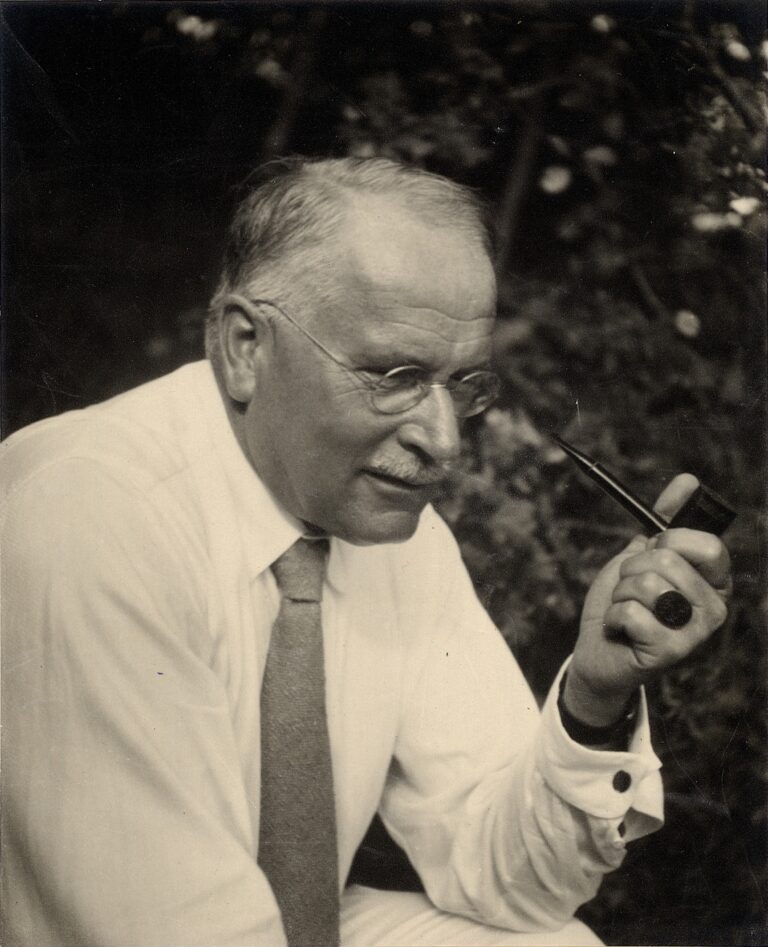
Carl Jung’s engagement with these texts transformed how the stages are understood today. He began studying alchemy seriously in the late 1920s and came to see its symbols as descriptions of the psychological processes he observed in his patients. He built The Psychology of the Transference (1946) on the woodcuts of the Rosarium. His Psychology and Alchemy (1944) and Mysterium Coniunctionis (1955-56) established the framework in which the stages are often discussed now: as a map of psychological individuation rather than only of laboratory chemistry.
What Is Prima Materia
Before the stages begin there is the starting point: prima materia. This is the raw material of the work, formless, mixed and unrefined. In the laboratory it was the base substance the alchemist chose to transform. The alchemists were deliberately vague about what exactly it was. Different traditions used different starting materials and the obscurity was often intentional, a way of keeping the art from the unworthy.
Psychologically, prima materia is the self before any deliberate inner work has been done: instincts, shadows, inherited patterns and unconscious drives all tangled together. It is also sometimes understood as the specific problem or wound that a particular cycle of transformation will address. Every pass through the Great Work has its own prima materia.
The Four Main Stages
The central framework of the Magnum Opus divides transformation into four color-coded stages. Each color represents a state of matter and a state of consciousness. The four-stage model is the older one. From around the 15th century many writers folded citrinitas into rubedo and left three stages, as explained below.
Later writers, especially in the Jungian tradition, also pair each stage with specific operations such as calcinatio or coniunctio. These pairings are modern interpretations rather than a fixed rule of the old texts, but they help describe what each stage feels like from the inside. For the tarot cards that mirror each stage, see Tarot and Alchemy.
Nigredo: The Blackening
Nigredo is the beginning and the most difficult stage. Everything that will eventually become gold must first become completely black.
In the laboratory this meant heating the raw material until it decomposed. The substance rotted, burned or dissolved into a dark undifferentiated mass, a process the alchemists called putrefaction. The blackening was not failure. It was confirmation that the process had genuinely begun, which is why a saying often quoted from the Rosarium tells the alchemist to rejoice when the matter turns black.
Psychologically nigredo corresponds to crisis, grief and the collapse of old identities. The alchemists called this state melancholia and described it as nigrum nigrius nigro, a black blacker than black. Jung saw in it the confrontation with the shadow. Modern writers usually connect nigredo with calcinatio (burning away), solutio (dissolving), putrefactio (rotting) and mortificatio (the death of the old form).
The symbols of nigredo are the raven, the skull, the black sun and Saturn. Its metal is lead, which the alchemists saw as the dullest of metals and the one furthest from gold. Read more in Nigredo: The Blackening Stage of Alchemy.
Albedo: The Whitening
After nigredo comes albedo: the whitening, the first light after total darkness. The blackened material has been fully broken down and what remains begins to be cleaned.
In the laboratory albedo was described as a washing, ablutio, in which the purified substance separated from the residue of decomposition and turned pale, almost luminous. Alchemists compared it to moonlight: cool and reflective, not yet its own source of light but able to receive and hold it. The goal of this stage was the white stone, which in theory could turn base metals into silver.
Psychologically albedo is the clarity that follows collapse. Jung linked it to the withdrawal of projections, recognizing as our own what we had attributed to the outside world. He also linked it to the emergence of the anima and animus as figures distinct from the ego. Modern writers connect albedo with ablutio (washing), separatio (separating) and sublimatio (refining upward).
The symbols of albedo are the moon, the white swan, the dove, the white rose and the white queen. Its metal is silver. Read more in Albedo: The Whitening Stage of Alchemy.
Citrinitas: The Yellowing
Citrinitas is the stage most people have not heard of and there is a reason for that.
In the older four-stage model citrinitas sat between albedo and rubedo. Greek alchemists called it xanthosis. It represented the yellowing: the first warmth of the sun after the cool silver of the moon phase. Where albedo was lunar, citrinitas marked the dawning of solar light, the moment the soul stopped merely reflecting light and began to generate its own.
From around the 15th century many alchemical writers merged citrinitas into rubedo and the four stages became three. Jung noted this shift himself. The yellowing was hard to distinguish consistently in the laboratory and many writers saw it simply as the beginning of the reddening. Some modern authors also suggest that a three-stage scheme suited Christian symbolism of the Trinity, though this is interpretation rather than documented fact.
In contemporary use citrinitas is the stage of consolidation before completion. The work of albedo is done and something is beginning to solidify, but it has not yet reached its final form. Insight starts to turn into lived experience. Its color is yellow or early gold and its image is the rising sun. Read more in Citrinitas: The Yellowing Stage of Alchemy.
Rubedo: The Reddening
Rubedo is the completion of the Great Work. The material has been dissolved, cleaned and refined and now arrives at its final state: the philosopher’s stone, the red stone said to turn base metals into gold.
The red carried several meanings at once: blood, fire, the sun at its height and the fullness of life. Where albedo belonged to the moon and the white queen, rubedo belongs to the sun and the red king. Their union, the coniunctio, is the sacred marriage of opposites that the Rosarium follows across its woodcuts.
Jung saw rubedo as the counterpart of individuation: the integration of all parts of the self, including the shadow, into a functioning whole. It is not perfection but wholeness. Modern writers connect rubedo with fermentatio (transformation through a catalyst), coniunctio (the union of opposites) and coagulatio (solidifying the result). Many old texts add two final steps: multiplicatio increases the power of the stone and projectio casts it onto base metal to transform it.
The symbols of rubedo are the sun, the phoenix, the red rose, the red king and the philosopher’s stone itself. Its metal is gold. Read more in Rubedo: The Reddening Stage of Alchemy.
The Transition Phases
Between the main stages, older texts describe shorter phases that do not fit neatly inside any one of them. Not every tradition lists them, but they describe real transitions.
Cauda Pavonis: The Peacock’s Tail
The peacock’s tail is the most famous transition phase and the best documented. In most classical texts it appears between nigredo and albedo: the blackened matter suddenly flashes through many colors, like the eyes on a peacock’s feathers, before it settles into white. Alchemists took it as a sign that the work was proceeding correctly. Jung’s own outline of the work places the peacock’s tail at the dawn after nigredo, just before albedo. Some modern writers place it before rubedo instead, which is why both versions circulate today.
Psychologically the peacock’s tail corresponds to a sudden rush of insight after a dark period. Connections appear between things that seemed unrelated and dreams grow vivid and symbolic. The alchemical advice was steady: observe, continue and let the colors pass.
Viriditas: The Greening
Viriditas, the greening, is the first sign of life returning to the blackened matter, the green shoot through ash. The term is best known from Hildegard of Bingen, who used it in the 12th century for the life-force that runs through all living things. Alchemists and later Jung spoke of a benedicta viriditas, a blessed greenness. In experiential terms it is the first moment after a dark period when something small begins to feel possible again.
Cinereus: The Grey
Some writers describe an ashen grey phase between the black and the white. Grey is neither destroyed nor clean. Psychologically it fits the long, undramatic middle period after a crisis: no longer collapse but not yet clarity. It is easy to underestimate because it does not feel like progress, but it still has to be moved through rather than bypassed.
The Operations of the Work
The color stages describe how the material looks. The operations describe what is being done to it. There was never one fixed list. George Ripley’s Compound of Alchymy (1471) describes twelve gates: calcination, solution, separation, conjunction, putrefaction, congelation, cibation, sublimation, fermentation, exaltation, multiplication and projection. Other authors counted differently.
The most widely used list today is the seven operations popularized by Dennis William Hauck in The Emerald Tablet (1999). The Jungian analyst Edward Edinger offered a different set of seven in Anatomy of the Psyche (1985). Hauck’s sequence runs as follows.
Calcinatio (calcination) burns the material to ash. Psychologically it is the burning away of false structures: the persona, old defenses and ways of coping that no longer serve.
Solutio (dissolution) dissolves the ash in water. What was rigid becomes fluid and unconscious material floods in.
Separatio (separation) divides the essential from the inessential. It is the work of discernment: telling what truly belongs to you from what you have absorbed from elsewhere.
Coniunctio (conjunction) joins what was separated. It is the first union of opposites, the moment when things that seemed irreconcilable prove able to coexist.
Fermentatio (fermentation) transforms through a catalyst. It begins with putrefaction (the death of the old form) and ends with new life that could not have arisen without it.
Distillatio (distillation) purifies through repeated heating and condensing. Psychologically it is sustained reflection that returns to the same material until what is essential becomes clear.
Coagulatio (coagulation) solidifies the result. Insight becomes embodied and the person lives differently because of it.
The Stages Are Not Linear and They Repeat
One thing the alchemical texts agree on is that the work does not happen once and finish. The Magnum Opus is circular. After rubedo comes a new prima materia, a deeper layer that has not yet been worked.
The old texts call part of this multiplicatio: the completed stone is dissolved again and the process repeated to increase its power. Each pass produces a result more refined than the last. This is why someone can experience what feels like a completed transformation and later find themselves back in nigredo. They are not failing or regressing. They are working a new layer of the same material.
The stages also overlap. A person does not finish nigredo on one day and begin albedo the next. Albedo can be emerging in one area of life while nigredo continues in another, just as different parts of the same substance could be at different stages in the alchemist’s flask.
The discomfort of nigredo is not a sign that something has gone wrong. It is a sign that something real is happening. The same movement appears in shadow work: confronting what has been hidden (nigredo), bringing it into clarity (albedo) and integrating it into a fuller sense of self (rubedo). For more on that parallel, see Alchemy and the Shadow. If you are new to the practice, start with How to Start Shadow Work. For practices that work with each stage, see The Art of Modern Alchemy.
Frequently Asked Questions
What are the four stages of alchemy in order?
The four stages are nigredo (the blackening), albedo (the whitening), citrinitas (the yellowing) and rubedo (the reddening). In the three-stage model that became common from the 15th century onward, citrinitas is absorbed into rubedo. Both sequences describe the same transformation at different levels of detail.
What is nigredo in alchemy?
Nigredo is the first and most difficult stage of the Great Work: the decomposition and blackening of the raw material. Alchemists saw the blackening as proof that the work had truly begun. Psychologically it corresponds to crisis, grief and the collapse of old identities. Jung linked it to the confrontation with the shadow.
What does albedo mean in alchemy?
Albedo is the whitening stage that follows nigredo. The broken-down material is washed and purified until it turns pale. Alchemists compared it to moonlight: cool, reflective and able to hold light without producing its own. Psychologically it represents the clarity that follows collapse. Its metal is silver and its image is the white queen.
Why is citrinitas often left out of the alchemical stages?
Citrinitas was a genuine stage in the older four-stage model: the yellowing between albedo and rubedo. From around the 15th century many writers merged it into rubedo because the yellowing was hard to distinguish in practice and was often seen as the start of the reddening. Both the three-stage and four-stage models are historically valid.
What is the peacock’s tail in alchemy?
The peacock’s tail (cauda pavonis) is a transition phase in which the matter flashes through many colors. In most classical texts it appears between nigredo and albedo, just before the whitening. Alchemists read it as a sign that the work was going well. Psychologically it corresponds to a rush of insight after a dark period.
What are the seven alchemical operations?
The best-known modern list, popularized by Dennis William Hauck, is calcinatio (burning), solutio (dissolving), separatio (separating), coniunctio (joining), fermentatio (transforming through a catalyst), distillatio (purifying) and coagulatio (solidifying). Historical alchemists used many different lists. George Ripley’s Compound of Alchymy (1471), for example, describes twelve gates.
How does alchemy connect to Jungian psychology?
Jung studied alchemical texts for well over a decade before publishing Psychology and Alchemy in 1944 and Mysterium Coniunctionis in 1955-56. He concluded that the alchemists had projected psychological processes onto matter. In his reading nigredo corresponds to confronting the shadow, albedo to making the unconscious conscious and rubedo to individuation, the integration of the whole self. He considered the coniunctio, the union of opposites, the central symbol of the entire tradition.
Further Reading
The History of Alchemy: Origins, Key Figures and the Great Work
The Art of Modern Alchemy: Practices for Spiritual Transformation
Alchemy and the Shadow: The Ancient Map of Inner Transformation
Hermeticism: Principles, History and Practice
How to Start Shadow Work: A Beginner’s Guide
Photo by Moon Moons on Unsplash





[…] melancholia, and one detailed survey of the stages notes that the old masters treated this state as the confrontation with the shadow, corresponding directly to crisis and the death of old identities. The Rosarium Philosophorum, the great illustrated treatise of 1550, even tells the practitioner to […]
[…] This article explains what nigredo meant in the alchemist’s laboratory, what it means in Jungian psychology and how to recognize it in your own life. It also covers how to move through it, the tarot cards that mirror it and a tarot spread for working with it. For an overview of all four stages, see The Alchemical Stages. […]
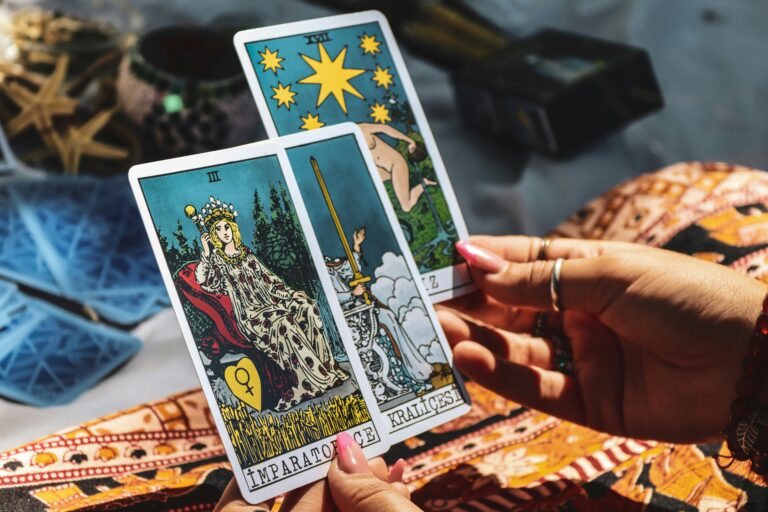
[…] This guide brings the two together. It explains how tarot and alchemy became connected, which cards mirror each stage and where alchemical symbols hide in the Rider-Waite-Smith deck. It ends with a full Great Work spread that follows the whole cycle from lead to gold. For the stages themselves, see The Alchemical Stages. […]