
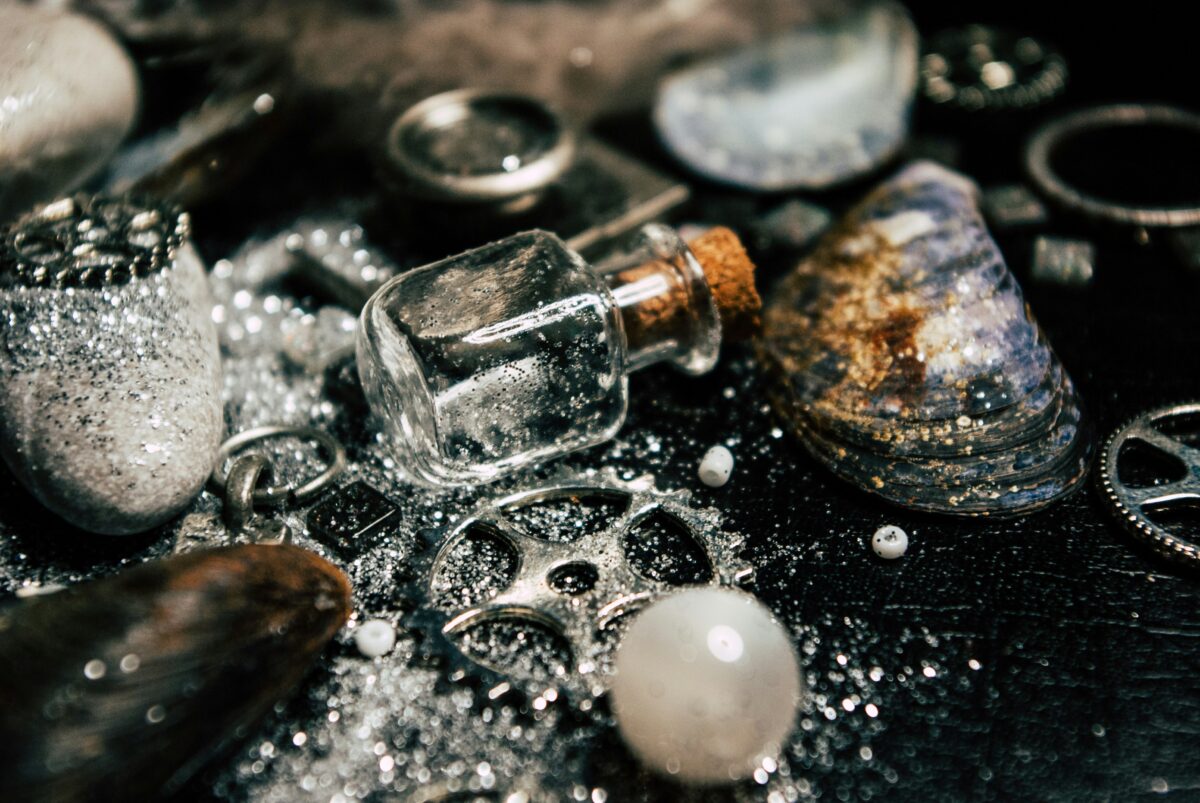
Alchemy was never only about turning lead into gold. For those who looked deeper, the real work was internal: a systematic process of breaking down what was false, purifying what remained and building something new from the ruins. That process had a map.
The stages of alchemy, called the Magnum Opus or Great Work, describe the journey from raw unrefined material to something transformed. Whether you read them as laboratory chemistry, spiritual practice or psychological development, the stages follow a consistent logic. Something must first fall apart before it can become whole.
This article covers every stage in order, including the stages that were later dropped from common use, the transition phases that appear between the main ones and the seven operations that run through the whole process. It also covers where these ideas come from and which historical texts first recorded them.
Where the Stages Come From
The alchemical color stages did not emerge from a single text or a single tradition. They accumulated over centuries across Arabic, Greek and European sources before being systematized in the late medieval period.
The earliest references to color changes in alchemical work appear in Greek texts from Alexandria, particularly in the writings attributed to Zosimos of Panopolis around 300 CE, who described the blackening and whitening of matter as part of spiritual transmutation. The Arabic alchemical tradition, especially Jabir ibn Hayyan in the 8th century, developed the idea of sequential stages in transformation further and these texts later passed into European alchemy through Latin translation.
The Turba Philosophorum or Assembly of the Philosophers is one of the earliest Latin alchemical texts to describe the stages in terms of color. It presents the work as a dialogue among ancient philosophers and was likely compiled in the 10th century from Arabic sources. It was widely read and cited throughout the medieval period.
The Rosarium Philosophorum or Rosary of the Philosophers is the text most directly associated with the four-stage color sequence. First printed in Frankfurt in 1550 as part of a collection called De Alchimia Opuscula, it includes twenty woodcut illustrations depicting the stages of transformation from prima materia to the philosopher’s stone. It had circulated in manuscript form for at least a century before that. The Rosarium is a florilegium, meaning it is itself a collection of quotes and sayings from earlier alchemical authorities including Hermes, Geber and Arnaldus de Villanova, organized within a symbolic framework. This is the text that contains the instruction most often quoted about nigredo: when you see your matter going black, rejoice.
The Splendor Solis, an illuminated alchemical manuscript produced around 1532 and attributed to Salomon Trismosin, presents the stages through a series of elaborate paintings showing the solar king, the lunar queen and their transformation. Its imagery is among the richest in the alchemical tradition and directly influenced later European understanding of the stages.
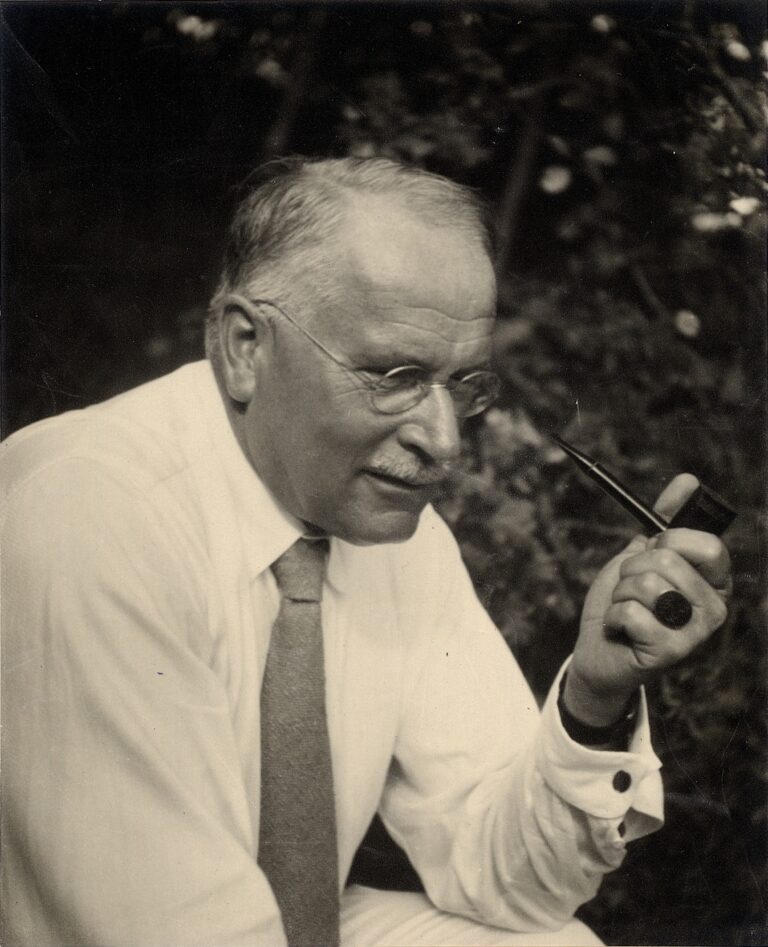
Carl Jung’s engagement with these texts in the 1920s and 1930s transformed how the stages are understood today. After encountering the Rosarium Philosophorum, Jung recognized that the alchemical symbols described psychological processes he was observing in his patients. His study of alchemy, particularly Psychology and Alchemy (1944) and Mysterium Coniunctionis (1955), established the framework in which the stages are now often discussed: as a map of psychological individuation rather than only of laboratory chemistry. Jung spent over a decade tracking down and having ancient manuscripts translated before writing these works.
What Is Prima Materia
Before the stages begin, there is the starting point: prima materia. This is the raw material of the work, formless, mixed and unrefined. In the laboratory it was the base substance the alchemist chose to transform. The alchemists were deliberately vague about what exactly prima materia was, partly because different traditions used different starting materials and partly because the obscurity was intentional. The Rosarium states that nothing is concealed of the philosophers except the secret of the art, which is not lawful to be revealed.
Psychologically, prima materia is the self before any deliberate inner work has been done: instincts, shadows, inherited patterns and unconscious drives all tangled together. It is also sometimes understood as the specific problem or wound that a particular cycle of transformation will address. Every pass through the Great Work has its own prima materia.
The Four Main Stages
The central framework of the Magnum Opus divides transformation into four color-coded stages. Each color represents a state of matter and a state of consciousness. The four-stage model was the original formulation; a three-stage version that drops citrinitas became more common after the fifteenth century, which is explained further below.
Nigredo: The Blackening
Nigredo is the beginning and the most difficult stage. Everything that will eventually become gold must first become completely black.
In the laboratory, this meant heating the raw material until it decomposed. The substance rotted, burned or dissolved into a dark undifferentiated mass. The Rosarium is explicit that if the material did not go black, nothing further could happen. The blackening was not failure. It was confirmation that the process had genuinely begun. The Zosimos texts describe this as the death of the matter, the necessary corruption that precedes any real change.
The three operations within nigredo describe the different ways this dissolution can occur.
Calcinatio is the first. The material is reduced to ash through intense and sustained heat. In psychological terms, calcinatio corresponds to the kind of confrontation that strips away comfortable explanations and familiar identities. It is not gradual. It is the crisis that cannot be rationalized.
Putrefactio follows or runs alongside calcinatio. Where calcinatio burns, putrefactio rots. This is the slower dissolution, the kind that happens when something that was once living has simply ceased to serve its function and begins to break down from within. Depression, stagnation and a pervasive sense of meaninglessness are all associated with putrefactio. The alchemists called this state melancholia. Jung noted in Mysterium Coniunctionis that the alchemists described nigredo as a black blacker than black, an intensification of darkness beyond ordinary despair.
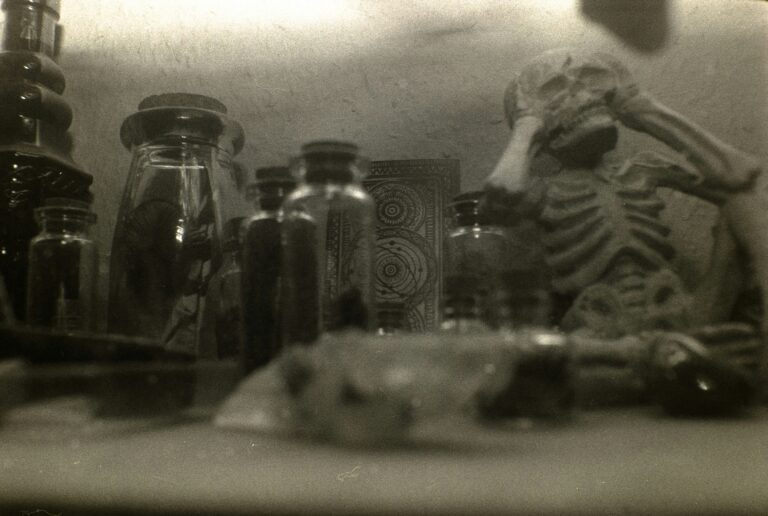
Mortificatio is the final movement within nigredo: the actual death. Not the drama of calcinatio or the slow rot of putrefactio, but the quiet recognition that something is over. In Jungian terms this is ego-death, the point at which the rigid self-concept loosens enough that something genuinely new can form. The alchemists sometimes depicted mortificatio as a skeleton or a king lying in his tomb. The thing that was powerful is now still.
The symbols of nigredo are the raven, the skull, the black sun and Saturn. Its metal is lead. Lead was understood as the heaviest and most inert of metals, the one furthest from gold. Its Saturnine qualities of weight, slowness and constraint map directly onto the experience of the stage.
Albedo: The Whitening
After nigredo comes albedo: the whitening, the first light after total darkness. The blackened material has been fully broken down and what remains begins to be cleaned.
The Rosarium depicts albedo through the image of washing: the purified substance is separated from the residue of decomposition and the material becomes pale, almost luminous. Alchemists consistently compared it to moonlight, reflective and cool, not yet its own source of illumination but capable of receiving and holding light. The Splendor Solis shows the lunar queen as the ruling image of this stage, standing in silver and white, opposite to the solar king who will only fully emerge in rubedo.
The three sub-processes of albedo describe how purification actually works.
Ablutio is washing. The gross impurities left over from nigredo are cleaned away. Psychologically this corresponds to what Jung described as the withdrawal of projections: the gradual process of seeing things more accurately, recognizing what has been attributed to the outside world that actually belongs within.
Separatio is the careful distinguishing of different elements from one another. Where everything was mixed and undifferentiated in nigredo, separatio begins to sort. In inner work this means learning to tell the difference between your own genuine responses and conditioned ones, between what you actually believe and what you have simply inherited, between the inner voice that serves and the one that undermines.
Sublimatio is lifting. The refined essence rises from the vessel while the heavier residue remains below. Alchemically this corresponded to the vapor rising from heated matter and being collected above. Psychologically it is the emergence of insight from material that was previously opaque. Understanding that felt impossible begins to become available. The person sees their patterns from a distance rather than being completely inside them.
Jung associated albedo with the emergence of the anima and animus, the soul images, which become distinguishable from the ego for the first time during this stage. The unconscious is no longer entirely dark. It is beginning to be known.
The symbols of albedo are the moon, the white dove, the silver rose and the washing of the stone. Its metal is silver.
Citrinitas: The Yellowing
Citrinitas is the stage most people have not heard of and there is a reason for that.
Originally the Great Work had four stages and citrinitas sat between albedo and rubedo. It represented the yellowing: the first warmth of the sun after the cool silver of the moon phase. Where albedo was lunar, citrinitas was solar in its early form. It marked the specific transition from purification into the beginning of integration, the moment when the soul stopped merely receiving light and began to generate it.
The Splendor Solis and several other texts from the 15th and early 16th centuries treat citrinitas as a distinct stage, associated with the yellowing of the material before it reaches full redness. It was sometimes called the xanthosis in Greek-influenced traditions and was understood as an intermediate solar awakening: not yet the full gold of rubedo but no longer the silver passivity of albedo either.
From around the mid-fifteenth century onward many alchemical writers merged citrinitas into rubedo, collapsing the four-stage model into three. There are several reasons this happened. The practical laboratory tradition found the distinction difficult to maintain consistently. Some writers viewed the yellowing as simply the beginning of reddening rather than a separate phase. And the three-stage model mapped more cleanly onto certain symbolic systems, including the Christian Trinity, which had institutional advantages in the European context where alchemy was always navigating religious scrutiny.
Jung placed less emphasis on citrinitas than on the other stages, though he acknowledged it as representing a form of solar awakening where spiritual insight begins integrating with lived experience rather than remaining purely intellectual. In contemporary use, citrinitas is the stage of consolidation before completion: the work of albedo is done and something is beginning to solidify, but it has not yet reached its final state. The person is no longer confused or raw but not yet fully integrated.
Its color is gold in its early form, before the deep red of rubedo. Its symbol is the peacock’s tail in its first transition, the initial appearance of warm color.
Rubedo: The Reddening
Rubedo is the completion of the Great Work. The material has been dissolved, cleaned and refined and now arrives at its final state: the philosopher’s stone, gold and what the alchemists called the fully realized self.
In the laboratory the reddening was the last visible transformation. The Rosarium describes the material shifting from white or pale gold into deep red before reaching its perfected form. The red color carried multiple meanings simultaneously: blood, fire, the sun at its zenith and the fullness of life. The philosopher’s stone itself was described as red and the Splendor Solis shows the solar king in his full power at this stage, opposite to the pale lunar queen of albedo.
Jung described rubedo as the equivalent of individuation: the integration of all parts of the self, including the shadow, into a functioning whole. In Mysterium Coniunctionis he described the full achievement of rubedo as the mystery of conjunction itself, in which spirit, soul and body are united. Not perfection but wholeness. The tensions that drove the earlier stages are not resolved in rubedo but held consciously, as a person who knows who they are including the parts they would prefer not to be.
The three core processes of rubedo describe how this final integration happens.
Fermentatio is transformation through a catalyst. Something entirely new is introduced into the refined material and changes its nature completely. The alchemical analogy is yeast: a small quantity transforms the whole substance into something that could not be produced without it. Psychologically fermentatio is often associated with a genuine encounter that cannot be undone: a relationship, a spiritual experience or a confrontation with the unconscious that permanently shifts the center of gravity. The old structure dies and something else begins in its place.
Coniunctio is the sacred marriage, the joining of opposites that the Rosarium depicts across its entire sequence of twenty woodcuts: the king and queen, sun and moon, masculine and feminine, conscious and unconscious. This is not the elimination of tension between opposites but its transformation. The king and queen do not merge into sameness. They are joined while remaining themselves. Jung considered coniunctio the central symbol of the entire alchemical tradition and named his final major work after it.
Coagulatio is the final solidification. The refined material takes on permanent and stable form. In practical terms this is where inner knowledge becomes embodied rather than remaining a set of ideas. The person does not just understand their transformation. They live differently because of it.
The symbols of rubedo are the sun, the phoenix, the red rose and the philosopher’s stone itself. Its metal is gold.
The Transition Phases
Between the four main stages are smaller intermediate phases documented in older alchemical texts. They are not always listed in every tradition but they describe real transitions that do not fit neatly inside any single stage. The alchemists observed these color shifts in the laboratory and gave them names because they were significant enough to track.
Viriditas (the greening) appears just after nigredo begins to lift. It is the first faint sign of something alive within the destroyed material, the green shoot through ash. Hildegard of Bingen, writing in the 12th century, used viriditas as a term for the animating life-force that persists through destruction: the greening power inherent in all living things. In the alchemical context it signals that the nigredo has genuinely completed enough that new life is beginning underneath. In experiential terms it is the first moment after a very dark period when something small begins to feel possible again. Not hope exactly, but the first absence of complete hopelessness.
Cinereus (the grey) follows viriditas and precedes albedo. The material has moved through black and through the first green but has not yet whitened. Grey is neither destroyed nor clean. It sits in between. Some traditions associate it with Jupiter, in contrast to the Saturnine heaviness of full nigredo, suggesting a lifting but not yet a clarity. Psychologically cinereus corresponds to the long middle period after crisis: still unclear and unsettled but no longer in the acute collapse of nigredo. Things are ambiguous rather than catastrophic. This is the phase people often underestimate because it does not feel dramatic, but it is a genuine transition that must be moved through rather than bypassed.
Cauda Pavonis (the peacock’s tail) is the most visually striking of the transition phases and the best documented across alchemical literature. It appears between albedo and rubedo and takes its name from the iridescent display of peacock feathers. In the laboratory the material would flash through a rapid sequence of colors: purple, green, gold and blue, the full spectrum appearing briefly before the final reddening settled in. The Rosarium and the Splendor Solis both document this phenomenon. It was understood as a highly positive sign that the work was proceeding correctly and that rubedo was imminent.
In inner work cauda pavonis corresponds to a period of rapid and sometimes overwhelming insight. Everything seems to be moving at once. Connections appear between things that previously seemed unrelated. Dreams become vivid and symbolic. The psyche produces material faster than it can be consciously integrated. It is exciting and disorienting in equal measure and it requires a degree of steadiness because the instinct is either to grasp at every new insight or to panic at the intensity of the process. The alchemical instruction was consistent: observe, continue and let the colors pass.
The Seven Operations
Alongside the color stages, alchemical tradition describes seven operations: specific processes that occur throughout the work. Where the stages describe what the material looks like from the outside, the operations describe what is actually being done to it. Different alchemical texts assign these operations to the elements and to planetary rulers.
These seven are not a separate system from the color stages. They map onto the stages and sometimes repeat. The sequence is approximately linear but the Turba Philosophorum and later texts are clear that some operations recur at deeper levels as the work progresses.
Calcinatio burns the material to ash. It is associated with nigredo, the element of fire and Saturn. In the laboratory, calcination destroyed the outer form of the substance to expose what was more essential beneath. Psychologically it is the destruction of the false structure that has been built up over time: the persona, the defenses, the ways of managing the world that no longer serve.
Solutio dissolves the material into water. Associated with nigredo and the transition into albedo, solutio corresponds to the flooding of something that was previously fixed and defended. The solid becomes liquid. What was rigid becomes permeable. Jung associated this with the experience of being overwhelmed by unconscious material, the flood that precedes purification.
Separatio divides the refined from the unrefined. Associated with albedo, separatio is the operation of discernment: identifying what is essential and what is not, distinguishing what genuinely belongs to the self from what has been absorbed from elsewhere. It requires a certain clarity that solutio and calcinatio alone cannot produce.
Coniunctio joins opposites. It can occur at multiple points in the work but reaches its fullest form in rubedo. The Rosarium organizes its entire twenty-image sequence around coniunctio as the central event of transformation: the meeting and marriage of the king and queen, the sun and moon. Alchemically, coniunctio was sometimes a literal mixing of substances that were previously separate. Psychologically it is the moment when things that seemed irreconcilable are found to be capable of coexistence.
Fermentatio transforms through a catalyst. Associated with rubedo, fermentatio describes a qualitative change that cannot be reversed: the material after fermentation is fundamentally different from what it was before. The two movements within fermentatio are putrefactio (the death of the old form) and the emergence of new life in its place. One does not happen without the other.
Distillatio purifies through repeated evaporation and collection. Associated with albedo and citrinitas, distillatio is the patient work of refinement: the substance is heated, rises as vapor, is collected and returned, then heated again. Each cycle removes more impurity. Psychologically this corresponds to the kind of sustained reflection that returns to the same material repeatedly until what is essential finally becomes clear. It cannot be rushed.
Coagulatio solidifies the final result. Associated with rubedo, coagulatio is the operation that gives the completed work its permanent form. Without coagulatio the refined essence would remain volatile and unstable, capable of being lost. In lived experience coagulatio is the difference between insight that fades and understanding that actually changes how a person is in the world.
The Stages Are Not Linear and They Repeat
One of the things the alchemical texts are consistent about: the stages do not happen once and finish. The Magnum Opus is circular. After rubedo there is a new prima materia, a deeper layer that has not yet been worked. The cycle begins again at a different level.
The medieval alchemists called this the multiplicatio, the multiplication of the stone. The completed stone is dissolved again and the process repeated to increase its potency. Each pass through the cycle produces a result more refined than the last. This is why someone can experience what feels like a completed transformation and then find themselves back in nigredo later. They are not failing or regressing. They are working a new layer of the same material.
It is also important to note that the stages overlap and can run simultaneously in different areas of life. A person does not finish nigredo on one day and begin albedo the next. The transition phases exist precisely because the boundaries between stages are gradual and variable. Albedo can be emerging in one domain of life while nigredo continues in another. The laboratory alchemists observed this directly: different parts of the same substance might be at different stages at the same time.
The Rosarium Philosophorum is direct about the blackening: when you see your matter going black, rejoice. This was not encouragement toward optimism. It was a technical observation. The blackening confirmed the process had genuinely begun. No blackening meant no transformation, the material had not been sufficiently broken down. For those working with the stages psychologically, this carries the same weight. The discomfort of nigredo is not a sign that something has gone wrong. It is a sign that something real is happening.
The stages also connect directly to shadow work, where the same movement appears: confronting what has been hidden (nigredo), bringing it into clarity (albedo) and integrating it into a fuller sense of self (rubedo). For more on that parallel, see Alchemy and Shadow Work.
Frequently Asked Questions
What are the four stages of alchemy in order?
The four stages are nigredo (the blackening), albedo (the whitening), citrinitas (the yellowing) and rubedo (the reddening). In the three-stage model that became more common after the fifteenth century, citrinitas is absorbed into rubedo, giving nigredo, albedo and rubedo. Both sequences describe the same transformation at different levels of resolution.
What is nigredo in alchemy?
Nigredo is the first and most difficult stage of the Magnum Opus: the complete dissolution and blackening of the raw material. The Rosarium Philosophorum (1550) describes it as the necessary beginning of the work, when the matter must go completely black before any further transformation is possible. Psychologically it corresponds to crisis, grief, depression and the collapse of old identities. The alchemists called this state melancholia. Jung described it as the confrontation with the shadow.
What does albedo mean in alchemy?
Albedo is the whitening stage that follows nigredo. After the material has been completely broken down, it is washed and purified. The alchemists compared albedo to moonlight: cool, reflective and not yet its own source of illumination but able to receive and hold light. Psychologically it represents the emergence of self-awareness after collapse, the withdrawal of projections and the first genuine clarity about the inner world. Its metal is silver and its ruling image is the lunar queen.
Why is citrinitas often left out of the alchemical stages?
Citrinitas was a genuine fourth stage in early alchemical writing, representing the yellowing of the material between albedo and rubedo. After the fifteenth century many alchemical writers merged it into rubedo, reducing the model to three stages. The reasons were partly practical (the yellowing was hard to distinguish consistently in the laboratory) and partly symbolic (a three-stage model mapped more cleanly onto Christian symbolism). Both the three-stage and four-stage models are historically valid.
What is the peacock’s tail in alchemy?
The peacock’s tail (cauda pavonis) is a transition phase between albedo and rubedo. In the laboratory the material would briefly display a rapid sequence of iridescent colors: purple, green, gold and blue, before settling into the final red of rubedo. Both the Rosarium Philosophorum and the Splendor Solis document this phenomenon as a sign that the work is progressing correctly. In psychological terms it corresponds to a period of rapid and sometimes overwhelming insight just before integration becomes stable.
What are the seven alchemical operations?
The seven operations are calcinatio (burning), solutio (dissolving), separatio (separating), coniunctio (joining opposites), fermentatio (transforming through a catalyst), distillatio (purifying through repeated evaporation) and coagulatio (solidifying the final result). They are not a separate system from the color stages. They describe the specific actions being performed within each stage and some operations recur at deeper levels as the work progresses.
How does alchemy connect to Jungian psychology?
Jung spent over a decade studying medieval alchemical manuscripts before publishing Psychology and Alchemy in 1944 and Mysterium Coniunctionis in 1955. He recognized that the alchemists had been unconsciously projecting psychological processes onto matter. Nigredo corresponds to confronting the shadow. Albedo corresponds to making the unconscious conscious and distinguishing the anima or animus from the ego. Rubedo corresponds to individuation: the integration of all parts of the self into a functioning whole. Jung considered the coniunctio, the sacred marriage of opposites depicted in the Rosarium Philosophorum, to be the central symbol of the entire alchemical tradition.
Further Reading
The Art of Modern Alchemy: Practices for Spiritual Transformation
Alchemy and the Shadow: The Ancient Map of Inner Transformation
Hermeticism: Principles, History and Practice
How to Start Shadow Work: A Beginner’s Guide
Photo by Moon Moons on Unsplash


[…] melancholia, and one detailed survey of the stages notes that the old masters treated this state as the confrontation with the shadow, corresponding directly to crisis and the death of old identities. The Rosarium Philosophorum, the great illustrated treatise of 1550, even tells the practitioner to […]